
 Nöbetçi Eczaneler




Scientists have returned 56 mesophotic corals to the seafloor near Flower Garden Banks National Marine Sanctuary, while follow-up monitoring has delivered an encouraging result from an earlier restoration effort: every coral checked at one 2025 outplanting site had survived and grown.
The latest operation took place in August 2026 and represents another step in an ambitious programme attempting to understand, propagate and ultimately restore coral communities living far below the shallow reefs familiar to most recreational scuba divers.
According to NOAA’s Office of National Marine Sanctuaries, the 56 corals had spent as long as four years in laboratories after fragments were originally collected from the mesophotic, or “twilight”, zone.
Researchers used that time to study how the animals grow, feed and reproduce before returning them to locations close to where they were originally collected.
Five Coral Species Returned
The latest group included five species: Swiftia exserta, Muricea pendula, Thesea nivea, Placogorgia sp. and Callogorgia sp.
Fragments had been collected during expeditions between 2022 and 2025 and maintained at laboratories in Charleston, South Carolina, and Galveston, Texas.
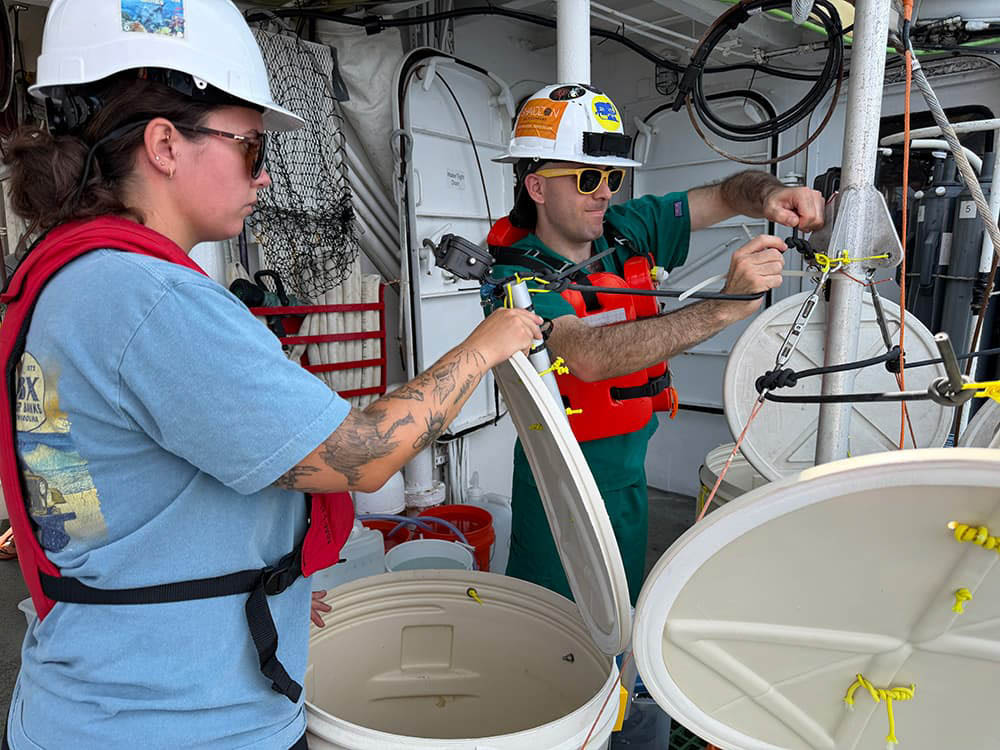
Before being taken back offshore, veterinarians assessed the colonies to ensure they were healthy enough for their return to the seafloor.
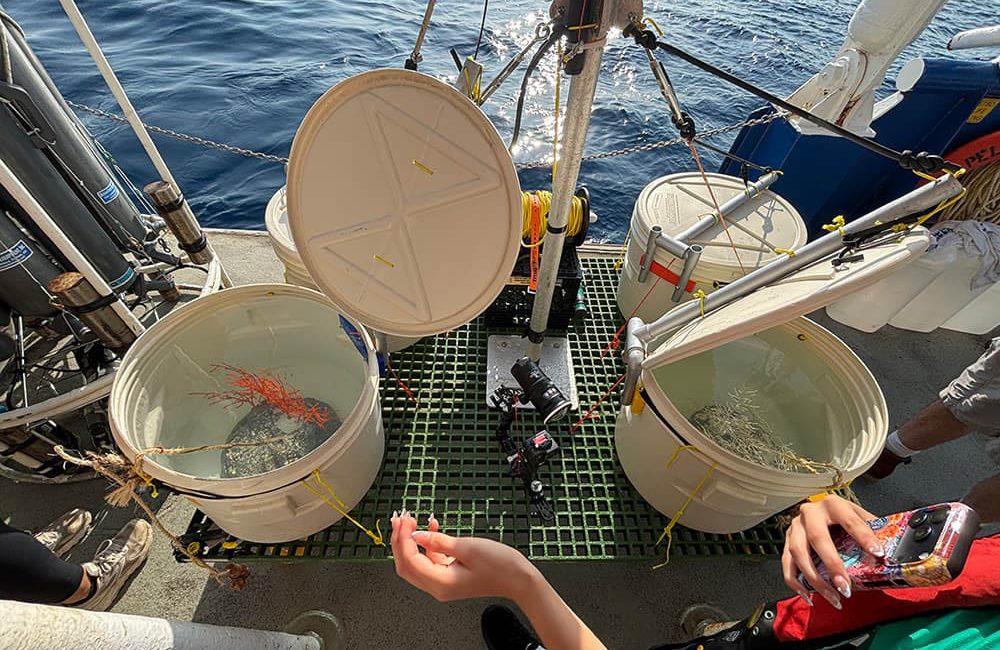
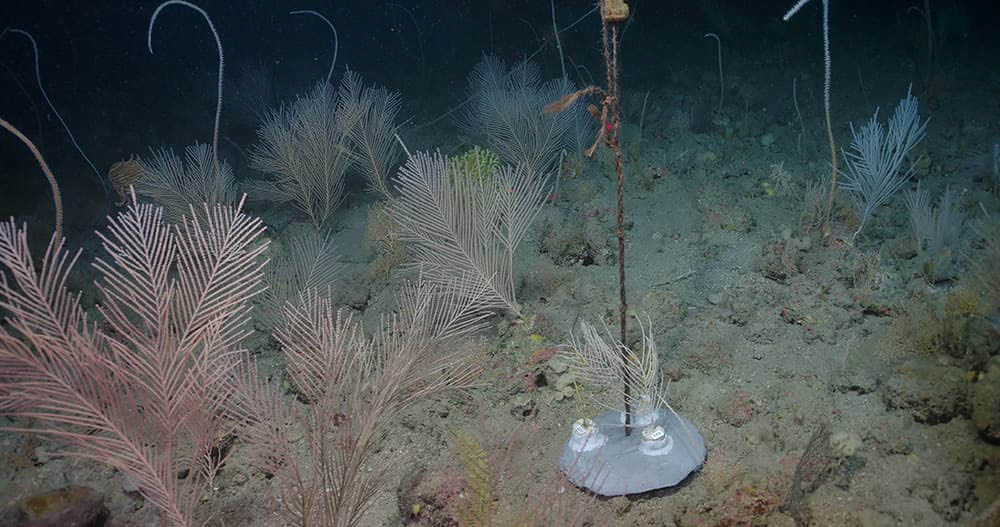
Once aboard the research vessel Pelican, the corals were transported to the offshore sites and placed on a specially developed “coral elevator”. The system lowered them through the water column before a remotely operated vehicle carefully positioned individual fragments on the seabed.
Importantly, the corals were returned to sites within one kilometre of their original collection locations.
Earlier Corals Are Surviving
The 2026 mission also provided scientists with an opportunity to inspect corals returned to the Gulf during the previous year.
That monitoring produced perhaps the most significant result of the expedition.
At a site north of Geyer Bank, NOAA reported that all of the corals outplanted in 2025 had survived and had grown.
Only 24 colonies were returned during that earlier operation, making this a developing restoration technique rather than evidence that damaged mesophotic ecosystems have already recovered. Nevertheless, survival and growth after a year on the seafloor provides an important early indication that corals maintained in laboratories can successfully make the transition back into their natural environment.
The work is particularly significant because keeping mesophotic corals in aquaria and subsequently returning them to the sea has only been attempted on a small number of occasions.
A Reef System Mostly Beyond Recreational Diving Depths
Flower Garden Banks National Marine Sanctuary protects an unusual network of reefs and banks approximately 80 to 125 miles off the coasts of Texas and Louisiana.
Although scuba divers know the sanctuary for its remarkably healthy shallow coral reefs, much of the protected area lies considerably deeper.
NOAA describes the sanctuary’s mesophotic zone as extending through habitats roughly 130 to 725 feet, or 40 to 221 metres, below the surface.
Mesophotic means “middle light”. These environments receive substantially less sunlight than shallow reefs but are not completely dark, allowing a mixture of corals, sponges, algae and other organisms to survive.
At East and West Flower Garden Banks, mesophotic coral ecosystems form a continuation of the shallower reef, although coral growth forms change as available light decreases.
Only seven banks within the sanctuary contain reef habitat within the conventional 130-foot recreational diving limit, according to Flower Garden Banks National Marine Sanctuary.
That makes remotely operated vehicles and highly specialised technical diving particularly important to understanding the sanctuary’s deeper ecosystems.
A Reference Point for Damaged Gulf Habitats
The significance of Flower Garden Banks extends beyond protecting the corals growing within the sanctuary itself.
Its relatively healthy mesophotic communities give researchers a reference against which they can compare damaged habitats elsewhere in the Gulf of Mexico.
The current work forms part of the Mesophotic and Deep Benthic Communities restoration programme, led by NOAA and the US Department of the Interior on behalf of the Deepwater Horizon Open Ocean Trustees.
More than 770 square miles of mesophotic and deep benthic habitat were injured following the 2010 Deepwater Horizon oil spill.
Scientists are therefore using healthy sites in and around Flower Garden Banks to learn how these poorly understood communities grow and reproduce, knowledge that could eventually improve restoration elsewhere.
The programme is already pushing restoration techniques into territory rarely encountered in conventional coral conservation.
Earlier in 2026, NOAA technical divers used closed-circuit rebreathers during another restoration expedition, completing decompression dives to depths of 72.5 metres. Divers planted laboratory-reared corals at 66 metres and propagated additional coral fragments directly underwater.
Researchers have also developed specialised equipment including coral elevators and a streamlined “coral torpedo” designed to transport specimens efficiently from the surface to divers working at depth.
Watching What Happens Next
Returning a coral to the seabed is only the beginning of the experiment.
During the August expedition, researchers also conducted ROV video surveys, collected biological and water samples and recovered settlement tiles. Locations of the outplanted colonies allow scientists to revisit individual corals and compare their survival and growth over time.
Further monitoring missions are already planned.
For restoration scientists, Flower Garden Banks therefore serves two roles simultaneously: a place where experimental techniques can be tested and a comparatively healthy ecosystem showing what mesophotic coral habitat can look like when it is functioning successfully.
The survival of the earlier transplants is encouraging, but the longer-term question is more important.
If laboratory-maintained corals continue growing and eventually reproduce after being returned to the seabed, scientists may have another practical tool for rebuilding some of the Gulf’s least visible and most difficult-to-reach coral communities.
THE SCUBA NEWS Link !
DemirHindiSG
05 Ekim 2026-21:47
