
 Nöbetçi Eczaneler



For our most recent Big Shot competition we asked photographers to submit images of man-made objects. The majority of entries were of shipwrecks, but there were also some great pictures of more prosaic items.
We also received some stunning shots of wildlife living in or on man-made objects, but most focused on the critter rather than the contest’s criteria, so didn’t quite make the final cut.
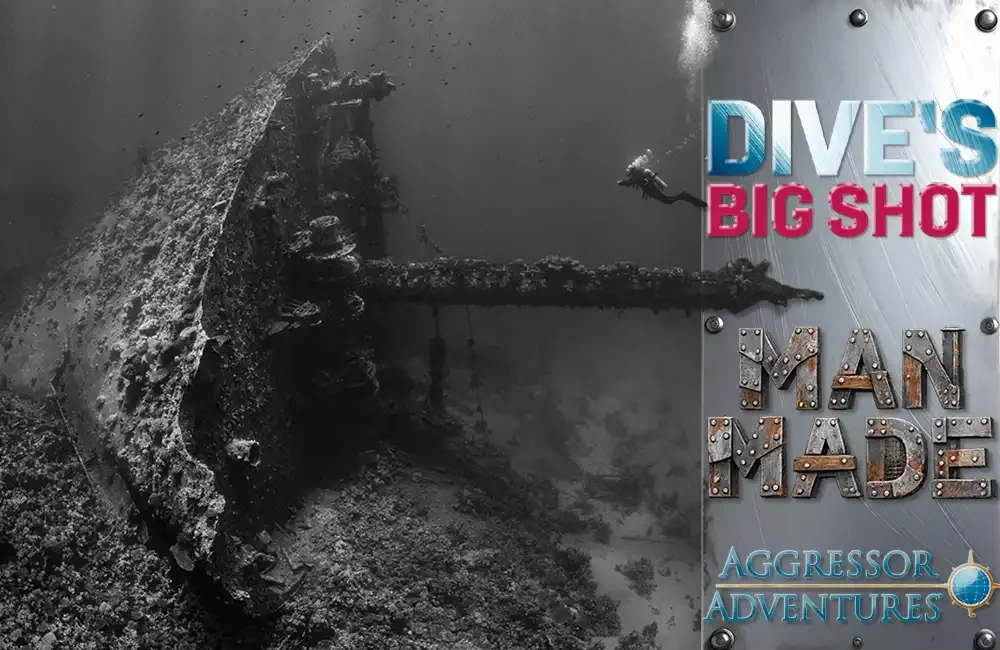
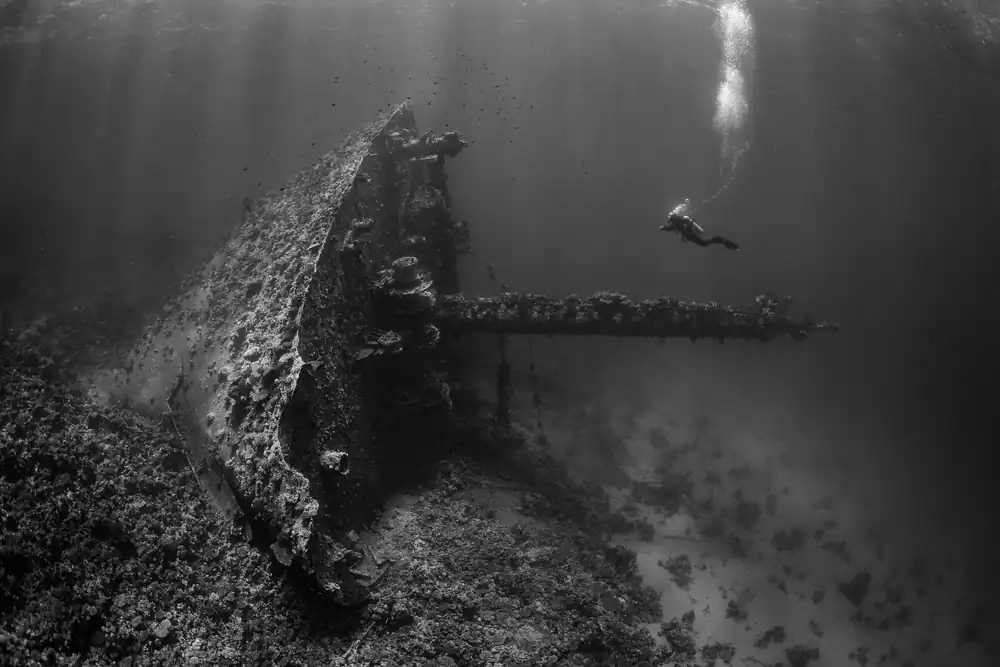
In the end, the winner was indeed a wreck, with David Bostock’s image ‘Exhale’, highlighting the scale of a the Red Sea wreck of Giannis D compared to the tiny figure of a diver hovering nearby. David wins an Aggressor Adventures liveaboard trip to Komodo worth £3,325.
Second place went to Dan Shipp’s photograph of a child’s buggy appearing to be growing, or being consumed, against a backdrop of plant life in an eerie and spookily dystopian image shot in a lake near London.
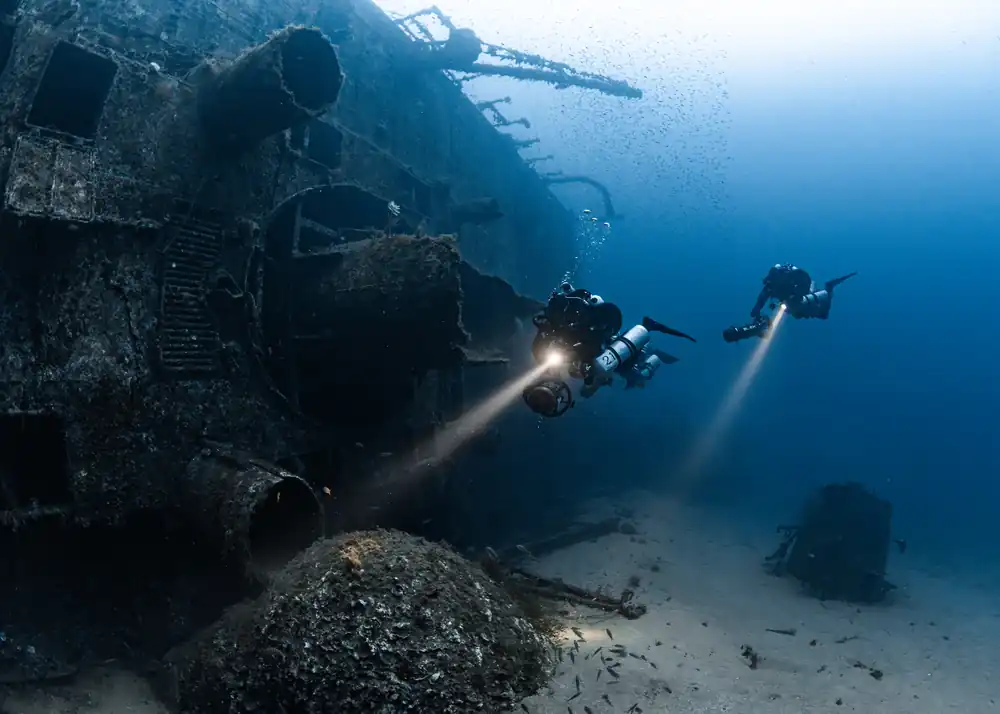
Anastasia Shmuck’s third-place picture was difficult to ignore for its superb composition and clarity, given the wreck is some 50m underwater. Dan and Anastasia win a year’s print and digital subscription to DIVE.
Highly Commended shots from Nur Tucker, Catherine Holmes, Shinto K Anto, Paul Eijkemans, Christian Horras, JillAnne McCarty and John Parker round out the best from the Autumn competition and each wins a year’s digital subscription. Thanks to all who entered.
For the final Big Shot of 2026, we’re asking photographers to send their best close-up underwater images. They don’t have to be macro shots, just as long as the subject – animal, vegetable or mineral – is ‘in your face’.
The winner will receive a Northern Red Sea liveaboard trip courtesy of Aggressor Adventures worth $2,760 – subscribe to our newsletter and follow us on social media so you don’t miss out when the competition goes live!
#DIVEsBigShotInYourFace
Winner, DIVE’s Big Shot Man-Made
‘Exhale’, by David Bostock
I live near Banbury in Oxfordshire and work as a professional wedding and boudoir photographer. I started diving in 1995 and gained my PADI Divemaster qualification in 2006. I have always been fascinated by fish and the underwater world.
I only started taking underwater photography seriously in 2022 after pottering around with a little compact housing. Underwater photography lets me share that fascination with people who don’t dive, giving them a glimpse of the life, scenery and atmosphere beneath the surface.
I took this photograph on the wreck of Giannis D in the northern Red Sea a couple of years ago on a liveaboard trip. The image is all about scale: the wreck dominates the frame, while a lone diver hovering above its fallen horizontal mast provides a human reference against the enormous structure.
For me, the bubbles bring the photograph to life. Sunlight filtering through the water backlights the diver’s exhalation, creating a bright trail towards the surface. That simple act of breathing, so familiar to every diver, gives the image its title, ‘Exhale’.
The mast draws the eye across the frame towards the diver, whose relatively small size helps convey the immensity of the wreck. The surrounding open water gives the scene a sense of space and stillness.
I chose a monochrome treatment to emphasise the texture of the encrusted metalwork and the contrast between the dark wreck and the illuminated bubbles, strengthening the photograph’s atmospheric quality.
Shot with: Canon EOS 5D Mark III with a Sigma 15mm f/2.8 fisheye lens, Nauticam 5DRS underwater housing with N120 glass dome port. Natural light, 1/160 sec, f/11, ISO 640.
Instagram: @bigblueimages
Second place
‘Leaving Childhood behind’, by Dan Shipp
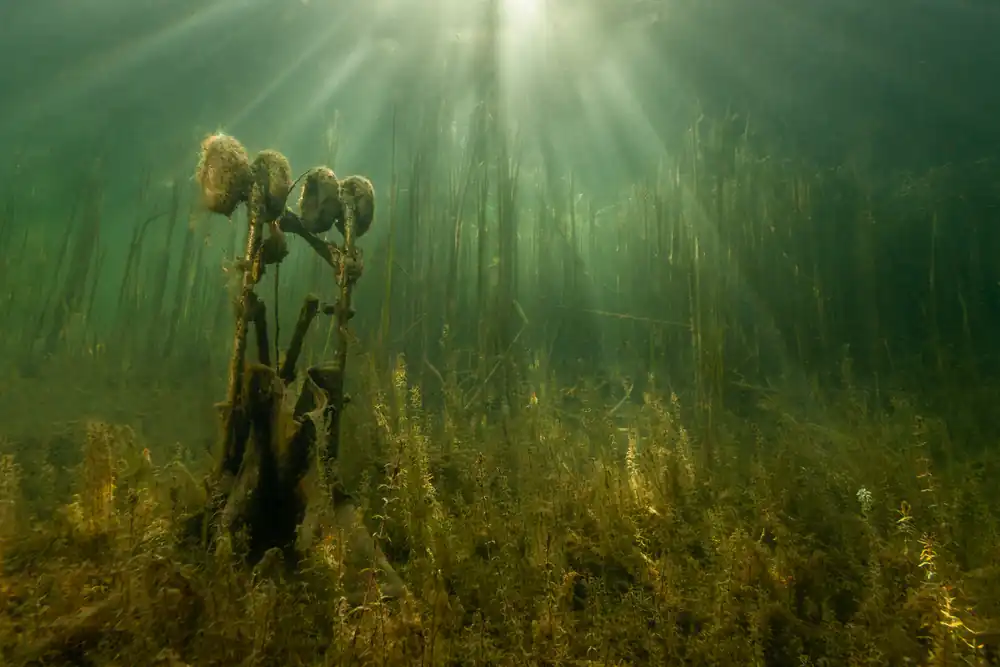
‘Leaving Childhood behind’ was taken on a warm afternoon in 2016 in the shallows of Wraysbury Lake just outside the M25. It was something of a landmark as I knew it would be my last UK dive before my wife and I started a new life as travellers, and I wanted to check my camera gear before we left on our adventures.
The discarded pram caught my attention and got me wondering – whose child no longer has a buggy, and what possessed its owner to launch it so far across the lake? Did the child walk from then on in a new chapter of independence? I was sure there was deeper meaning to this scene, a symbol of evolution that humanity was growing up, but not necessarily learning the right lessons in conservation – a subject very close to my heart.
Some resident carp were squabbling nearby and stirring up the sediment, but I returned for a second dive once they had departed. I was careful not to disturb the fine sediment, set my strobes to tickle the foreground and dialled in the settings to bring out the sun.
We ended up travelling for the most incredible 10 years of my life, and I worked as an underwater photographer for the Jean-Michel Cousteau Resort among many other experiences. My wife and I now live by the sea in Wales. I’ll leave it to you to decide on the deeper meaning of the image.
Shot with: Canon 500D and Sigma 10-20mm lens, Sea&Sea housing, 2 x YS D1 Strobes; f/8, 1/60s, ISO 200.
Third place
Isonzo Wreck, by Anastasia Shmuck
I’m an underwater photographer by passion, and an IT project manager by profession, from Germany. My diving ranges from recreational to technical and CCR diving, with a particular interest in wrecks.
Underwater photography combines the parts of diving I enjoy most: exploring places few people ever get to see and finding a way to bring them back to the surface through an image. I particularly enjoy working with divers and light to give wrecks scale, atmosphere and a sense of their environment.
This image was taken in November 2025 on the wreck of Isonzo, an Italian water tanker torpedoed by the British submarine HMS Safari off the southern coast of Sardinia on 10 April 1943, where she now lies on her starboard side at around 40–56 metres.
I wanted to photograph the wreck in a way that showed more than its structure. The divers give it scale, while the torch beams draw attention into the wreck and create a connection between them and something that has been lying underwater for more than eighty years.
We planned the positioning before the dive, but getting the frame took communication, small adjustments and waiting for the light and divers to line up.
Shot with: Sony α7C II, Nauticam housing, Canon EF 8–15mm f/4L fisheye lens, f/7.1, 1/80s, ISO 2000.
Instagram: @theunderwaterpanda
Highly commended
‘Clownfish and Toothbrush’ by Nur Tucker
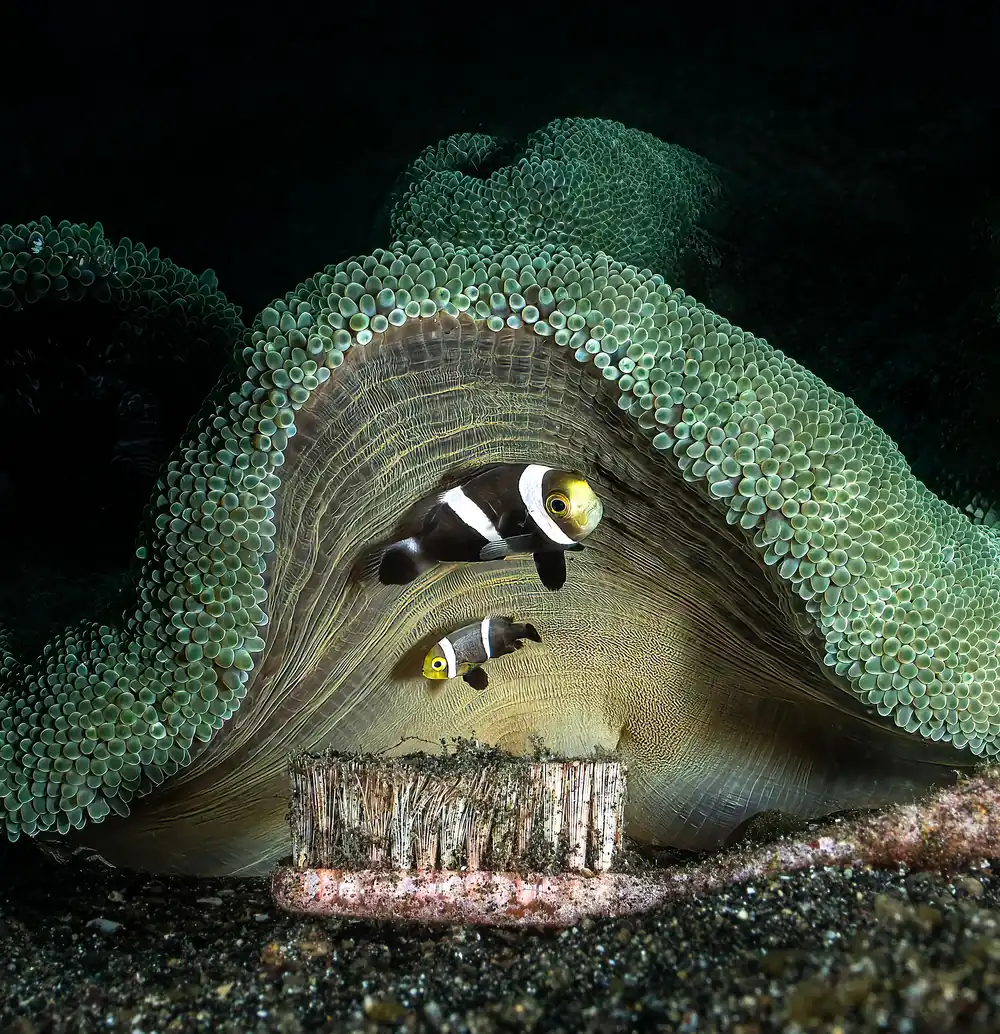
While diving in Lembeh, I came across this busy anemone with two clownfish – and, incongruously, a discarded toothbrush lying directly in front of it. My first instinct was to move the toothbrush out of the frame and photograph a more pristine scene. Instead, I decided to leave everything exactly as I found it.
The toothbrush seemed to tell a more important story. Against the beauty and intricacy of the anemone and its inhabitants, this very ordinary piece of human waste felt particularly intrusive – a small reminder that our discarded objects can find their way into even these extraordinary underwater habitats.
I made the photograph with the toothbrush deliberately prominent in the foreground, hoping the contrast would provoke a thought about our relationship with the ocean and what we leave behind. After taking the photograph, I removed the toothbrush from the reef.
Shot with: Nikon D500 and Sigma 17–70mm lens, focal length 58mm, 2 x Inon Z-240 strobes; f/18, 1/80s, ISO 200
Instagram: @nurtuckerphotography
Highly commended
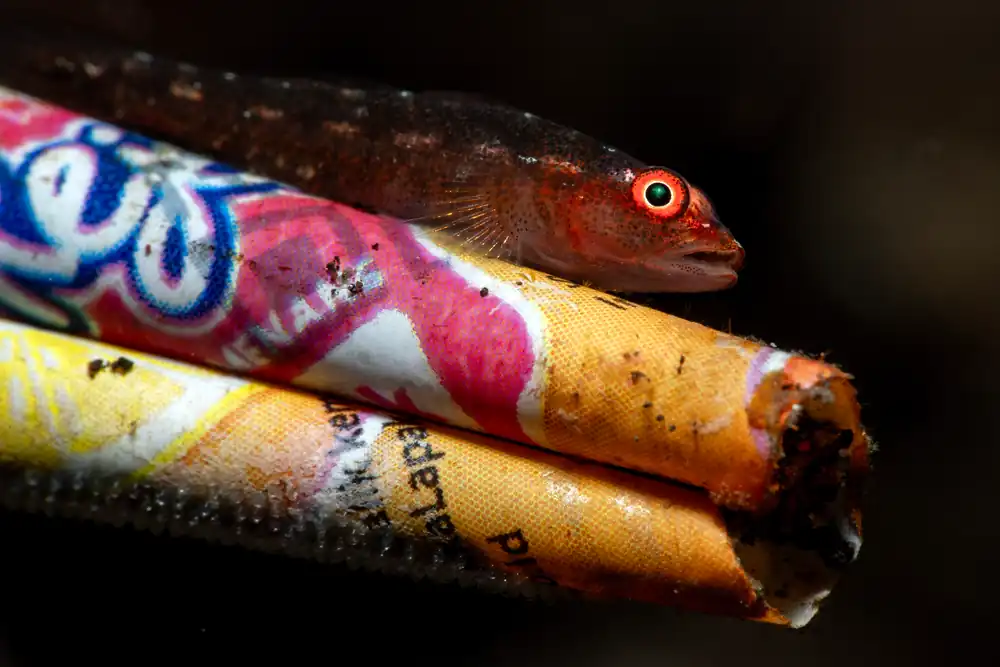
‘Plastic Nest’, by Paul Eijkemans
I am from the Netherlands and work as an executive coach for various large companies in various countries. I have been diving and taking underwater photographs for the past 25 years. My photography became more serious after my father passed away; he left me a small inheritance, and I used it to buy a completely new setup.
An investment like that had to pay off, so I started dedicating more time to underwater photography. It became a continuous cycle of taking photographs, reviewing them, learning, improving, and trying to create better images.
I have been a finalist in several major competitions, including Nature Photographer of the Year, Ocean Art, and Ocean Geographic Pictures of the Year. What draws me most to underwater photography is the extreme sense of focus it gives me. Sometimes I can spend an hour with a single subject, simply trying to get the shot exactly right, a level of concentration that gives me an enormous sense of peace.
‘Plastic Nest’ shows a goby that has laid its eggs on a piece of rolled-up plastic in Tulamben, Bali. Although the plastic is being used for a good purpose in this case, it remains a grim reminder of the vast amount of waste polluting our seas and oceans.
Shot with: Nikon Z7 in a Nauticam housing, Nikon 105mm macro and Nauticam SMC-1 diopter, Inon Z330 strobes; f/32, 1/200s, ISO 200.
Facebook: @pc.eijkemans
Highly commended
‘Architecture of hope’, by Cathy Holmes

Baros Island resort is well known for its pioneering, long-running coral reef restoration programmes in the Maldives. It is one of the major conservation resort centres for coral regrowth. Through their resident Marine Centre team, guests can actively participate in coral gardening, transplanting living fragments onto specially designed coral tables or ‘Coral Cubes’ to help regenerate the island’s celebrated house reef.
Here a new reef can be seen thriving close to the pier legs of the restaurant complex, with coral colonies covering the coral frames below, home already to anemones with clownfish and a huge biodiversity of reef fish and countless smaller reef creatures.
Shot with: Nikon D500, Nikon 8-15mm fisheye, Retra Pro flashes; f/18, 1/60s, ISO 400
Instagram: @catherineholmes.photography
Highly commended
Lockheed Tristar, by Christian Horras
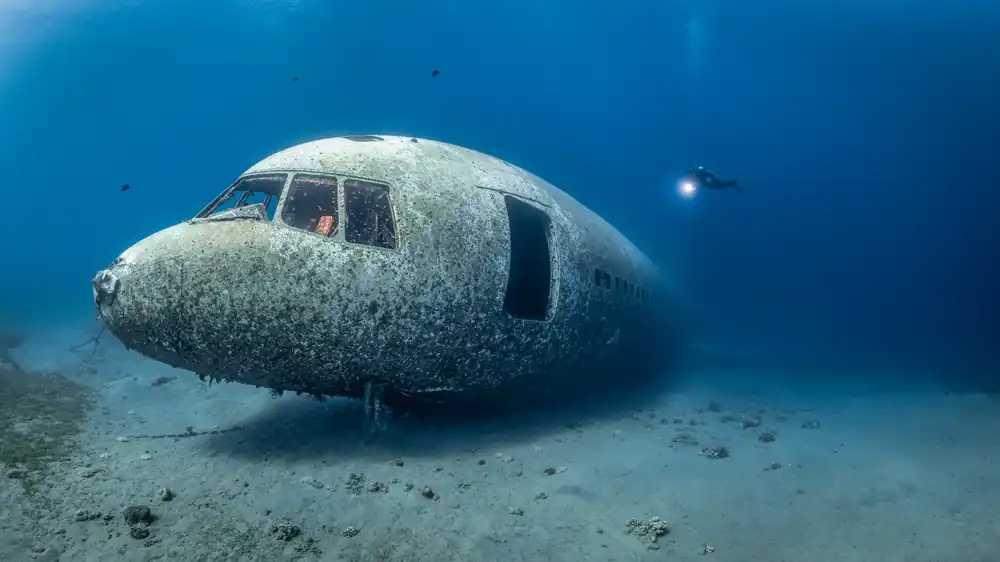
This picture was taken in Aqaba, Jordan. It is a composite of several shots, merged to a panorama. The plane is a Lockheed L-1011 Tristar, a popular dive site in Jordan. I used some remote lighting to highlight the cockpit.
Shot with: Nikon D850 with Nikon 8-15mm Fisheye lens in a Seacam housing; f/10, 1/100s, ISO 200.
Instagram: @christian.horras
Highly commended
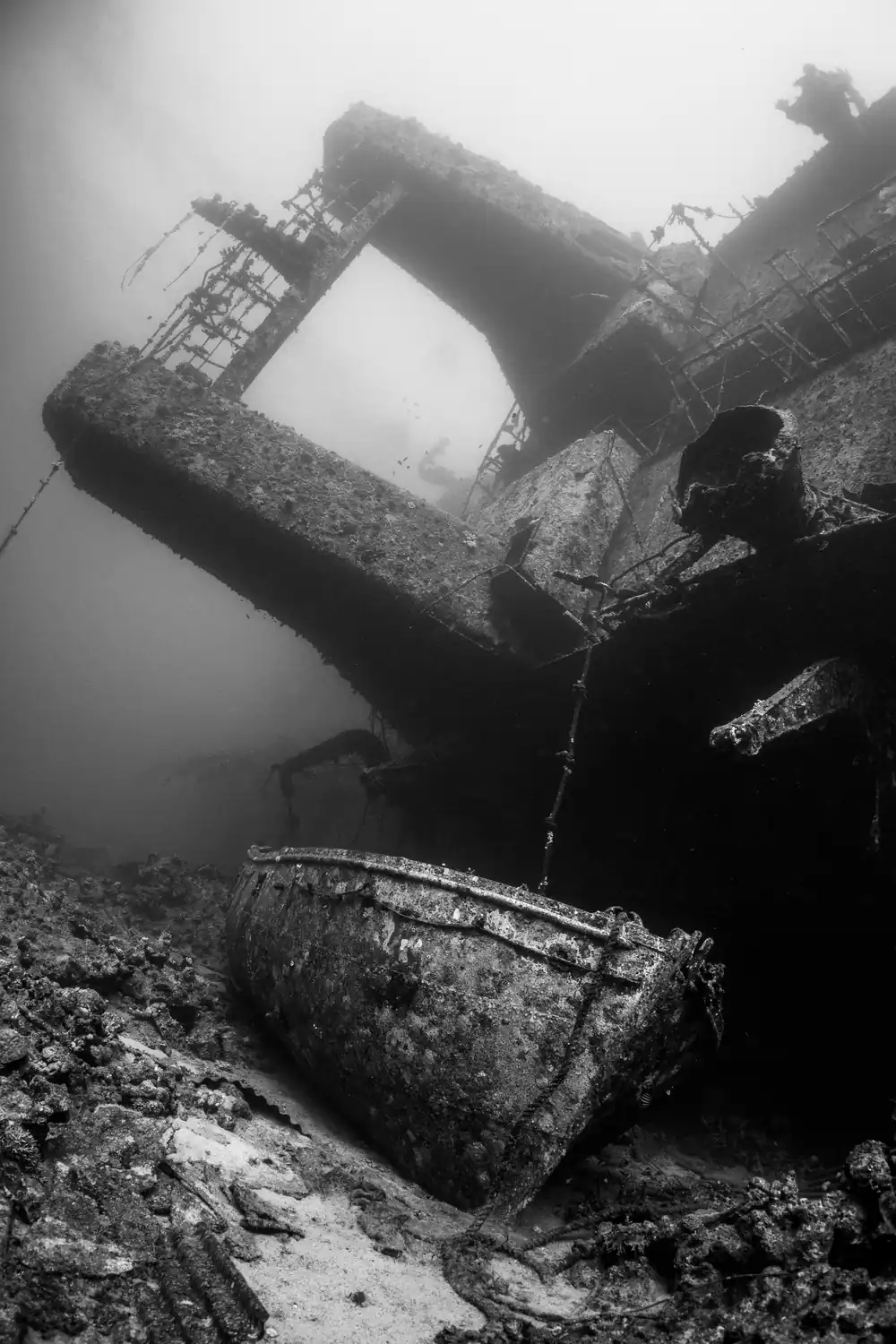
The Salem Express, by John Parker
I have been diving since 1993 and am a BSAC Advanced Diver and OWI with around 1,600 dives. I find diving with a camera most relaxing and rewarding.
This image was taken on a ‘Wrecks and Brothers’ trip onboard Ghazala Adventure. I have dived the wreck many times since 1996, not so long after the tragedy of the sinking. Diving the wreck is still a shocking experience given the amount of victims’ belongings still in place.
This was the first time I used my new camera rig and I wanted to test the capability of the camera and WWL-C on a large subject. It’s not as wide as a fisheye but I think it gives a nice perspective of the wreck. I dialled in the settings and composed the picture with the lifeboat strong in the foreground, which tells the tragic story of the wreck.
Shot with: Nikon Z50II, Nikkor 16-50mm at 16mm, Nauticam WWL-C, Natural Light; f/10, 1/80s, ISO 640
Instagram: @JohnStrummer77
Highly commended
‘Old Wives Fish’ by JillAnne McCarty
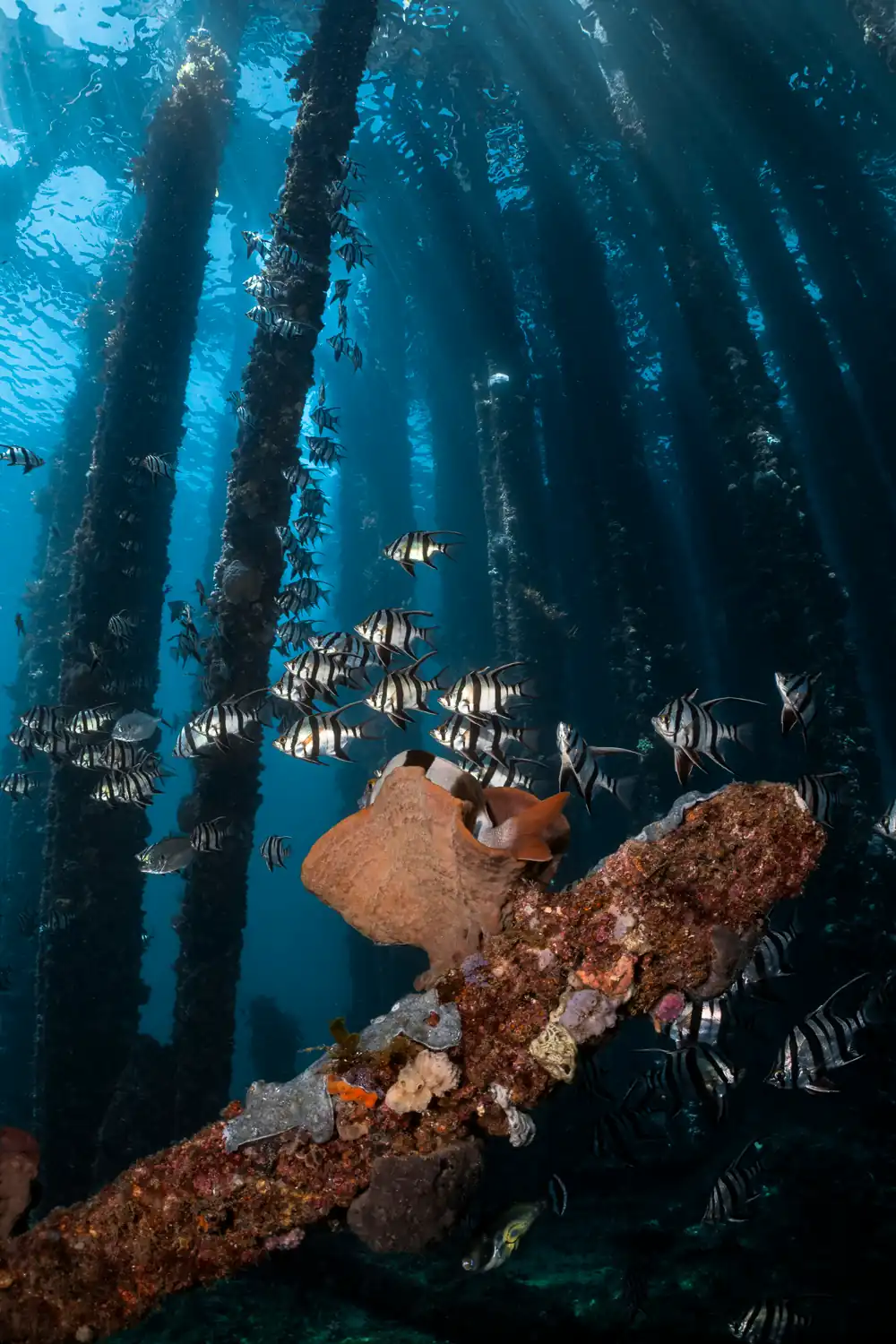
Old wives fish (Enoplosus armatus), named for the grumbling sound they make with their teeth, are endemic to temperate Australian waters. Territorial carnivores, they are shown gathered amongst the pilings of the Rapid Bay Jetty, South Australia.
What began as a man-made structure built nearly 100 years ago became a vital marine haven for these fish and the invertebrates they depend on for food. This image preserves a moment of vibrant life under the old jetty’s pylons, made just prior to a recent devastation of this ecosystem by a severe algal bloom from agricultural runoff.
It stands as a visual record of an artificial reef’s beauty and the fragility of our marine environment. I used a slow shutter speed to allow the ambient light to set the tone for this image, with a touch of strobe on the foreground fish.
Shot with: Nikon D850 with 28-70mm zoom lens on 38mm, Nauticam housing, WACP, Retra Pro strobes, f/18, 1/60s, ISO 400.
Instagram: @jillmccartyimages
Highly commended
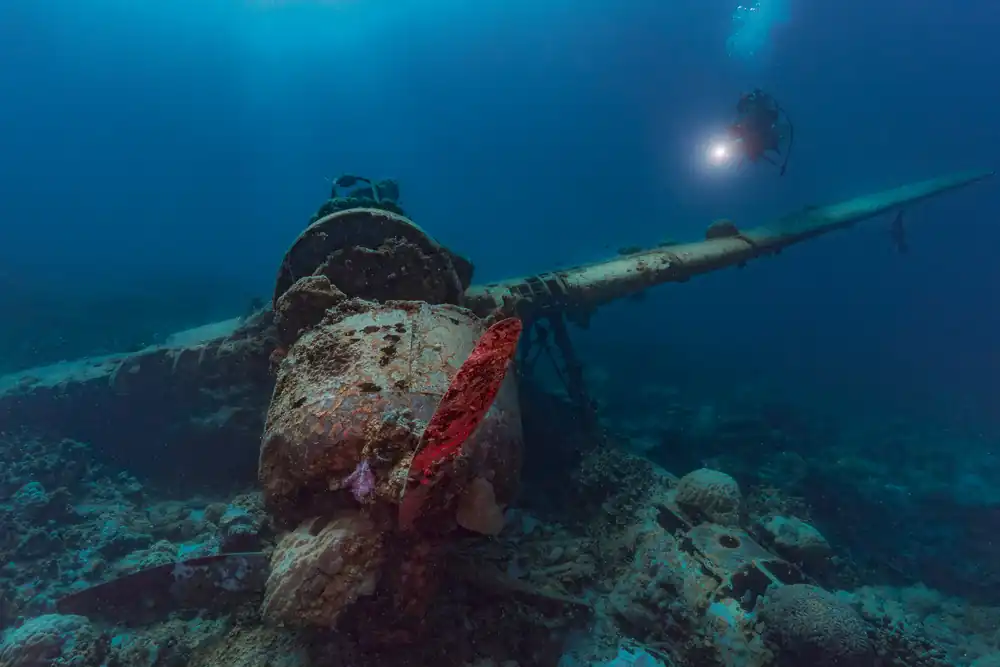
‘Jake Seaplane’ by Shinto K Anto
I’m Shinto, an underwater photographer originally from Kerala, India, now based in Singapore. I’ve been diving and photographing the underwater world for around a decade.
I love the opportunity to enter a world that most people rarely get to see, and underwater photography has taught me to slow down, observe, and look for stories – whether in the behaviour of a tiny reef creature, a vast school of fish, or a historic wreck slowly becoming part of the ecosystem around it.
This image was taken while diving the Japanese Navy E13A-1 seaplane wreck in Palau, known locally as the ‘Jake’. After decades underwater, the aircraft has become part of the reef, with corals and marine life gradually reclaiming the wreck.
I wanted to show both the scale of the aircraft and the experience of exploring it underwater, so I waited for my buddy to enter the frame. Her dive light in the background adds a sense of scale and brings the scene to life, while the heavily encrusted aircraft tells its own story of time and transformation.
Shot with: Sony α7R III, with Tamron 17–28mm lens, Isotta Housing, f/22, 1/125s, ISO 500
Instagram: @floodedcamera
The post DIVE’s Big Shot Man-Made – the winners appeared first on DIVE Magazine.
