
 Nöbetçi Eczaneler





By Mark ‘Crowley’ Russell
The Divers Alert Network’s insurance arm, DAN Risk Retention Group, Inc (DAN RRG) has filed a federal court action seeking clarification of its insurance obligations in connection with the wrongful-death lawsuit brought by the family of Dylan Harrison.
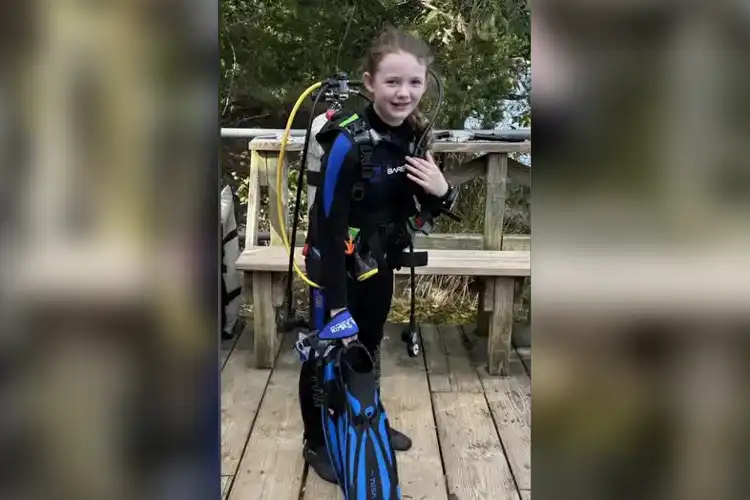
Twelve-year-old Dylan, from Rockwall, Texas, died of drowning during an Open Water training course at the Scuba Ranch inland dive site in Terrell, Texas, in August 2025.
Her parents subsequently filed a wrongful-death lawsuit alleging that their daughter’s death was preventable, and that systemic safety failures within the recreational scuba industry were to blame.
DAN RRG filed the action in the US District Court for the Northern District of Texas on 16 June, and names the organisations and individuals involved in the underlying lawsuit, including PADI, NAUI, the Scuba Ranch, dive operator ScubaToys, Dylan’s instructor William Armstrong and his divemaster Jonathan Roussel.
The case has been reported in places as ‘DAN sues PADI and NAUI’, which – in a strict interpretation of the term – is correct, but the filing is separate from the wrongful-death lawsuit and does not seek to determine who was responsible for Dylan’s death, nor any financial damages that may arise as a result.
Instead, DAN RRG is asking the court to decide whether its insurance policies require it to pay for the legal defence of the defendants and whether it would be responsible for any settlement or damages that might result from the case.
In legal terms, the action is known as a ‘declaratory judgment’, which allows a court to clarify the rights and obligations of parties under a contract while the main lawsuit proceeds in parallel.
Such cases are commonly used when an insurer and its policyholders disagree about the scope of insurance cover.
In its declaratory judgment, DAN RRG argues that allegations made in the Harrison family’s lawsuit about scuba instruction, supervision, training standards and instructor certification are excluded under the relevant insurance policies, meaning it should not have to fund the defendants’ legal defence or pay any damages if they are ultimately found liable.
DAN RRG also argues that some organisations are covered only as ‘additional insureds’, a limited form of cover that does not apply to the allegations made against them in the Harrison family’s lawsuit.
Although the action has only just been filed, the outcome could have significant implications for the defendants because it may determine who pays the costs of defending the lawsuit and whether insurance funds would be available to satisfy any financial settlement or damages awarded by the court.
Beyond this case, however, the filing could potentially have implications for the scuba diving industry as a whole.
Liability insurance for dive businesses and dive professionals is mandatory in almost every corner of the world – certainly no responsible dive outfit would operate without it – and it is a cost that is inevitably passed on to the consumer.
A ruling that the defendants in the Dylan Harrison case are not covered by their insurance policy, before any judgment has been made regarding the underlying claims of negligence, may have a knock-on effect on how legal risks are managed within the industry.
Court rulings on policy exclusions may well influence the terms and conditions of future insurance coverage, and the premiums associated with it.
It’s also possible that changes to insurance coverage and policy exclusions may have an impact on diver training standards.
If insurance providers decide that certain training activities present an unacceptable risk, operators and agencies may be required to adopt stricter procedures or limits in order to obtain cover – for example, by reducing the instructor-to-student ratio when children are involved in a course, an issue that has already been raised in the Dylan Harrison case.
The post DAN insurer seeks ruling on insurance obligations in Dylan Harrison litigation appeared first on DIVE Magazine.
