
 Nöbetçi Eczaneler






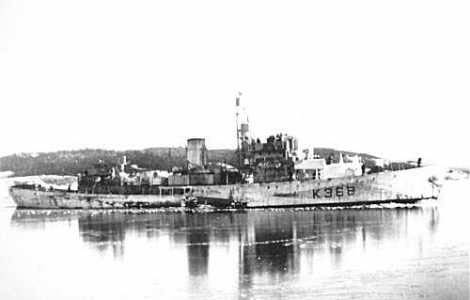
The UK government has taken a decisive step in tightening control over military wreck sites, with a new protection order highlighting a growing shift in how historic wrecks are managed, and how divers will be allowed to interact with them.
According to a report in Divernet, the Ministry of Defence has designated a wreck site as a Controlled Site, one of the strictest levels of protection under UK law, following controversy surrounding the recovery of a ship’s bell believed to be linked to the Second World War corvette HMCS Trentonian.
While the specific designation has not yet been widely reported beyond specialist diving media, the move aligns with a broader and increasingly visible policy direction. Military wrecks are no longer being treated as accessible heritage sites; they are being repositioned as protected war graves and sensitive historical assets.
For divers, this marks a significant shift.
What a Controlled Site Actually Means
Under the UK’s Protection of Military Remains Act, a Controlled Site designation effectively places a wreck under strict legal protection. Unlike “Protected Places”, which still allow limited diving under certain conditions, Controlled Sites are subject to far tighter restrictions.
In practical terms, this can mean:
- No penetration diving
- No removal or disturbance of artefacts
- Restricted or prohibited access without a licence
Enforcement has historically been inconsistent, but recent actions suggest that is changing.
The Bell That Triggered a Response
At the centre of the latest development is the reported recovery of a ship’s bell linked to HMCS Trentonian, a Royal Canadian Navy vessel sunk in 1945.
The raising of artefacts from military wrecks has long existed in a grey area between salvage, heritage recovery, and outright looting. However, sentiment around these sites is shifting rapidly, particularly where loss of life is involved.
The recovery appears to have acted as a flashpoint, prompting authorities to move more decisively in asserting control and reinforcing legal protections.
A Wider Crackdown Is Already Underway
This is not an isolated incident.
In recent months, there has been increasing pressure from authorities and heritage organisations to treat all military wrecks as “hands-off” sites. The Ministry of Defence has signalled a stronger stance, with growing emphasis on:
- Preservation over exploration
- Legal enforcement over informal diver etiquette
- Recognition of wrecks as war graves
For the diving community, this represents a fundamental change in how some of the most iconic sites may be accessed in the future.
What This Means for Divers
For recreational and technical divers alike, the implications are clear.
Wreck diving in UK waters is entering a new phase, where:
- Legal awareness will become essential
- Historic freedoms may be reduced
- Some sites could become effectively off-limits
This does not signal the end of wreck diving in the UK, but it does mean that the balance between exploration and preservation is shifting firmly toward protection.
Divers who have long operated under informal codes of respect may now find those expectations formalised into enforceable law.
A Turning Point for Wreck Diving
Whether this latest designation proves to be an isolated enforcement action or part of a wider rollout remains to be seen.
What is clear is that the direction of travel has changed.
The era of unrestricted access to military wrecks is steadily being replaced by a framework where heritage, legality, and ethics take priority. For divers, operators, and training agencies, adapting to that reality will be essential.
THE SCUBA NEWS Link !
DemirHindiSG 23 Mart 2026-00:19
