
 Nöbetçi Eczaneler






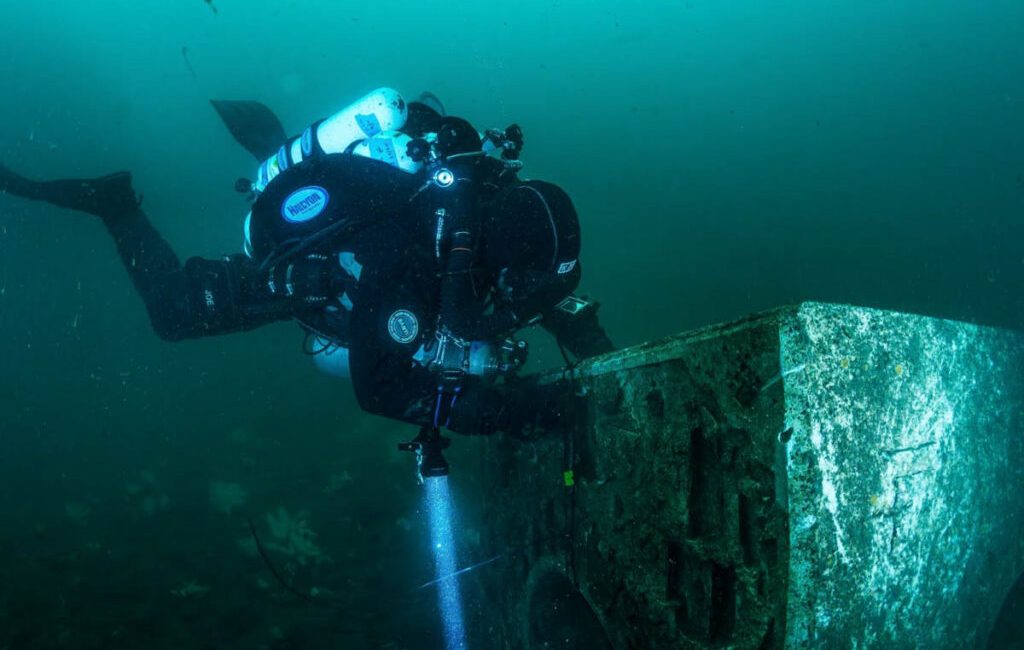
A team of volunteer divers has recorded a 99% survival rate among adult native oysters attached to an experimental reef off the coast of North East England, providing an encouraging early indication that efforts to rebuild a habitat lost from the region more than a century ago are working.
Seven divers from Project Baseline UK carried out the underwater survey off Whitburn, South Tyneside, as part of the Wild Oysters Project: Tyne and Wear.
Working at depths of around 25 metres in the North Sea, the divers inspected a one-hectare restoration site containing specially designed Oyster Reef Cubes and thousands of native oysters.
Their findings suggest that the reef has successfully made it through a critical first winter.

Divers Return To The Reef
The restoration site was established in October 2025 as part of a five-year project being delivered by ZSL and Groundwork North East & Cumbria.
Twenty textured Oyster Reef Cubes were installed on the seabed alongside 60,000 juvenile oysters and approximately 100 tonnes of scallop shell cultch, providing a stable surface on which a new reef could develop.
The cubes themselves were seeded with around 4,000 adult native oysters.
When Project Baseline UK’s volunteer divers returned in July, nine months after installation, all 20 structures remained securely in position despite the exposed conditions off the North East coast.
More importantly, 99% of the adult oysters that remained attached to the cubes were found alive and healthy.
Oysters that had become detached were also observed alive on the seabed within the restoration area.
Sampling showed that juvenile oysters, known as spat, had survived their first winter despite periods of low temperatures and reduced food availability.
For a restoration project exposed to North Sea wave energy, changing water conditions and predation, that survival represents an important early milestone.
Divers Find Marine Life Moving In
The dives were not simply about counting oysters.
Survey teams also documented how other marine species were beginning to use the artificial reef.
Fish were recorded around the Oyster Reef Cubes, while sea urchins and velvet swimming crabs were found sheltering within the structures. Shrimp and squat lobsters were among the most abundant species observed across the wider restoration area.
Early analysis of underwater video collected from the site suggests the structures are already functioning as habitat rather than simply serving as platforms for oyster restoration.
Dr Ashleigh Tinlin-Mackenzie, Marine Ecology Technical Lead at Groundwork North East & Cumbria, said the results demonstrated both the performance of the structures and the importance of the divers collecting the data.
She said the organisation was grateful to the Project Baseline UK volunteers for gathering information at 25 metres in the cold North Sea, adding that seeing oysters survive alongside fish, crabs, sea urchins, shrimp and squat lobsters gave the project confidence in the restoration approach.

Putting Diving Skills To Work
For Project Baseline UK, the work demonstrates another role recreational and technical diving communities can play in marine conservation.
The organisation brings together skilled volunteer divers to document underwater environments and collect data in collaboration with scientific and conservation organisations.
Marcus Rose of Project Baseline UK said working with Groundwork and ZSL had allowed the group’s volunteers to put their diving skills to practical use while gathering data relevant to active conservation work.
He described seeing the project develop from its initial surveys through to the deployment and subsequent monitoring of the artificial reef as particularly exciting.
That involvement is especially valuable at a site where direct observation of what is happening 25 metres beneath the surface would otherwise require considerably different resources.

Rebuilding A Lost North Sea Habitat
Native oyster reefs once formed part of Britain’s coastal ecosystems but have suffered a dramatic decline.
According to ZSL, native oyster numbers across the UK have fallen by more than 95% since the 1800s as a result of pressures including over-harvesting, habitat loss, pollution and disease.
Oyster reefs disappeared from the Whitburn region more than a century ago.
Their importance extends beyond the oysters themselves. Native oysters filter seawater while the complex three-dimensional reefs they create can provide feeding grounds, shelter and nursery habitat for numerous other species.
The Whitburn project is therefore testing whether an oyster ecosystem can be rebuilt in exposed open-water conditions rather than simply maintaining oysters in protected coastal nurseries.
Another 16,000 Oysters Added
Results from the monitoring dives have already influenced the next stage of the project.
Custom-designed cages have been installed inside the central openings of the Oyster Reef Cubes. These contain mixtures of adult and juvenile oysters, allowing the project to establish multiple generations while attempting to reduce predation during vulnerable stages of development.
A further 1,000 mature native oysters and 15,000 juvenile oysters have now been deployed at the restoration site.
The project team plans to continue monitoring the reef and adapting its restoration methods as more data becomes available.
Celine Gamble, Senior Partnerships Manager at ZSL, said restoring oyster habitat in the open North Sea presents significant challenges, including wave energy, water quality, changing environmental conditions and predation.
The survival of both adult and juvenile oysters through their first winter therefore provides an encouraging result, but the project remains at an early stage.

What Happens Next
The Wild Oysters Project: Tyne and Wear is currently supported through the Stronger Shores partnership, led by South Tyneside Council with Defra funding through the Flood and Coastal Innovation Programmes managed by the Environment Agency.
Current Stronger Shores programme funding is due to end in 2027, and the project team is seeking further grant funding that could allow oyster restoration work to expand along the North East coast.
For now, the reef off Whitburn provides something conservationists did not have a year ago: a functioning experimental oyster habitat in the open North Sea and measurable evidence of how it has performed through its first winter.
And much of that evidence has been gathered the old-fashioned way, by divers descending to the seabed and seeing for themselves what is happening below the surface.
THE SCUBA NEWS Link !
DemirHindiSG
23 Eylül 2026-16:51
