
 Nöbetçi Eczaneler






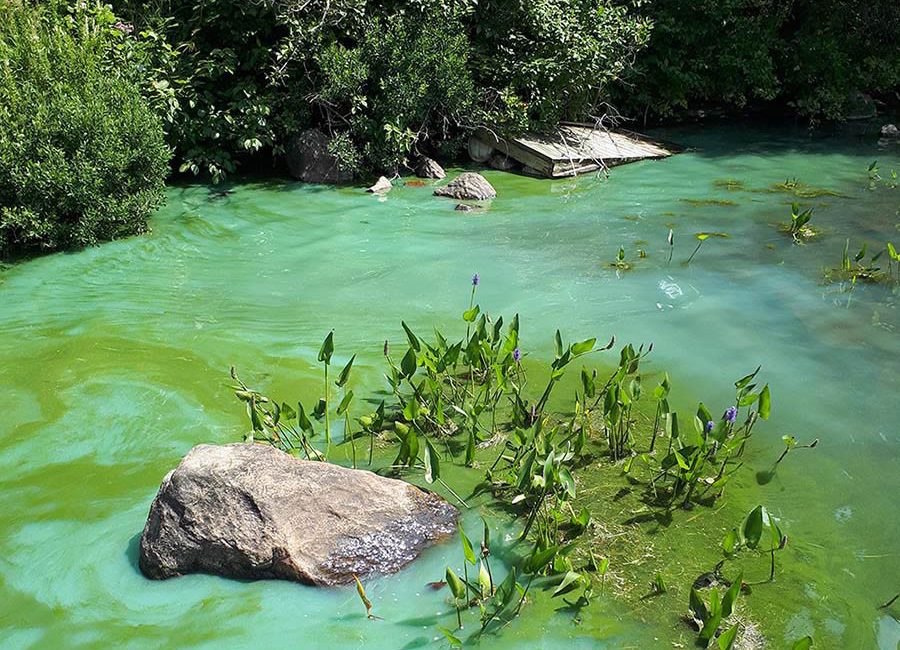
Blue-green algae, also called cyanobacteria, are tiny, plant-like microorganisms that naturally inhabit bodies of freshwater such as:
- lakes
- ponds
- rivers
- streams
These organisms grow best in shallow, slow-moving, and warm waters, though they can also be found in deeper or cooler areas. Typically, they are not visible to the naked eye under normal conditions.
Some types of cyanobacteria can release cyanotoxins, which pose health risks to both humans and animals.
Under certain conditions, the population of blue-green algae can grow rapidly, forming dense accumulations or surface scums known as blooms. These blooms occur most frequently in late summer or early autumn but may appear at other times as well. Their development is encouraged by:
- still water
- elevated temperatures
- an increase in nutrients, particularly phosphorus
It’s important to note that blooms don’t necessarily appear in the same locations every year.
The exact causes of specific harmful algal blooms (HABs) are not always well understood. In some regions, they seem to occur naturally, while in others, they are thought to be influenced by human actions. Different types of algae are capable of causing HABs, and each species has unique environmental conditions that support its growth. In various parts of the world, a rise in the frequency and intensity of HABs has been linked to increased nutrient runoff from human sources. However, in some coastal areas, HABs happen regularly due to natural processes like upwelling, which is driven by the movement of ocean currents.
How to recognize blue-green algal blooms
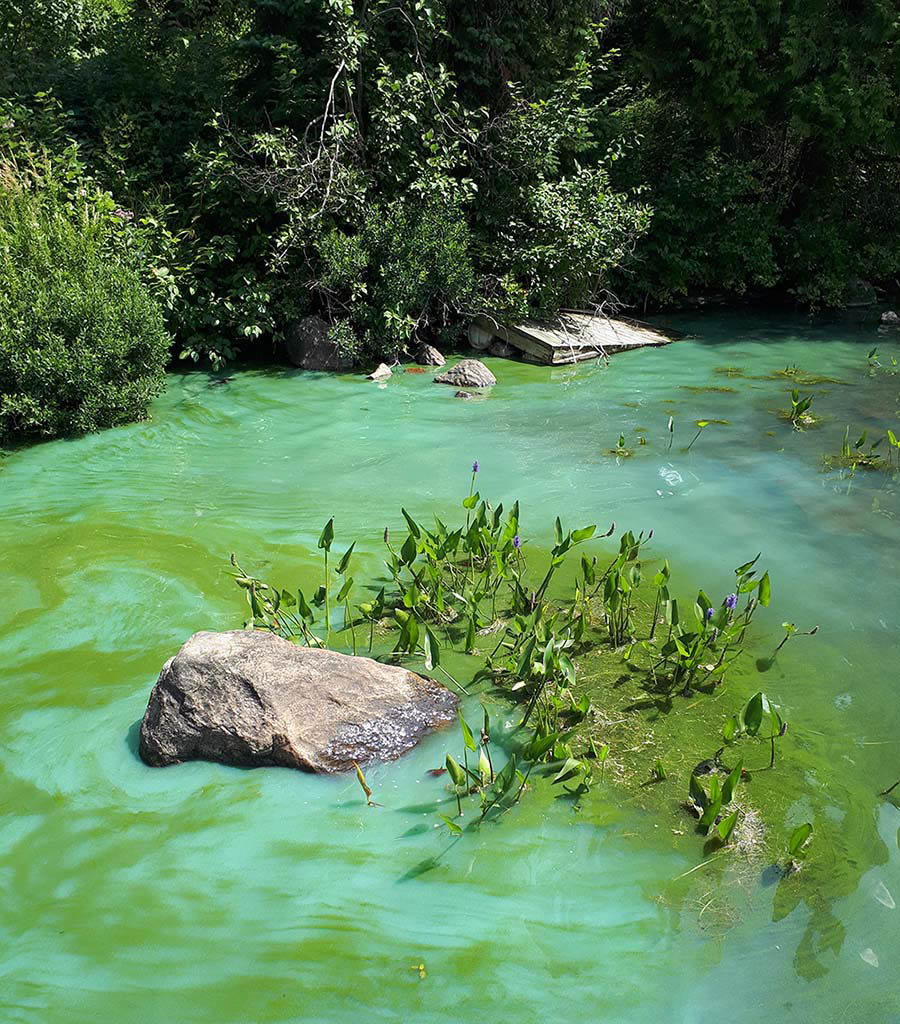
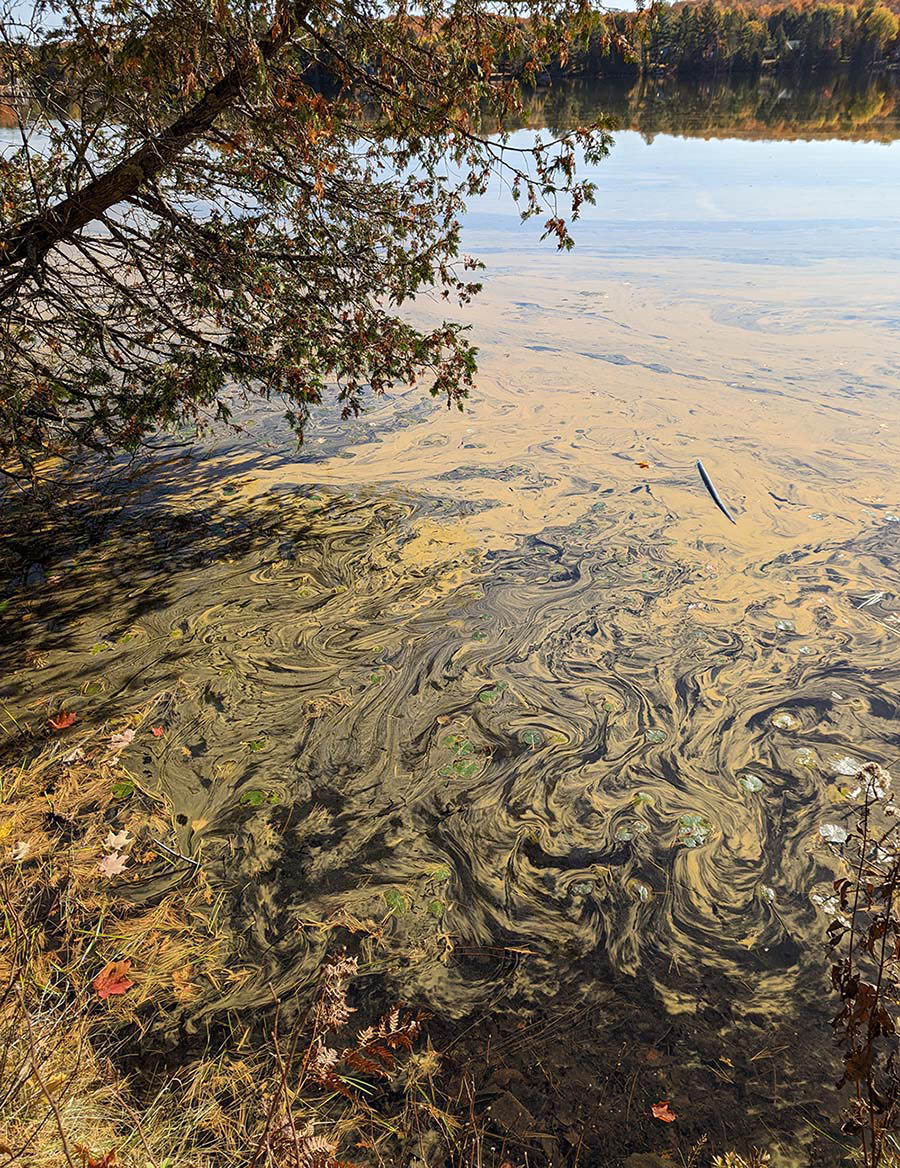
Dense blue-green algal blooms can look like green pea soup or turquoise paint. They can also be other colours such as yellow, purple, red or brown.
When the cells are very dense, they may form scums or solid-looking mats.
What to do if you see a blue-green algal bloom
If you think you see a blue-green algal bloom:
- assume that toxins are present, because you can’t tell if toxins are present just by looking at a bloom
- avoid contact with the water, do not bathe or swim in it
- do not drink the water
- restrict pet and livestock access to the water
- report it
Report a suspected blue-green algal bloom
Submit a report online, or call the Spills Action Centre 24 hours a day, 7 days a week
THE SCUBA NEWS Link !
DemirHindiSG 15 Temmuz 2025-20:14
