
 Nöbetçi Eczaneler





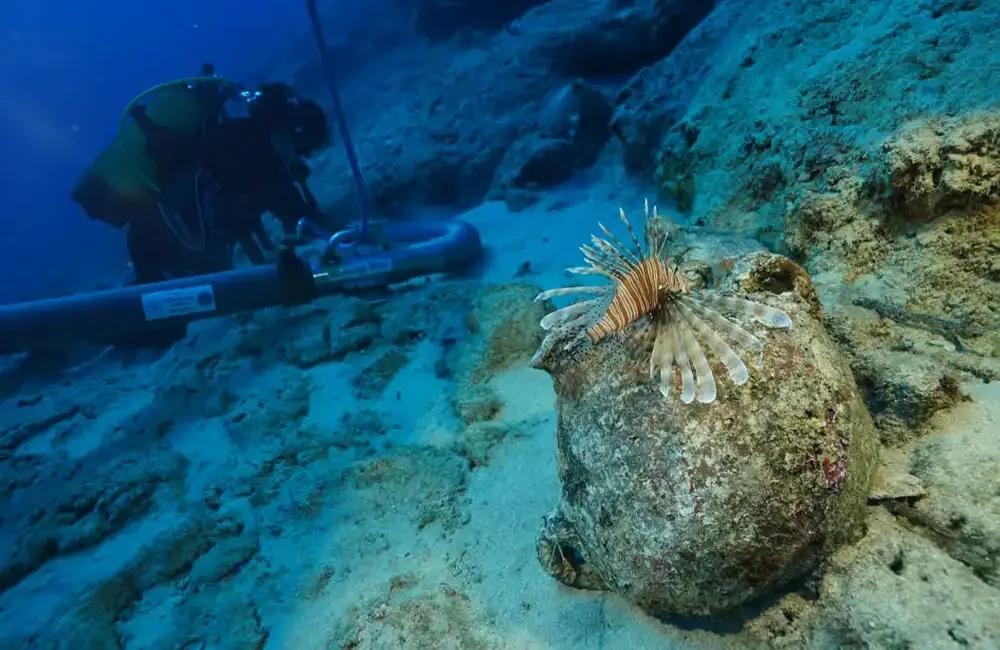
Underwater archaeologists excavating an ancient shipwreck off Turkey’s Mediterranean coast have recovered ceramic storage jars dating back as much as 4,700 years, potentially making it the oldest known shipwreck in the world.
The discovery, announced by Turkey’s Ministry of Culture and Tourism on 14 October, follows several years of research near Kekova Island, off the coast of Antalya.
More than 30 large ceramic amphorae have been found scattered across a rocky slope at a depth of approximately 30m, together with three stone anchors.
The vessel is believed to have been a merchant ship which sank during the Early Bronze Age, between 2700 and 2400 BC, around the time the Great Pyramid of Giza was being constructed in Egypt.
Turkey’s Minister of Culture and Tourism, Mehmet Nuri Ersoy, announced the latest findings on social media.
‘In the Blue Homeland, we are bringing to light the traces of the world’s oldest shipwreck,’ he said in a post on X. ‘We continue to illuminate Anatolia’s maritime history with new discoveries, preserving our underwater cultural heritage to pass it on to future generations.’
The site was documented in 2024 by a team from Akdeniz University, led by underwater archaeologist Associate Professor Hakan Öniz.
A challenging wreck excavation
Mavi Vatan’da, dünyanın en eski batığının izlerini gün yüzüne çıkarıyoruz. Kekova’da yürüttüğümüz su altı kazılarında çıkarılan, 4.700 yıl öncesine uzanan amforalar, Anadolu kıyılarının deniz ticaretindeki köklü geçmişine ışık tutuyor. Zeytinyağı ya da şarap taşımak için kullanıldığı düşünülen bu kaplar, Doğu Akdeniz’deki ticaretin ve kültürler arası etkileşimin önemli izlerini taşıyor. Kil analizleri, amforaların muhtemelen Ürdün Vadisi’ndeki atölyelerde üretildiğine işaret ediyor. Benzer örneklerin Mısır, Troya ve Girit’te de bulunması, farklı coğrafyaları deniz yoluyla birbirine bağlayan ticaret ağlarını anlamamız açısından büyük önem taşıyor. Buluntular arasında, üzerinde dokuz farklı işaret ve gövdesinde iki delik bulunan bir amfora da dikkat çekiyor. Peynir ya da tereyağı yapımında yayık olarak kullanılmış olabileceği düşünülen bu kap, denizcilerin uzun yolculuklarda kendi yiyeceklerini üretmiş olabileceklerine dair ipuçları sunuyor. Anadolu’nun denizcilik tarihini yeni bulgularla aydınlatmaya, su altındaki kültürel mirasımızı koruyarak gelecek nesillere aktarmaya devam ediyoruz. Kazıların bilimsel sorumluluğunu üstlenen Doç. Dr. Hakan Öniz’i ve emeği geçen tüm çalışma arkadaşlarımızı kutluyorum.
— Mehmet Nuri Ersoy (@MehmetNuriErsoy) October 14, 2026
Preliminary investigations suggested that the remains were considerably older than other shipwrecks found along the Turkish coast, and two amphorae were recovered for examination, one in 2024 and another in 2025.
Formal excavations began in 2026 under the authority of the Antalya Museum Directorate, with Öniz overseeing the scientific research and the Mediterranean Archaeology Association involved in the underwater work.
The excavation has been challenging as the amphorae were embedded in a rocky underwater slope, much of it covered in marine growth and sediment. Most of the wreck’s remains lie at depths of around 30m, severely limiting the amount of time divers could spend at the site on each dive.
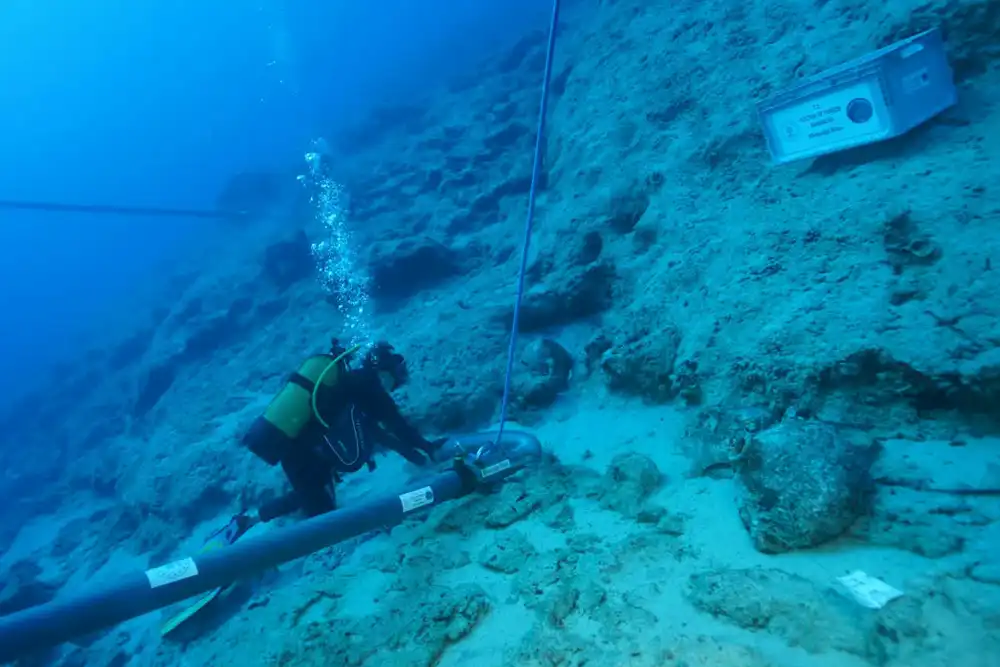
The ship is believed to be around 10 metres in length, and although none of the ship’s original timber structure has survived to be analysed by radiocarbon dating, the cargo has provided archaeologists with evidence of its age and possible origins.
A preliminary report by Öniz and fellow archaeologist Ceyda Öztosun, published in the Journal of Maritime Archaeology in July, describes the distinctive shape of the amphorae, which have two handles, flat bases and, in many cases, a raised ridge around their widest section.
Their construction and decoration resemble Early Bronze Age pottery found elsewhere in the eastern Mediterranean, particularly in the Levant (which broadly encompasses modern-day Lebanon, Syria, Jordan, Israel, and Palestine) and Egypt.
Experts have dated the style of the amphorae to between 2700 and 2400 BC, although the precise time period has not yet been confirmed.
The researchers have also discovered two stone anchors with three holes and another with a single hole at the wreck site. Similar anchors have been found at Bronze Age sites in Cyprus and Anatolia, although Öniz acknowledges in his study that it has not been possible to establish if any of them belonged to the Kekova vessel.

The discovery has already produced some unexpected results, as several of the jars still contain visible residue of their contents, despite having spent some 4,500 years underwater.
It is thought the amphorae likely contained olive oil, wine and tree resins, although the scientists say they may have been reused during their working lives, making the precise makeup of the contents harder to determine.
One particularly unusual amphora has attracted attention due to nine distinct markings on its surface and two holes in its body, which archaeologists believe may have been used as a churn to make cheese or butter.
The discovery has in turn prompted speculation that sailors could have transported live goats aboard their vessels, allowing them to produce dairy products during long voyages.
Although there is no evidence to confirm this, its presence offers an insight into the way ancient seafarers may have stored and prepared their supplies.
Ancient trading networks
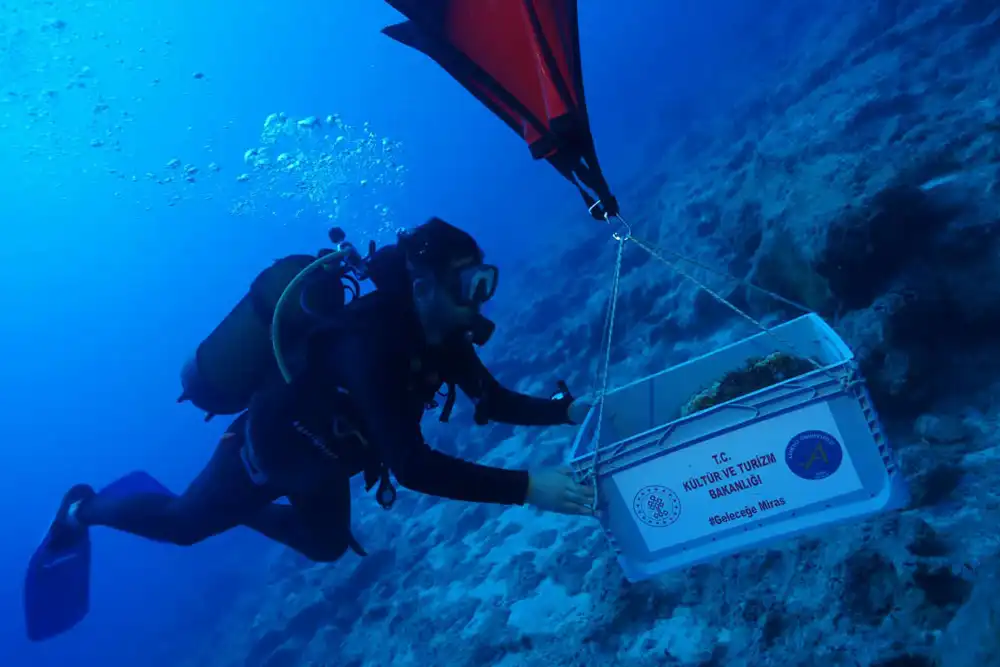
The cargo is also providing clues about how trade was conducted at the time, with analysis of the materials used to make the amphorae suggesting they may have originated in the Central Jordan Valley, an inland area of the southern Levant located around the River Jordan between the Sea of Galilee and the Dead Sea.
Similar pottery has also been identified near the Egyptian pyramid complexes at Giza, Saqqara and Abusir, as well as at Troy and on Crete.
The researchers believe the vessel may have departed from a port on the Levantine coast, travelling west along southern Anatolia towards Troy or the Minoan settlements on Crete, although its final destination remains unknown.
Australian archaeologist Dr Karin Sowada, specialist in ancient Egyptian archaeology and trade based at Macquarie University, said that the ship is ‘a missing piece in the story of networks, trade and commodity exchange in the wider eastern Mediterranean.’
‘This era includes the pyramid age of Giza and its mighty pharaohs,’ she said in an article for the university, ‘What remains under the sea is a time capsule of ancient trade.’
What caused the Kekova ship to sink may never be known. Archaeologists believe the sailors may have sought shelter among the islands during a storm before being driven into the rocky coast.
It nevertheless adds its name to a growing legacy of ships lost along the coast of southern Turkey and the eastern Mediterranean, providing a valuable insight into the development of civilisation during a time from which few historical records remain.
The recovered pottery will undergo conservation work and further scientific examination to determine its age, which, if the researchers’ proposals are proven accurate, may predate the currently recognised oldest shipwreck in the world, a 4,200-year-old vessel found off the coast of Dokos in Greece.
The post Ancient shipwreck discovered off Turkey could be world’s oldest appeared first on DIVE Magazine.
