
 Nöbetçi Eczaneler




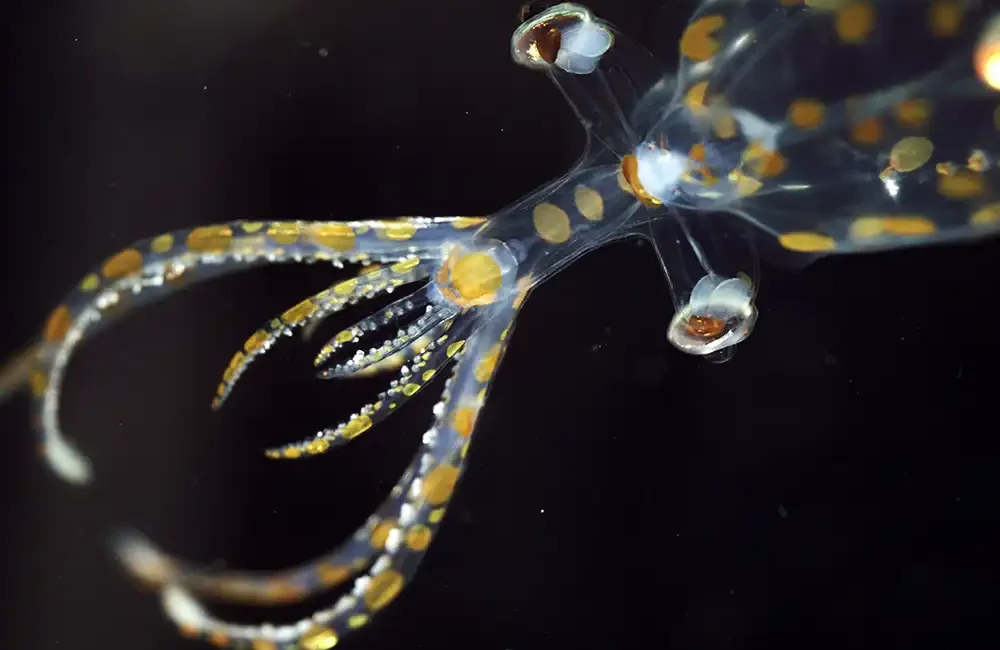
Working in international waters off the coast of Brazil, researchers explored the ocean’s midwater – the vast zone between the sunlit surface and the seabed, regarded as Earth’s largest and least explored habitable ecosystem.
Using a combination of advanced imaging technology and onboard genetic sequencing, the team was able to identify more than two dozen previously undescribed species within days rather than the years normally required for taxonomic study.

The potential new species include an amphipod crustacean, a new species of gossamer worm, nine jellyfish, seven siphonophores, seven comb jellies (ctenophores), four larvaceans and two giant rhizarians.
‘The largest habitat on Earth, the midwater, is filled with incredible animals we are only just starting to understand,’ said expedition chief scientist Dr Karen Osborn of the Smithsonian National Museum of Natural History.
‘I continue to be fascinated by the fantastic variety of solutions they have evolved to survive in this formidable environment, and that drives me to keep asking questions about our ocean.’
Researchers also recorded a range of rarely observed animal behaviour, including a pelagic octopus feeding on a jellyfish.
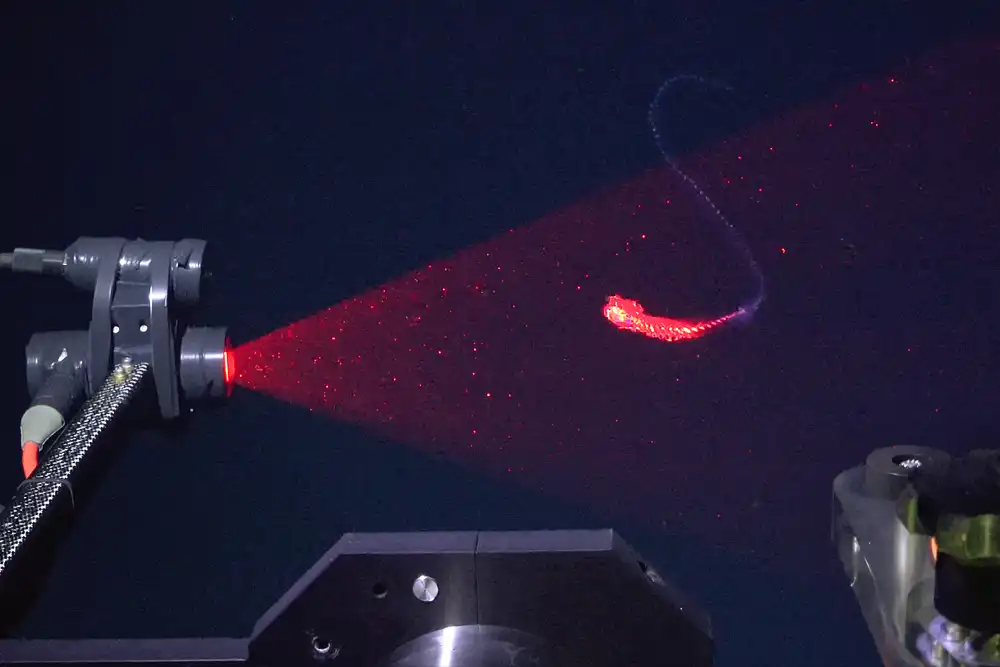
The Ocean’s midwater is one of the most challenging areas to explore because of its inaccessibility and immense volume. To aid in future exploration, the expedition tested several new, non-invasive imaging systems mounted on the remotely operated vehicle SuBastian.
These included DeepPIV (particle image velocimetry), a laser system that scans animals in 3D, and EyeRIS (remote imaging system), which uses high-resolution cameras to image fragile marine life without touching it, both developed by the Bioinspiration Lab at MBARI (Monterey Bay Aquarium Research Institute).
The team also tested a shadowgraph camera, developed by the Japan Agency for Marine-Earth Science and Technology (JAMSTEC), which uses light and shadow to reveal fine details in transparent animals.
The new systems produce detailed three-dimensional models of delicate gelatinous animals without damaging them, enabling scientists to study their external and internal structures without relying solely on collected specimens.
Many midwater species are too fragile for conventional sampling, so researchers also used experimental laboratory equipment aboard the vessel, including a virtual reality observation chamber developed by the University of Western Australia and a specialised ‘gravity machine’ microscope developed at Stanford University.
The team also achieved what they describe as a first for research at sea by using Stanford University’s open-source confocal microscope, known as Squid, to image the living three-dimensional cellular structure of a protist – a large single-celled marine organism.

‘This opens a new door for researching deep-sea physiology, linking cellular architectures to organism function,’ said Dr Manu Prakash of Stanford University.
In parallel with the imaging work, researchers sequenced genomes from collected specimens on board the vessel, allowing rapid confirmation that many of the organisms were previously unknown to science.
‘The novel suite of technologies on this cruise is a glimpse into the future of marine biological science,’ said Schmidt Ocean Institute executive director Dr Jyotika Virmani.
Related articles
The post Scientists identify 31 new marine species during South Atlantic expedition appeared first on DIVE Magazine.
