
 Nöbetçi Eczaneler




Words and pictures by Lewis Jefferies
It was spring 2025 and reports were coming in thick and fast about unusually high numbers of octopus being spotted by divers and landed by fishermen along the south coast of England.
Porthkerris, a sheltered cove on Cornwall’s Lizard Peninsula – the southernmost point of Great Britain – seemed to be a hotspot, so I didn’t delay in heading down to investigate.
As I arrived, the excitement was already building. A few fellow underwater photographers were yomping up the beach post-dive, excitedly informing me that there were multiple ‘octos’ around at the northerly end of the reef.
After prepping my camera and kitting up, I descended slowly along the stony seabed, weaving between long fronds of seaweed down to around 10 metres (33ft).
For about fifteen long, anticipation-filled minutes I searched along the edge of the main pinnacle at the site known as Drawna Rock but didn’t find a single sign of them.
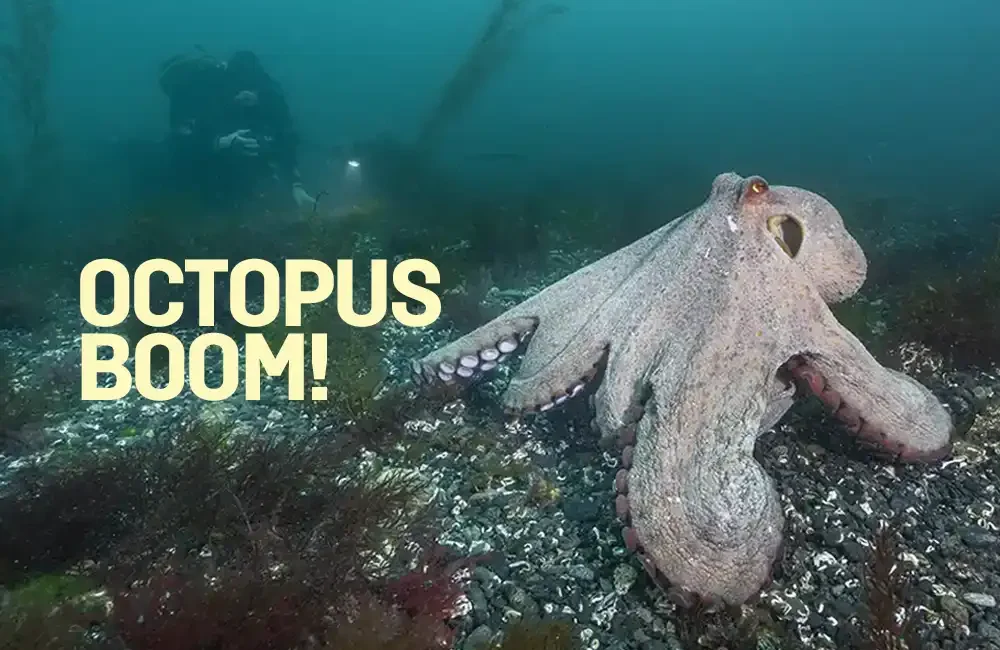
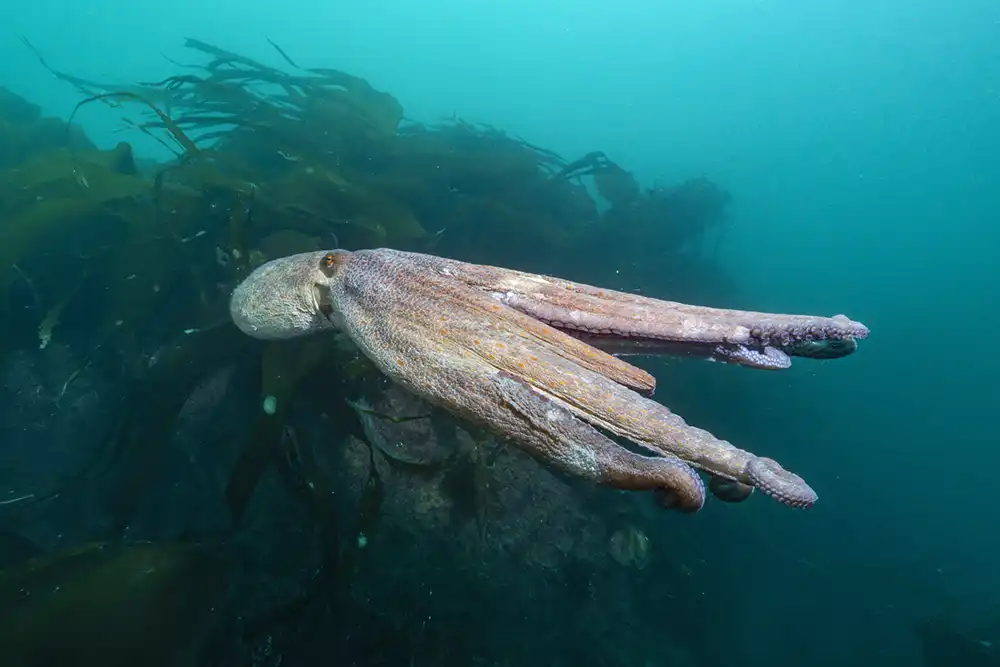
I was beginning to lose hope when a sudden movement to my left startled me and a large octopus revealed itself in an incredible transformation.

From lying flat on the seabed, it morphed elegantly into an upright position, its colour changing from the greyish blue of the stones into a warm yellowy-orange.
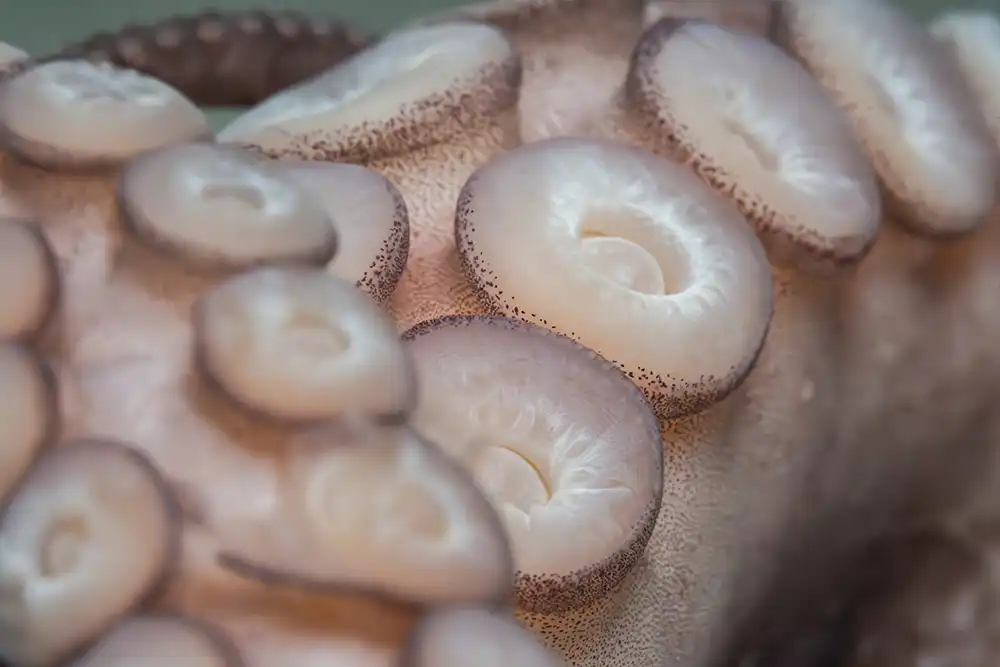
Lifting itself by its arms, the magnificent creature appeared to walk slowly and gracefully along the seafloor. As it moved, I could see the hundreds of suckers that lined its arms, each one capable of tasting and sensing its environment independently.
During this breathtaking display, the creature was studying me intently with its beautiful, complex eyes. I often feel that octopuses are just as curious about us divers as we are about them.
It’s a humbling experience to interact with such an intelligent creature, one that seems to be trying to observe and understand us in the same way we want to understand it.
I moved slowly and respectfully alongside the animal, keeping its behaviour relaxed and giving me ample time to document the encounter on camera.

Then, as if it suddenly had a better idea, it lifted into the water column and, with a wave of its arms, glided off towards the reef, its form dissolving into the blue.
That encounter was just the beginning. Over the next hour, I spotted five more octopuses – quite a tally for a single dive in British waters.
Near a deep crevice in the reef at around 15 metres, two were intertwined in what appeared to be courtship or mating behaviour. The two creatures writhed together as one along the reef wall in a fantastic display of synchrony and rippling colours.
I kept my distance so as not to disturb the moment, and they slowly made their way into the crevice and out of sight. What I had just witnessed was part of something extraordinary.
Local divers and snorkellers had reported sightings far beyond Cornwall’s borders, with similar reports emerging from the county of Devon and up to the Solent, the strait between England and the Isle of Wight, more than 200 miles away.
Blue-blooded shapeshifters

The species at the heart of the bloom is the common octopus (Octopus vulgaris), a remarkably intelligent marine invertebrate with eight arms and three hearts, reaching up to 1.3m (4.3ft) in length.
They have blue blood, the result of haemocyanin, a copper-rich protein that transports oxygen more efficiently than haemoglobin in human blood, making it well-suited to low-oxygen ocean environments.
Octopuses are masters of disguise, renowned for their extraordinary ability to change both colour and texture in an instant. They use specialised skin cells called chromatophores to seamlessly blend into their surroundings, enabling them to ambush prey and hide from predators.
As well as camouflage, the colour-changing and shape-shifting abilities are thought to be a method of communication, used during mating, disputes or territorial encounters, potentially enabling them to resolve conflicts without physical contact.
Octopus eyes are similar to those of humans, with a lens, iris and retina, although the retina is constructed differently and does not have a blind spot like most vertebrates.
Cephalopod vision is not fully understood and, although it is thought they are colour blind – at least in human terms – they can detect polarised light, enabling them to see patterns and contrasts that are invisible to the human eye.
In addition to their impressive transformational abilities and eyesight, common octopuses demonstrate problem-solving abilities that rival many vertebrates.
Tests have shown they can navigate their way through mazes and even open jars to retrieve food. As solitary hunters, they prey primarily on crustaceans, molluscs, and small fish, using a powerful beak and venomous saliva to subdue their prey.
Despite their considerable cognitive abilities, however, the common octopus has a short lifespan of only 12-18 months, and females die shortly after their eggs hatch, having devoted their final weeks to protecting and aerating their clutch.
Blooming octopuses
While population blooms of octopus in England are rare, they are not unheard of.
The Marine Biological Association documented major surges along England’s south coast in 1899 and again in the summer of 1948, making the 2025 bloom the first such event in more than 70 years and the first in living memory for a generation of divers.
Despite its name, sightings of the common octopus – which is typically more abundant in warmer southern European waters and throughout the Mediterranean – are infrequent due to their elusive, nocturnal nature and extraordinary camouflage abilities.

Researchers believe the most likely explanation for the 2025 bloom is a warming of ocean and atmospheric temperatures during the preceding months.
From March 2025, the waters off Devon and Cornwall reached up to four degrees Celsius above the seasonal average, a significant deviation from normal conditions in the region.
‘These exceptionally warmer waters could be an explanatory factor behind the growth and survival rate of the previous year’s juveniles by providing an abundance of their planktonic food,’ says Dan Barrios-O’Neill, Head of Marine Conservation at Cornwall Wildlife Trust.
‘The availability of food in the early stages of these animals’ lives is incredibly important as this species grows very fast.’
Common octopus are also extraordinarily fecund. Females can lay between 100,000 and 500,000 eggs at a time, which may explain how favourable environmental conditions lead to such dramatic population explosions in relatively short periods.
An ethical dilemma
The octopus bloom created both challenges and opportunities for Cornwall’s fishing community.
Some traditional shellfish fishers faced huge frustration as their catches disappeared, and they found themselves hauling up pots full of empty shells – some still containing the eight-armed culprits.
‘It’s the most octopus I’ve ever seen in my 15-year career and my catch has massively dropped as a result,’ said Jonny Pascoe, a third-generation fisherman from Mullion Cove on the Lizard Peninsula.
‘I noticed the octopus had eaten the crabs and lobsters by the empty shells I’m pulling up, as well as more that have lost claws. I hope the bloom will fade off, but it could take a long time for our shellfish stocks to recover from such a large influx of predators on the seabed.’
The impact didn’t stop at crustaceans. Empty scallop shells were found in hauled pots that wouldn’t usually attract scallops, suggesting the octopuses could have been storing them in a form of larder for later consumption.
‘Octopus are highly intelligent, voracious predators that have a rapid growth rate in a relatively short life span, so their demand for energy is very high,’ added Barrios-O’Neill.
‘Brown or edible crab and lobster make up a large part of their diet – both species targeted by fishers – so they exert a significant top-down pressure on commercially valuable species.’

Despite negative economic impacts for some, the bloom has been positive for others, and larger commercial vessels have been able to capitalise as a result.
One Newlyn trawler smashed records, taking a haul of more than 20 tonnes of octopus with a market value exceeding £158,000.
However, while the lucrative catches demonstrated the commercial significance of the unexpected visitors, they also sparked important ethical conversations among both fishers and marine conservationists.
Octopuses are among the most intelligent invertebrates and demonstrate remarkable problem-solving abilities, tool use, and complex behaviours, all of which suggest a high level of awareness, and a capacity for suffering.
Such cognitive sophistication challenges traditional approaches to marine harvesting and raises questions about whether octopuses deserve the moral consideration afforded to other intelligent animals.

From a sustainability perspective, octopus populations can be vulnerable to overfishing due to their short lifespan and specific reproductive cycles, making responsible catch limits and harvesting methods crucial for the long-term preservation of their populations.
The economic importance of octopus fishing in lieu of the reduction in shellfish stocks that the octopus bloom has created adds another layer of complexity to the discussion.
Any restrictions on harvesting must balance animal welfare and environmental concerns with the livelihoods of fishing communities that have relied on crustacean harvesting for decades.
A scientific bonus
Despite the potential negative impact on local shellfish populations, marine predators were reaping the benefits of the bloom.
Risso’s dolphins, which feed on octopus, arrived in large numbers during the summer months. Their presence demonstrated how swiftly the bloom reshaped the regional marine food web, attracting predators that rarely venture into British waters in large numbers.
Grey seals were seen gathering at octopus hotspots and decapitated octopus corpses were spotted by local divers, a likely sign of seal predation.

‘The octopus are providing a significant resource for these larger marine mammals,’ said Barrios-O’Neill, ‘and these animals may have a useful natural effect on modulating the unusually high numbers.’
While the 2025 bloom was exceptional in its scale and timing, which some might apportion to a changing climate, it’s important to understand the event within a broader context of marine population cycles.
Octopuses are short-lived animals that typically have boom and bust cycles – albeit very rarely on this scale in British waters – and so the bloom of 2025 may simply be part of a natural cycle.
Whatever the case, the events of that summer were a vivid illustration of how rapidly marine ecosystems can shift due to changing environmental conditions.
Marine researchers were provided with an exceptional opportunity to study cephalopod behaviour and population dynamics in British waters, which will aid in understanding both the short-term ecological impacts and the long-term implications for the region’s marine biodiversity and its fishing industry.
As Cornwall’s diving community eagerly awaits this forthcoming season, there’s a sense of cautious wonder. The ideal scenario would see octopus numbers settle into a sustainable balance, one that supports the ecosystem and the fishing industry without overwhelming either.
But for now, there’s an undeniable excitement around encountering more of these intelligent, charismatic creatures in waters where they were once a rarity.
More great reads from our magazine
- Neighbours of the North Wall – life among Sund Rock’s wolf eels
- My Octopus Mother – a life-changing encounter in the Emerald Sea
- Making a splash – a judge’s eye view of the Dive Dauin photo splash-in
- The old man, the sea, and the son – a father and son’s diving journey to Galápagos
- Full Circle – Crowley’s return journey through 25 years of Sharm El Sheikh

Take out a year’s print and digital subscription from £23.99
(UK price, international postage extra)
The post Octopus Boom! The UK octopus bloom of 2025 appeared first on DIVE Magazine.
