 Nöbetçi Eczaneler





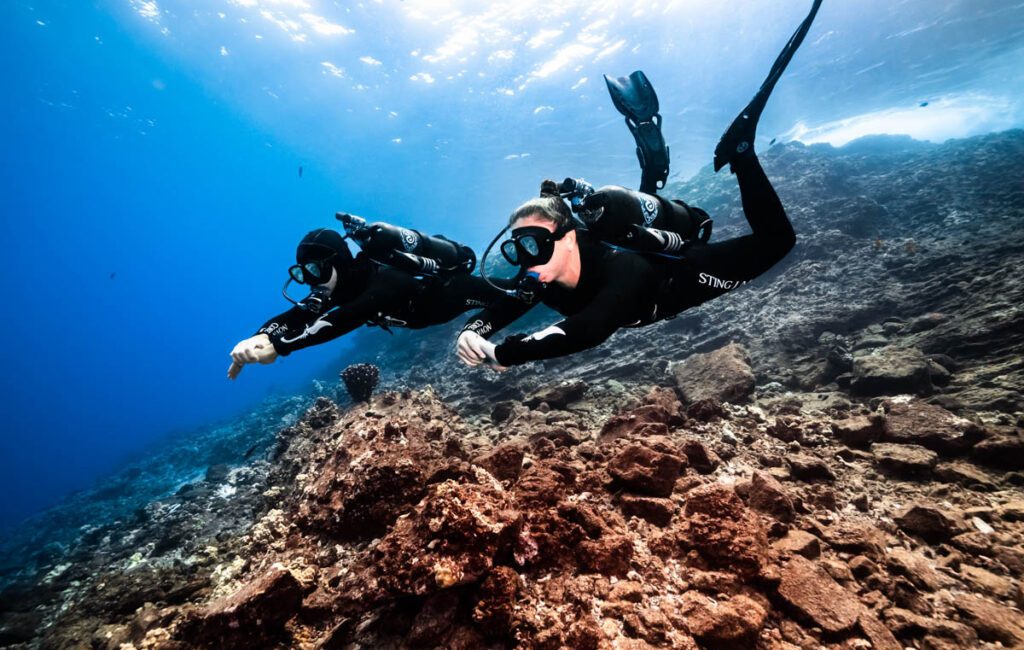
New Avelo Diver training means newcomers can now learn to scuba dive using the company’s alternative buoyancy system from the very beginning
Avelo is taking perhaps its most significant step yet towards bringing its alternative approach to buoyancy into mainstream recreational diving, with a new entry-level training pathway designed for people who have never previously been certified to scuba dive.
The new Avelo Diver course changes an important part of the company’s proposition. Until now, much of Avelo’s growth has centred on introducing already-qualified scuba divers to a different way of managing buoyancy.
Now, a diver can potentially begin their scuba journey with Avelo.
Learning Differently From the First Dive
The significance goes beyond the launch of another certification.
Traditional entry-level scuba courses teach students using a cylinder, buoyancy compensator and weighting system. Managing the changing volume of air inside the BCD as depth changes is consequently one of the fundamental skills new divers learn.
Avelo approaches the problem differently.
Its system combines the Hydrotank with the Jetpack and uses water as adjustable ballast. Rather than repeatedly adding and releasing air from a conventional BCD to compensate for changes in depth, water added to the system remains essentially incompressible.
Avelo argues that this creates a more stable platform from which students can develop the other skills required to become divers.
The company’s newly updated training information now describes a pathway for newcomers extending from their first experience through to full certification, with Avelo positioning the reduced complexity of buoyancy management as a way for students to concentrate more effectively on learning to dive.
Importantly, this should not be interpreted as automatic buoyancy control. The diver still has to establish neutral buoyancy and control their position, breathing, trim and movement underwater.
A Major Change From Avelo’s Previous Training Route
This is what makes Avelo Diver particularly interesting.
The established Recreational Avelo Diver pathway was principally aimed at people who were already scuba certified and wanted to learn how to use the Avelo System.
That effectively placed Avelo downstream of the major recreational training organisations. Divers generally learned conventional scuba first and encountered Avelo afterwards.
Opening the system to complete beginners changes that relationship.
Someone entering the sport could potentially develop their fundamental diving skills around Avelo’s water-ballast system without first building experience around a conventional inflatable BCD.
That raises an interesting question for the wider industry: could alternative equipment architectures eventually influence how scuba itself is taught?
A Shorter Route Into Open Water
At least one Avelo Dive Center is already advertising the new programme.
Oahu Travel Divers in Hawaii says its Avelo Diver course runs over two days following completion of e-learning.
The first day includes confined-water training and swimming assessments, while the second moves students into open water for two boat dives.
The centre argues that removing some of the buoyancy-management demands associated with conventional equipment allows students to progress more quickly through their initial training.
That remains a claim associated with the Avelo training model rather than evidence that learning on Avelo produces better divers than conventional entry-level programmes. As the number of newly certified Avelo divers grows, longer-term training and safety data will provide a more useful basis for comparison.
Where Does This Leave Conventional Scuba?
Avelo remains a comparatively small part of the enormous recreational scuba market, and conventional cylinders, BCDs and weighting systems are not about to disappear from dive centres.
There are also practical considerations for somebody qualifying on a different equipment architecture.
Availability matters. A diver trained on Avelo may travel somewhere that does not stock the system, making competency with conventional scuba equipment potentially valuable.
Avelo is addressing availability by building a network of Dive Centers, destination resorts and liveaboards equipped to support the system, while its professional pathway includes instructors authorised to train and certify Avelo divers.
The company is also developing the system alongside established diving manufacturers including Shearwater and SCUBAPRO.
A Bigger Test for Avelo
Avelo has already demonstrated that experienced divers are willing to try a different approach to buoyancy.
Convincing somebody who has never dived before may be a different proposition, but it could ultimately prove much more important.
A diver who converts to Avelo after years of conventional diving compares the system with everything they already know.
Someone who learns on Avelo has no such reference point.
For them, pumping water into a Hydrotank rather than adding air to a BCD could simply be how scuba diving works.
That makes Avelo Diver more than another course in the company’s training catalogue. It represents a test of whether Avelo can move from being an alternative system for existing divers to becoming one of the ways the next generation of divers enters the underwater world.
THE SCUBA NEWS Link !
DemirHindiSG
26 Ağustos 2026-13:12
