
 Nöbetçi Eczaneler







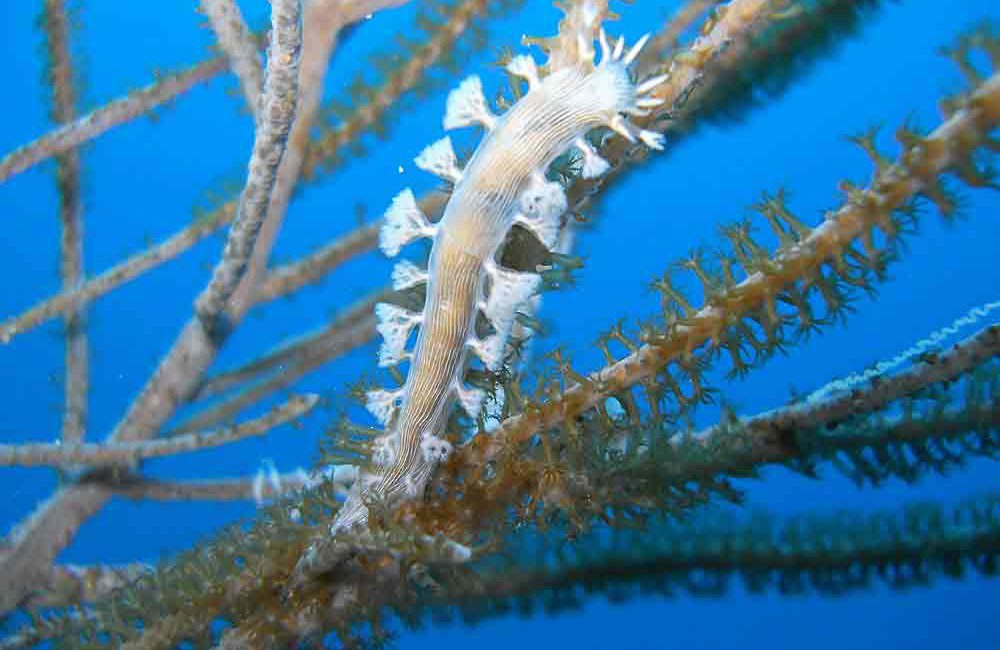
Away from the big-animal encounters that dominate many Caribbean diving itineraries, the reefs around Honduras’s Guanaja offer something different: a remarkable world of nudibranchs, tiny crustaceans and creatures that reward divers willing to slow down.
There is a particular kind of excitement that comes from spotting something underwater that almost everyone else might have missed.
It might be a nudibranch barely larger than a fingernail, a shrimp camouflaged against its surroundings or a tiny fish peering out from a crack in the reef.
For divers who appreciate these encounters, an extraordinary dive does not necessarily involve sharks, rays or other large marine animals.
Sometimes, the most memorable discovery is just a few centimetres long.
That is part of the appeal of Guanaja, the quieter of Honduras’s three principal Bay Islands, where local dive operators have long recognised the diversity of small marine life living among the island’s reefs, sponges, sand and rocky formations.
For underwater photographers, marine-life enthusiasts and divers who enjoy taking their time, Guanaja presents an opportunity to experience a different side of Caribbean diving.
Looking Beyond the Big Animals
Many diving destinations promote their encounters with larger marine animals. Those experiences can be spectacular, but they represent only one part of what makes a reef interesting.
Guanaja’s particular strength is its macro life.
Carol Bradovchak, marketing representative for Guanaja Resorts, which operates Cabanas on Clark’s Cay and Villa on Dunbar Rock, identifies the diversity of smaller marine species as one of the destination’s most distinctive attractions.
Rather than promising unusually large numbers of reef fish or frequent megafauna encounters, the resorts encourage visitors to appreciate the smaller organisms that inhabit the reef.
This is an important distinction.
A dive centred on macro life requires a different approach. Instead of covering as much distance as possible, divers spend longer examining individual coral heads, sponge formations, rocky crevices and patches of sand.
What initially appears to be an ordinary section of reef can reveal an extraordinary amount of activity.
The challenge is learning where to look.
The Colourful World of Nudibranchs and Sea Slugs
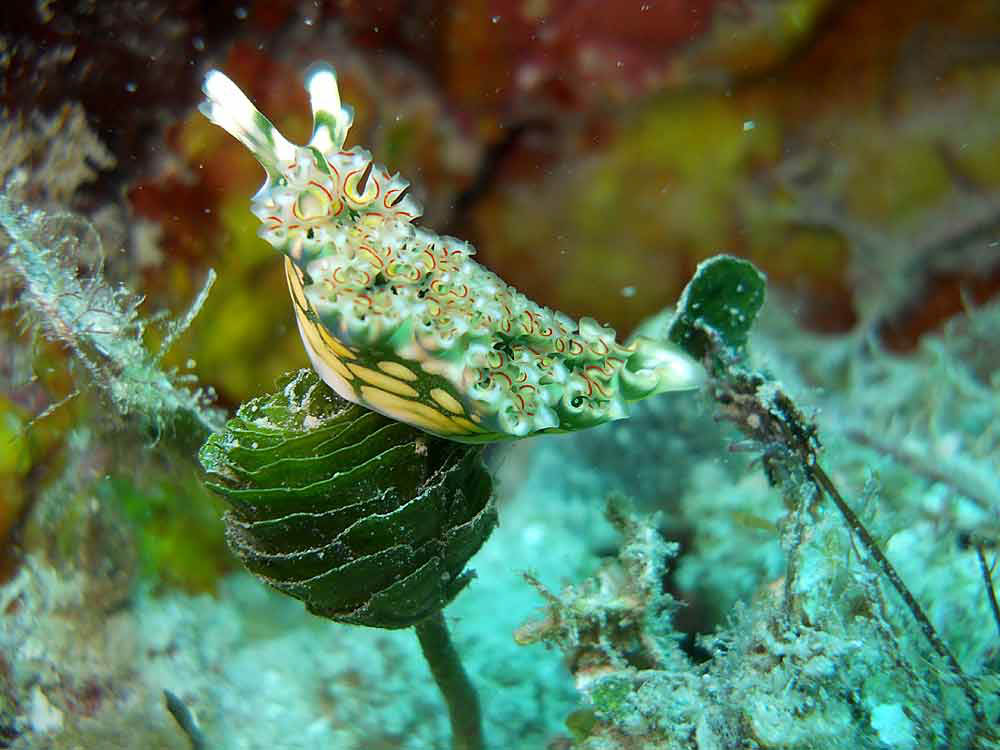
Among the most fascinating subjects for macro enthusiasts are nudibranchs.
These soft-bodied marine molluscs occur in an extraordinary range of shapes, colours and patterns. Some have delicate external gills or brightly coloured appendages, while others blend remarkably well into their surroundings.
Their appearance makes them particularly popular with underwater photographers, although spotting them can require patience and careful observation.
Guanaja Resorts’ underwater photography collection includes examples identified as Hamner’s tritonia, black-spotted nudibranchs, white-spotted aeolids and several other sea-slug species.
The collection also includes a lettuce sea slug, an ornate elysia and a spotted sea hare, illustrating the diversity of related marine molluscs that may interest divers looking beyond larger reef inhabitants.
The presence of these animals is particularly rewarding because many are easily overlooked.
Some are associated with specific prey or habitats, and knowing what to look for can make the difference between swimming past a subject and discovering it.
Local guides familiar with the reefs can be invaluable in helping divers notice these details.
For photographers, that expertise can turn an otherwise unremarkable patch of reef into the highlight of an entire trip.
Tiny Crustaceans With Extraordinary Camouflage
Nudibranchs are only part of the story.
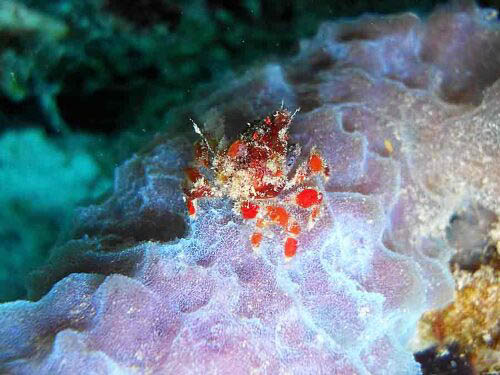
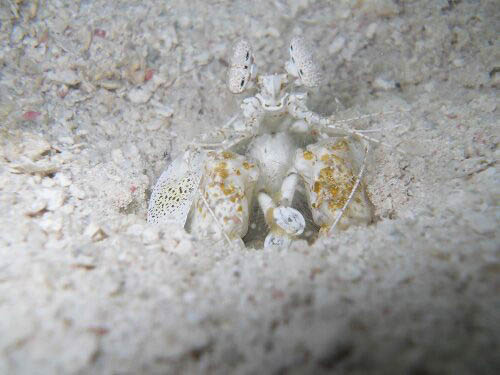
Small crabs and shrimps also provide opportunities for observation and photography, particularly when their colours and body shapes allow them to disappear against the surrounding reef.
Among the subjects represented in the Guanaja Resorts image collection are creatures identified as a curved-nose neck crab, a cryptic teardrop crab, a gaudy clown crab, a Caribbean spider shrimp and a roughback shrimp.
Each demonstrates a different aspect of the adaptations that make small reef animals so fascinating.
Some rely on camouflage, blending with coral, sponge or other surroundings. Others remain almost motionless, making them difficult to distinguish from the reef itself.
These are not necessarily creatures that reveal themselves to divers moving quickly through the water.
Spotting them takes concentration, slow movements and an appreciation of the smaller details.
The reward is the opportunity to observe marine life that might otherwise remain completely unnoticed.
There Is More to Discover on the Sand
A sandy seabed might initially appear less interesting than a colourful coral reef.
Look more closely, however, and the picture changes.
Sand and rubble habitats provide shelter for small fish, crustaceans, molluscs and other organisms that depend on concealment for protection.
Some spend much of their time beneath the surface. Others use their colouring to blend into the substrate or take refuge among small pieces of coral rubble.
Guanaja’s dive operators encourage visitors not to overlook these areas.
According to Villa on Dunbar Rock’s description of its local dive sites, sand and rubble environments can be particularly rewarding for divers willing to search carefully for concealed marine life.
This approach is especially useful for photographers seeking subjects that may not be immediately obvious during a conventional reef dive.
Observing them responsibly means maintaining excellent buoyancy, keeping equipment clear of the seabed and avoiding any disturbance to the animals or their habitat.
Pipefish, Blennies and Other Small Reef Residents
Not every interesting macro subject is an invertebrate.
Small reef fish can be equally rewarding, especially species that depend on camouflage or remain close to particular structures.
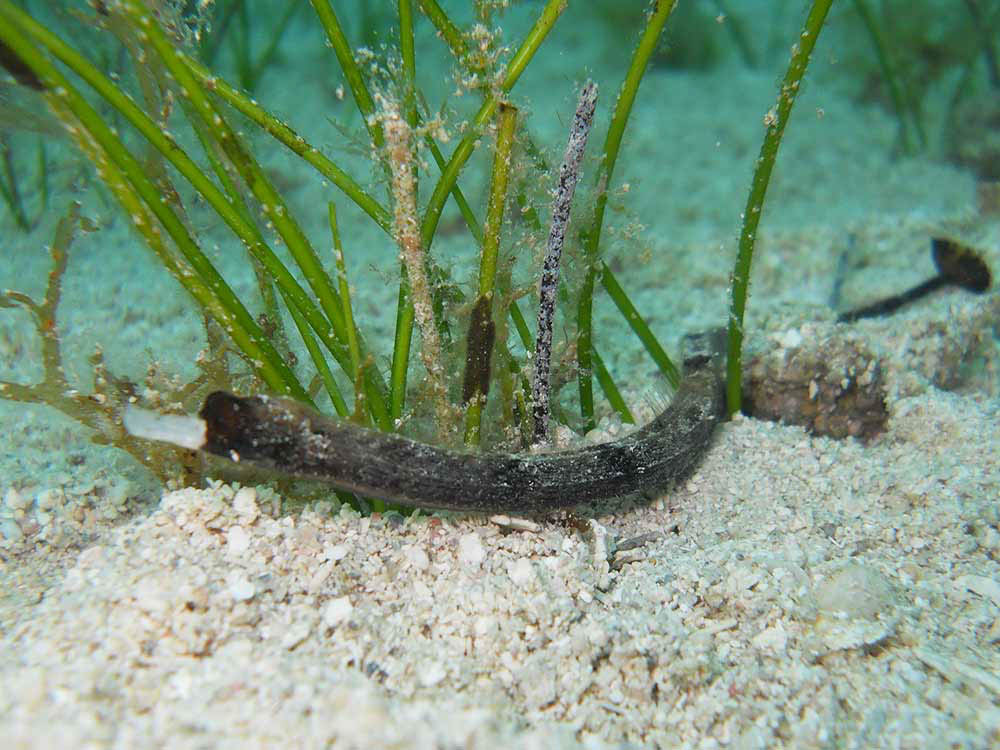
The Guanaja photography collection includes pipefish and an arrow blenny, both appealing subjects for divers interested in marine behaviour and close-up photography.
Pipefish belong to the same family as seahorses and are recognised by their elongated bodies and distinctive appearance.
Blennies, meanwhile, often remain near holes, crevices or other protective structures, where their behaviour can provide fascinating photographic opportunities.
Finding these animals is not always about discovering something rare.
Sometimes the appeal lies in simply watching a familiar creature closely enough to notice details that are easily missed.
For divers who enjoy marine biology or underwater photography, these encounters can become some of the most memorable moments of a trip.
Why Dunbar Rock Has a Particular Appeal for Macro Divers
One of the interesting features of Villa on Dunbar Rock is the opportunity to explore the shallow reef surrounding the property itself.
While boat diving provides access to sites around Guanaja, the resort also promotes shore diving around the rock.
According to Guanaja Resorts, these shallow waters provide additional opportunities to look for small marine animals, including during appropriately planned night dives.
The resort’s own guidance specifically identifies the area as particularly rewarding for macro enthusiasts.
That offers an appealing option for divers who want to spend additional time photographing small subjects rather than relying exclusively on scheduled boat trips.
The shallow environment should not be mistaken for a risk-free dive site. Currents, conditions, marine traffic and night-diving considerations still require proper planning and appropriate experience.
But for photographers who prefer working slowly and methodically, the ability to revisit an area and become familiar with its inhabitants can be a significant advantage.
The Value of an Experienced Local Guide
One of the challenges of macro diving is that experience alone does not guarantee a successful search.
Even capable divers and photographers can overlook animals that local guides notice immediately.
Guides who spend years diving the same reef systems gradually develop an understanding of where particular organisms are likely to be found.
That familiarity can be especially valuable when looking for small species associated with particular reef structures or habitats.
Villa on Dunbar Rock offers the option of arranging private dive guides, including for underwater photographers who want more time to work with individual subjects.
For experienced photographers, this can provide greater flexibility when planning dives around specific photographic objectives.
However, the importance of a guide is not simply the ability to identify interesting subjects.
Good guiding also supports responsible interaction with the marine environment, helping visitors observe wildlife without moving, touching or otherwise disturbing it.
Photographing the Smaller Side of Guanaja
Macro photography requires patience.
A successful photograph often depends on getting close enough to frame a small subject while maintaining control of buoyancy, camera position and lighting.
It also requires recognising when conditions are unsuitable.
A creature hidden deep within fragile coral should not be disturbed to obtain a clearer photograph.
Likewise, photographers should avoid repositioning animals, damaging habitat or placing equipment against living reef structures.
For those new to macro photography, Guanaja offers opportunities to practise a more deliberate approach to underwater observation.
Even divers without specialist camera equipment can enjoy the experience.
A slow dive spent looking at the reef’s smallest inhabitants can be just as rewarding without a photograph to take home.
A Different Reason to Visit Guanaja
Guanaja offers a mixture of walls, pinnacles, swim-throughs, shallow reefs and wreck diving.
Yet its smaller inhabitants deserve attention in their own right.
For some divers, the appeal will always be the possibility of encountering a large animal in open water.
Others find equal satisfaction in discovering a tiny crustacean hidden among sponges or a colourful sea slug moving slowly across the reef.
Neither experience is inherently better.
They simply reflect different ways of appreciating the underwater world.
What Guanaja offers is an opportunity to take the second approach seriously.
The island’s quieter diving environment, varied habitats and experienced local guides provide reasons for macro enthusiasts to consider it when planning their next Caribbean dive trip.
Sometimes, looking more closely reveals far more than swimming farther.
And on the reefs surrounding Guanaja, some of the smallest marine residents may leave the biggest impression.
This feature forms part of The Scuba News’ Guanaja destination coverage ahead of DEMA 2026, supported by Guanaja Resorts. Wildlife sightings are never guaranteed, and species represented in supplied photography should not be interpreted as a checklist of guaranteed encounters.
Further Reading
Discover the destination in our earlier feature, Scuba Diving in Guanaja, Honduras, or explore private resort and dive group holidays in Guanaja.
For more detailed information about the local dive sites and macro photography opportunities, see Villa on Dunbar Rock’s Guanaja diving guide.
Dive travellers interested in accommodation and diving arrangements can visit Guanaja Resorts to explore Cabanas on Clark’s Cay and Villa on Dunbar Rock.
THE SCUBA NEWS Link !
DemirHindiSG
19 Ekim 2026-21:17
