 Nöbetçi Eczaneler


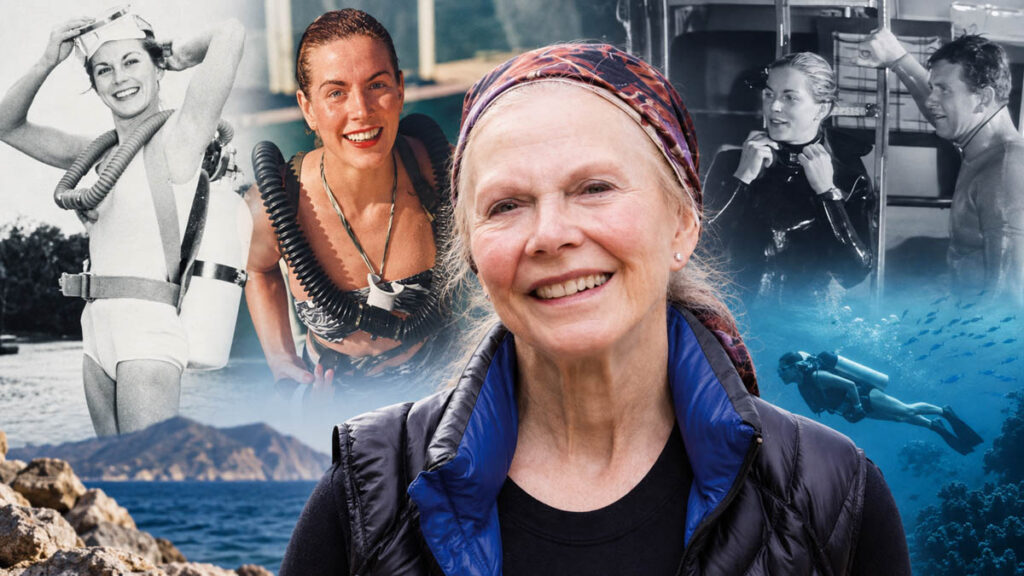
Zale Parry’s place in scuba diving history was already secure long before she began trying to preserve the stories of everyone else who had helped create it.
The record-breaking dives, pioneering equipment work, underwater photography and Hollywood appearances made her one of the most recognisable figures from the formative years of recreational scuba diving.
But there was another side to Parry’s contribution to diving that is perhaps less familiar.
For decades, she worked alongside fellow diving pioneer Albert “Al” Tillman collecting the memories, photographs and stories of the people who had built the sport around them.
It was painstaking work that ultimately became an extraordinary record of diving’s early history.
Following Parry’s death at the age of 93 earlier this summer, those efforts take on an even greater significance.
The Dive That Changed Everything
Parry was already involved in the emerging underwater world by the early 1950s.
Working alongside her husband, Dr. Parry Bivens, she became involved in Scientific Underwater Research Enterprises, better known as SURE. Their work included underwater equipment testing and the development of one of California’s earliest civilian hyperbaric chambers for divers.
Then came a dive in 1954 that would transform Parry into a nationally recognised figure.
She descended to 209 feet off Catalina Island, establishing a women’s depth record.
But the record wasn’t actually the primary objective.
According to the Diving Equipment & Marketing Association, Parry was testing the Hope-Page non-return valve mouthpiece, a safety innovation designed to prevent water entering a diver’s breathing hoses.
The test was successful, and the valve design subsequently became a standard safety feature on scuba regulators.
The record, however, attracted enormous attention.
Parry appeared on the cover of Sports Illustrated in May 1955 and became increasingly involved with television and film as America’s fascination with the underwater world grew.
Bringing Scuba Into People’s Homes
Parry’s expertise made her particularly valuable to Hollywood at a time when genuinely experienced scuba divers were still relatively rare.
Her television and film work included Kingdom of the Sea and, most famously, Sea Hunt, the enormously influential television series starring Lloyd Bridges.
Parry helped teach Bridges to dive and worked both in front of the camera and as an underwater specialist.
For a generation who had never worn a mask or regulator, programmes such as Sea Hunt provided a first glimpse of what it might be like to explore beneath the surface.
Parry was therefore doing more than performing underwater.
She was participating in the transformation of scuba from an unusual pursuit practised by a relatively small collection of enthusiasts into something millions of people could imagine doing themselves.
Her influence extended into underwater imagery as well. She co-founded the International Underwater Film Festival in 1957 and later became the first woman elected president of the Underwater Photographic Society.
Yet perhaps one of her most important contributions began when Parry and another giant of American diving started looking backwards.
Recording The People Who Built Diving
Albert Tillman was himself instrumental in the development of recreational diving and diver education in the United States.
Together, Tillman and Parry recognised something that becomes increasingly important as any industry matures: the people who remember its beginnings will not be around forever.
So they began recording them.
An account published by the Northwest Diving History Association describes decades of journeys across North America to interview diving pioneers wherever they could find them.
Florida, British Columbia, Mexico, California, the Midwest and the East Coast all became destinations in a much larger effort to capture diving’s human history.
The resulting archive grew to include thousands of audio recordings and tens of thousands of handwritten pages.
And collecting the stories was only the beginning.
Tillman’s son, Thomas, recalls his father writing drafts by hand while Parry typed manuscripts and sent them back to the people they had interviewed.
Dates were questioned. Memories were compared against other accounts. Photographs were tracked down. Claims were checked.
This wasn’t nostalgia assembled casually around a dive-club table.
It was an attempt to establish a record.
Making Sure The Stories Survived
The partnership eventually produced Scuba America: The Human History of Sport Diving in America, but the significance of the project extends beyond any individual book.
Parry and Tillman had realised that recreational diving possessed a history worth deliberately preserving.
That matters because much of early scuba history did not unfold inside large institutions.
It happened in dive shops, garages, swimming pools, boats and workshops.
Equipment was being invented and modified. Training practices were developing. Divers were exploring sites with technology that would appear primitive by today’s standards. Underwater photographers were learning how to document a world that most people had never seen.
Many of the people involved probably had little reason at the time to believe that somebody might want to hear their recollections half a century later.
Parry and Tillman understood otherwise.
They collected photographs, films, documents and personal accounts before those pieces of history disappeared.
When Tillman died in 2004, Parry continued to champion diving’s history and the people behind it.
Today, that work provides something increasingly valuable: connections to the individuals who experienced recreational scuba diving while it was still being invented.
A Legacy That Continues
Parry’s influence also continues through another generation.
The Academy of Underwater Arts & Sciences established the Zale Parry Scholarship in 2006.
The annual award supports young divers pursuing academic study or accredited field work in areas including undersea exploration, marine conservation, hyperbaric medical research and diving equipment technology.
It is an appropriate continuation of a career that crossed almost every boundary within the underwater world.
Parry was a diver when recreational scuba was still finding its identity. She tested equipment. She promoted hyperbaric safety. She taught. She photographed the underwater world. She appeared on television and film. She helped introduce scuba to audiences who had never experienced it.
And then she helped document the people who had made that world possible.
There is something particularly fitting about that final part of her legacy.
The diving industry will inevitably remember the photograph of the young woman who descended to 209 feet in 1954 and suddenly found herself in the national spotlight.
But somewhere behind that image is another Zale Parry.
She is sitting among photographs, handwritten notes and recorded interviews, checking another date and identifying another face because somebody’s story might otherwise disappear.
Parry spent much of her life making diving history.
She spent just as much of it making sure diving remembered where it came from.
THE SCUBA NEWS Link !
DemirHindiSG
12 Eylül 2026-20:29
