
 Nöbetçi Eczaneler





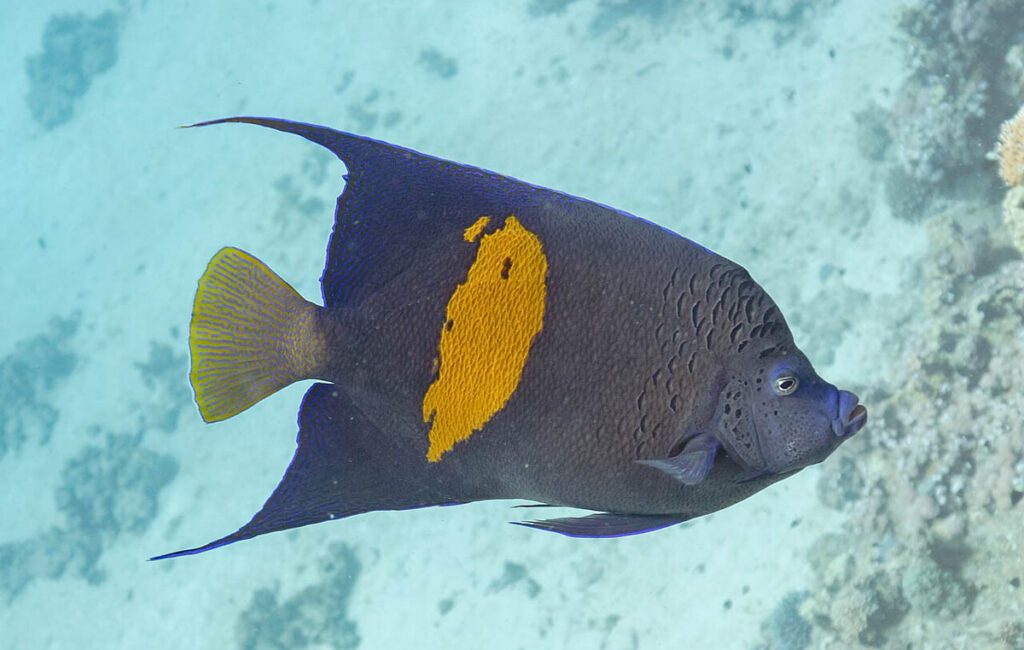
Scientists investigating the appearance of a non-native yellowbar angelfish in southern Brazil say the evidence points towards an aquarium release rather than the fish reaching the South Atlantic naturally.
The study, published in Marine Biology Research, used a combination of otolith chemistry, DNA analysis, previous sighting records and examination of the fish’s stomach contents to investigate how the yellowbar angelfish (Pomacanthus maculosus) arrived thousands of kilometres outside its native range.
Researchers examined a single male collected from a marine protected area in Brazil in 2019. An angelfish of the same species had previously been recorded by divers at the same location 420 days earlier, raising the possibility that both records involved the same individual.
Reconstructing the Fish’s Journey
Rather than simply assuming that the fish had been released from an aquarium, researchers tested three possible explanations for its presence in Brazilian waters.
These were natural dispersal during the fish’s early life, movement into the region as an adult, or human-assisted introduction.
Otoliths, structures found inside the inner ears of fish, can preserve chemical information relating to the environments experienced during an animal’s life. By analysing this record alongside other evidence, the researchers were able to investigate which of the possible routes best fitted the fish’s history.
The study concluded that an introduction associated with the aquarium trade was the most likely explanation.
DNA barcoding was also used to confirm the species identification, while genetic evidence suggested that the fish may have originated from the Indian Ocean or Red Sea region.
A Fish Far From Home
The yellowbar angelfish is native to the western Indian Ocean region, including the Red Sea and waters around the Arabian Peninsula and East Africa.
Its presence in Brazil had already attracted scientific attention.
A yellowbar angelfish was filmed during a scuba survey on a rocky reef off southern Brazil in 2017. The sighting subsequently formed the basis of a 2018 scientific paper documenting the first record of the species in the south-western Atlantic.
At the time, researchers noted that the enormous distance separating Brazil from the species’ natural distribution, together with its biological characteristics, strongly suggested that human activity had played a role in its arrival.
The latest study provides considerably more evidence for that explanation.
Yellowbar angelfish have also previously appeared outside their natural range elsewhere. The US Geological Survey records non-native occurrences of the species, including in Florida, where aquarium release has been identified as the probable introduction pathway.
What Was It Eating?
The researchers also examined the contents of the Brazilian fish’s digestive system to understand how it was interacting with its new environment.
Sponges accounted for 86.9% of the gut contents examined, while algae represented another 6%.
That finding matters because introduced species do not necessarily need to become abundant before scientists begin considering their ecological implications.
The researchers said the fish’s diet could create overlap with native related species competing for similar food resources.
However, the study concerned a single individual and does not establish that yellowbar angelfish have developed a reproducing population in Brazil.
Aquarium Releases and Marine Invasions
Marine aquarium species appearing outside their natural ranges are not unprecedented.
Yellowbar angelfish themselves have been recorded outside their native distribution, while the species is also present within the ornamental fish trade. Brazil’s environmental authority, IBAMA, includes Pomacanthus maculosus within its aquarium-fish information resources.
That makes human-mediated introduction a plausible pathway, although the significance of the latest research lies partly in how investigators approached the question.
According to the researchers, previous studies have frequently proposed aquarium release as a possible explanation for non-native marine fish, but the Brazilian investigation used empirical techniques to test the pathway directly.
The authors argue that otolith chemistry could therefore become a useful forensic tool when scientists attempt to determine how marine fishes have reached areas far outside their natural distributions.
For divers, sightings of unusual species can also provide an important early record. In this case, a scuba survey produced the observation that preceded the eventual collection of the fish by more than a year.
What began as an unusual angelfish sighting on a Brazilian reef has now provided researchers with a case study in how scientists can reconstruct the journey of a marine invader.
THE SCUBA NEWS Link !
DemirHindiSG
20 Eylül 2026-21:17
