
 Nöbetçi Eczaneler






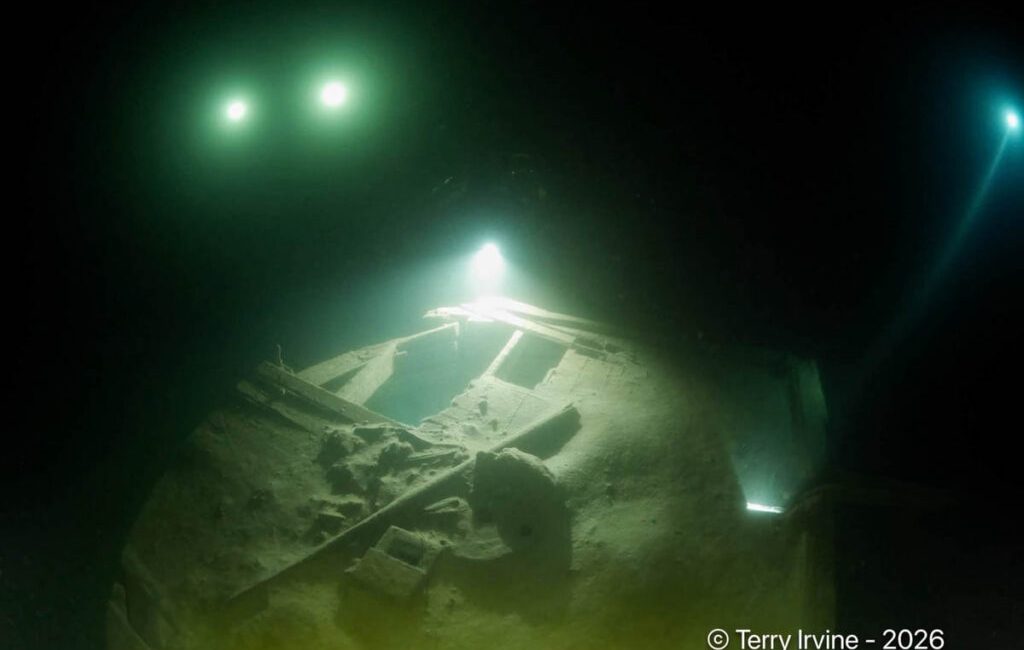
Whitefish Point offers some of the most exiting and diverse fresh water shipwreck diving in North America. It is one of the last spots in the Great Lakes where one can see wrecks without the zebra mussel infestation.
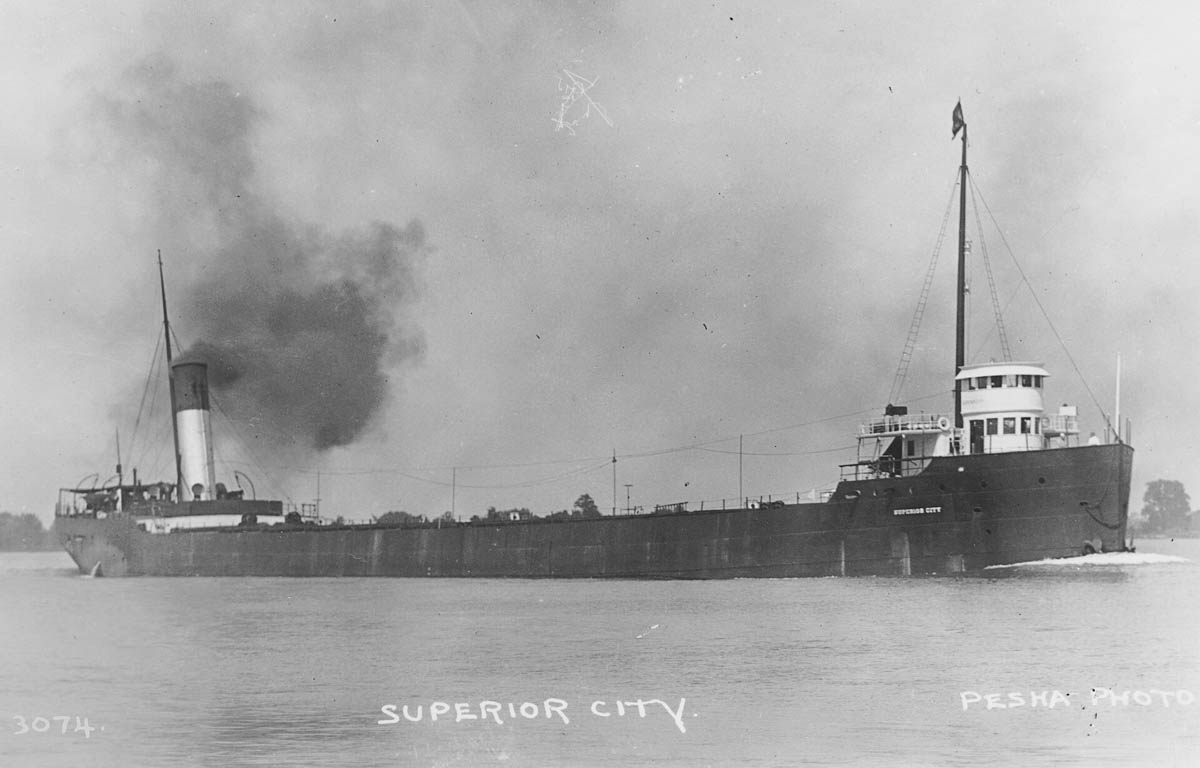
Launched in 1898, the SS Superior City was considered a pioneer vessel and held the distinction of being the largest ship ever built on freshwater at the time. She actively sailed the Great Lakes for twenty-two years before meeting a tragic end in 1920, when she sank following a catastrophic collision with the steamer Willis L. King in Lake Superior’s Whitefish Bay. The disaster resulted in the loss of 29 crew members and sparked immediate debate, though investigators ultimately ruled that the captains of both vessels had failed to follow standard maritime rules-of-the-road.
Launched on April 13, 1898, at the Cleveland Ship Building Company yards in Lorain, Ohio, the Superior City was a pioneer vessel that marked a significant leap forward in the evolution of Great Lakes shipping, representing a shift toward larger, longer, and stronger steel ships compared to the sail-powered craft of the past. As the largest vessel ever built on freshwater at the time, her launching drew crowds from across the town of Lorain, who gathered along the riverfront to witness the historic event.
Over a decade later, on April 26, 1909, the ship found herself at the center of a peculiar incident at the Soo Locks in Sault Ste. Marie, Michigan. After hearing reports that nearby boats were being quarantined and that lock workers had briefly spotted a smallpox warning sign displayed on the Superior City the previous night, local health officer Dr. Griffin boarded the vessel. Following a heated confrontation where everyone onboard denied knowing anything about the sign, Dr. Griffin issued a stern warning that tampering with contagious disease markers would be reported to the Secretary of State. While the exact origins of the sign remained a mystery, shipwreck historian Wes Oleszewski noted that in the days following the scare, uninvited guests became far less common aboard the boats tied up at the locks, especially the Superior City.
At 9:10 PM on August 20, 1920, a tragic collision occurred in Lake Superior’s Whitefish Bay between the Superior City and the steamer Willis L. King. The Superior City was downbound, heavily laden with 7,600 tons of iron ore loaded at Two Harbors, Minnesota, while the Willis L. King was travelling upbound and light after discharging her cargo in Ashtabula, Ohio. Striking the Superior City on her port side aft of midships, the Willis L. King severed the vessel nearly in half. The impact unleashed a violent explosion as an inrushing wall of cold lake water burst through the aft bulkheads and smashed into the ship’s scalding boilers, literally tearing the stern off the ship. In the chaotic moments immediately following the collision, the crew scrambled to lower the lifeboats positioned directly above the boiler room. Tragically, this placed the majority of the crew directly over the epicenter of the blast, leading to a catastrophic loss of life as the vessel rapidly sank.
The sinking of the Superior City claimed 29 lives—28 men and one woman—marking the deadliest disaster in the history of the Pittsburg Steamship Company. Among the crew, only four men managed to survive the catastrophe. Captain Sawyer, Second Mate G. G. Lehnt, and Watchman Peter Jacobsen were positioned at the front of the vessel and leapt into the lake as she went under. Rescuers later pulled Captain Sawyer from the water, where he was clutching a life preserver he had not had time to put on, while Lehnt was found clinging to the hull of an overturned lifeboat. Jacobsen, after being pulled under by the suction of the sinking ship, fought his way back to the surface and swam for roughly twenty minutes before a lifeboat from the Willis L. King rescued him.
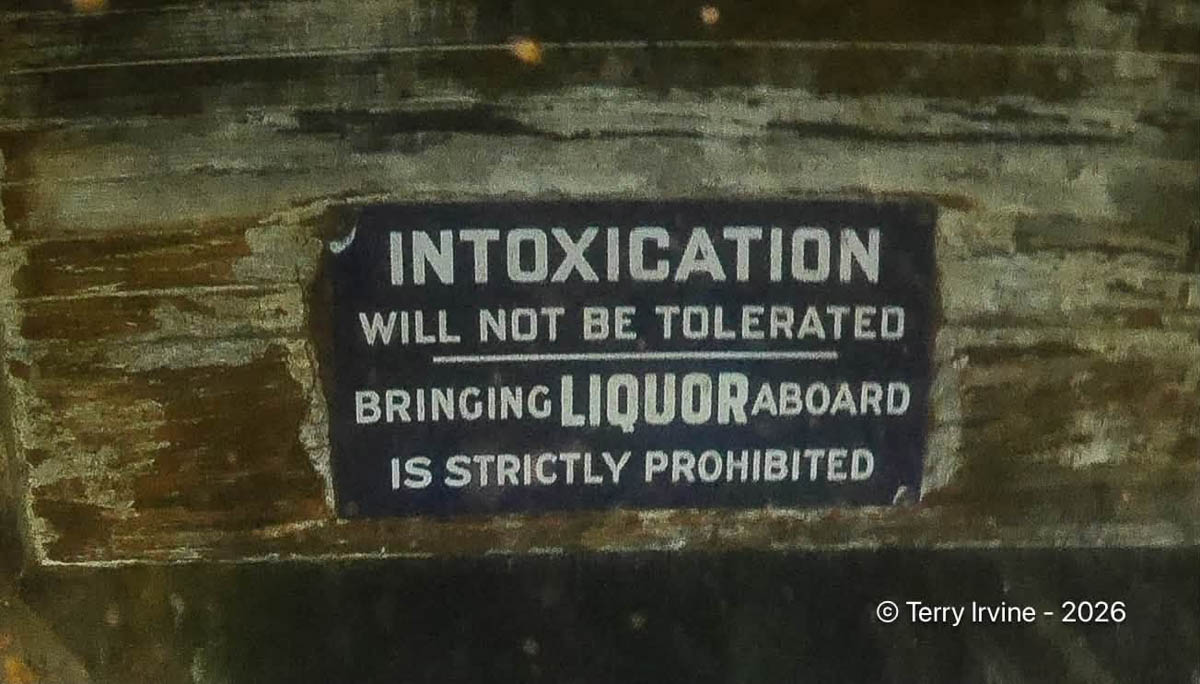
The fourth survivor, Boatswain Walter Richter, was asleep in his bunk clad only in long underwear when the emergency bells rang. Upon reaching the deck, the violence of the boiler explosion blew him off the ship—and out of his clothing—into the water. Richter survived by clinging to a floating wooden hatch cover, using it as a improvised raft until the steamer J.J. Turner arrived to rescue him. Crew members aboard the J.J. Turner later recalled the immense force of the detonation, noting that wooden interior fixtures had been blasted entirely through the ship’s steel hull. The remaining crew members either perished instantly in the blast or were swept underwater by the violent whirlpool created as the ship plummeted to the bottom; notably, not a single body was ever recovered.
Although both vessels had sighted each other roughly ten minutes before impact and communicated via steam whistles, Captain Sawyer of the Superior City and Captain Nelson of the Willis L. King offered sharply conflicting accounts of the conditions and signals leading up to the collision. Sawyer claimed the weather was clear and that the ships had agreed on a standard port-to-port pass using single whistle blasts. Nelson, conversely, insisted the night was foggy and hazy, alleging they had agreed to a starboard-to-starboard pass marked by two-blast signals. As a result of these mismatched movements, the Superior City swung directly across the path of the Willis L. King. Nelson reacted by cutting his engine, backing full astern, and hard-turning his bow to port, but it was too late to prevent the crash. At the time of impact, the Willis L. King was traveling at approximately 12 mph (19 km/h), while the Superior City was moving at 10.5 mph (16.9 km/h).
Inspectors Gooding and Hanson from Marquette, Michigan, launched an official investigation into the incident, though both captains quickly stopped making public statements, speaking only through depositions arranged by maritime lawyers representing the shipowners. Crew members aboard the neighboring steamers J.J. Turner and Midvale witnessed the collision, overheard the whistle exchanges, and corroborated that despite early-evening haze, the sky was completely clear with unlimited visibility when the collision occurred. Following the incident, the damaged Willis L. King was brought to the Superior Shipbuilding Company drydock to repair a twisted, broken stem, 17 destroyed shell plates and frames, buckled forward decks, and various broken structural supports. To control the narrative surrounding the disaster, Captain Nelson issued strict orders barring his crew from speaking about the crash to anyone other than the vessel owner’s legal representatives.
Following months of investigation and formal litigation, Judge C. Z. Luce of the United States District Court for the Western District of Wisconsin concluded that both captains were at fault for failing to obey established maritime “Rules of the Road.” The ruling emphasized that under federal navigation regulations, whenever a captain is uncertain about an approaching vessel’s course or intentions, they are legally required to sound the danger signal and immediately slow down, stop, or reverse engine power until safe passage is assured. Because neither master took these required precautionary measures when the passing signals proved conflicting, both were held responsible for the catastrophe.
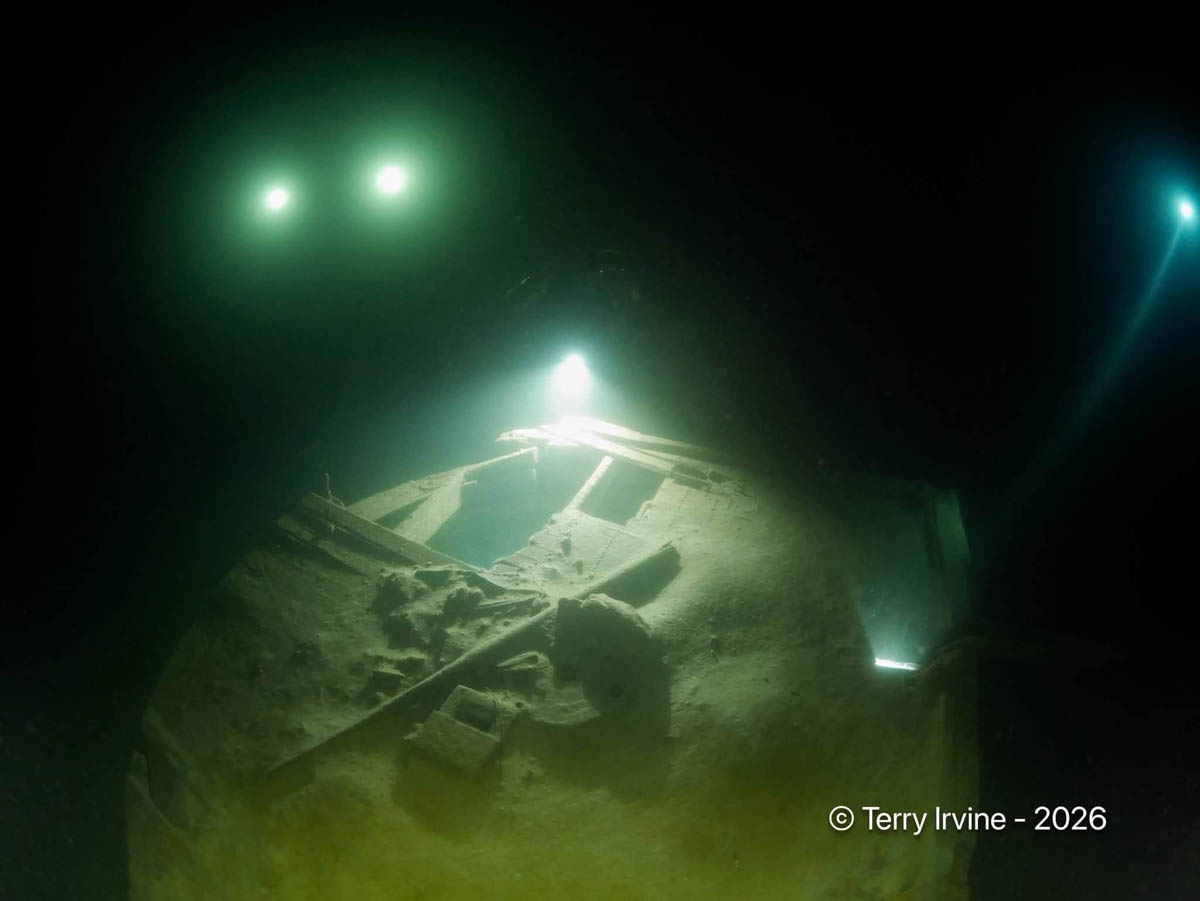
The resting place of the Superior City remained undisturbed for more than fifty years until diver John Steele first came across the site in 1972. In 1980, the wreck was located again by Tom Farnquist and Gary Shumbarger of the Great Lakes Shipwreck Historical Society, who conducted a comprehensive photographic survey of the submerged vessel.
The ship’s story reignited controversy decades later in 1988, when the Great Lakes Shipwreck Historical Society released a documentary titled “Graveyard of the Great Lakes,” which featured extensive video footage showing the exposed remains of the Superior City’s crew as as well as a scene depicting the retrieval of a wedding ring from a body. Ethics surrounding the wreck site remained a hot topic as late as 1996 due to disputes over artifacts recovered from her remains. Today, the Superior City is preserved and protected as a historic site within the Whitefish Point Underwater Preserve.
Ethical concerns surrounding the site resurfaced when state authorities raided the Great Lakes Shipwreck Museum and its administrative offices, seizing roughly 150 artifacts that had been unlawfully gathered from state-protected bottomlands. Following a legal settlement in 1993 with the Michigan Department of State and the Department of Natural Resources, the museum was allowed to keep items recovered from the Superior City and other local wrecks, displaying them under a formal loan arrangement with the state.
Today, the Superior City is preserved and protected as a historic site within the Whitefish Point Underwater Preserve.
THE SCUBA NEWS Link !
DemirHindiSG
05 Ağustos 2026-19:58
