
 Nöbetçi Eczaneler




By DIVE Staff
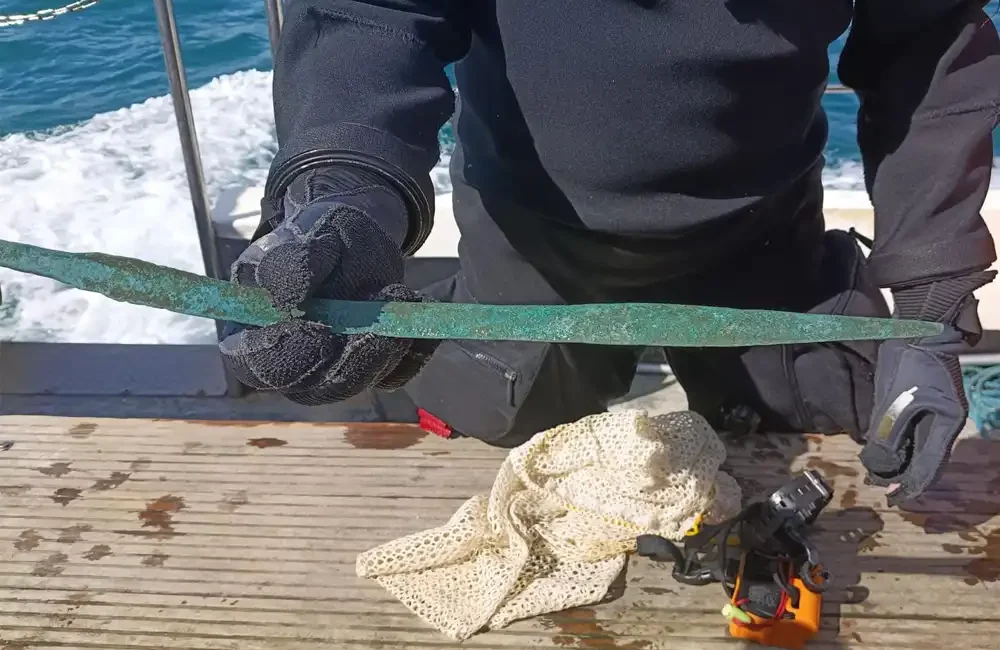
A rare Bronze Age sword has been discovered by volunteer divers investigating the protected Salcombe Cannon and Moor Sand wreck sites off the coast of Devon, in southern England.
The sword was discovered earlier this year by South West Maritime Archaeological Group (SWMAG) divers Becky Gill and Catherine Gill during the Historic England-funded SWMAG: The Next Generation of Affiliated Volunteers project, delivered in partnership with MSDS Marine.
Recovered from an area first investigated in the late 1970s by maritime archaeologist Keith Muckelroy, the find comes from what is recognised as one of the most important prehistoric maritime archaeological locations in north-west Europe. Previous seabed finds from Salcombe already suggest there are remnants of at least two separate Bronze Age shipwrecks.
Initial specialist assessment suggests the weapon belongs to the Middle or Late Bronze Age, dating from around 1300-800 BC. Erosion has made it difficult to assign the sword more confidently at present, although it is hoped further study will refine its type.

‘A kid at Christmas does not come close to the excitement of finding this sword,’ said Becky Gill. ‘It is testament to the dedication of every member of the team, past and present, as well as a lesson in following your intuition and gut instinct. I’m proud to be a part of the next chapter of this important site.’
‘It is an amazing thrill to find and recover an object from under the sea that turned out to be a Bronze Age sword,’ said CAtherine Gill. ‘I wonder where and who made it, who was planning to use it, and who was the last person to touch it, before us, around 3000 years ago.
‘It’s thanks to the team we have built up over the last couple of years, who all contributed to discovering this exciting find and we’re hoping for more!’
Following conservation work by MSDS Marine, the sword will be donated to the British Museum, where it will be studied and made accessible for future research.
‘This is a wonderful and important addition to the Bronze Age story of the Salcombe site,’ said Neil Wilkin at the British Museum.
‘The objects recorded by SWMAG to date play an important role in national and international exhibitions and accounts of this critical period of British history and reflect connections with Continental Europe.
‘The discovery of a new sword continues this fascinating story and is a reminder of the potential of new finds to re-write the story of maritime trade, exchange and journeying off British shores 3,000 years ago.’

The Salcombe area has long been recognised as an internationally important prehistoric maritime site, with evidence of extensive Bronze Age trade and seafaring activity.
Finds from the site include weapons and tools demonstrating connections between communities around the Atlantic seaways more than 3,000 years ago.
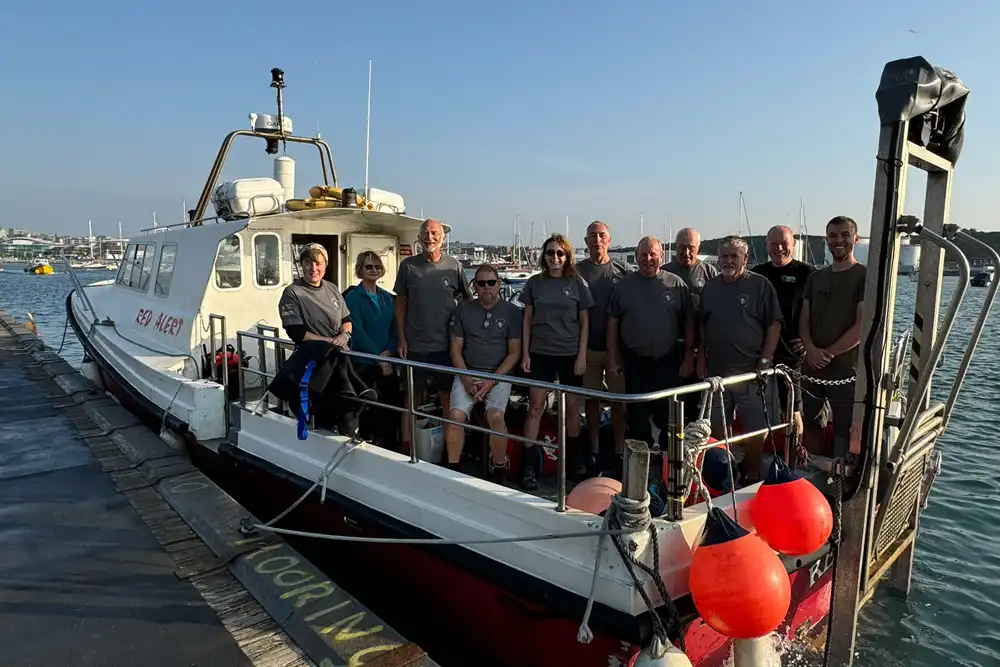
The SWMAG: The Next Generation of Affiliated Volunteers project was established to support the future management of the protected wreck sites while passing knowledge and skills to a new generation of maritime archaeology volunteers. The project won the Marsh Award for Community Archaeology Project of the Year in 2025.
SWMAG members have spent decades investigating and caring for the Salcombe sites, contributing thousands of volunteer hours to archaeological research and site management.
‘This is an incredibly exciting discovery and a powerful reminder of the importance of protected wreck sites and the contribution volunteers continue to make to maritime archaeology,’ said Alison James, Project Manager at MSDS Marine and Archaeological Advisor to SWMAG.
‘The fact that this discovery has been made by the next generation of volunteers makes it even more special and is a testament to the hours of diving that have taken place at the site by volunteers from SWMAG in the past and more recently.’
‘It’s fantastic to see this new discovery. This protected wreck site is in safe hands with the new generation of SWMAG volunteers,’ said Hefin Meara, Maritime Archaeologist at Historic England.
Further analysis of the sword is underway while MSDS Marine undertakes its conservation before it is transferred to the British Museum.
Researchers hope the find will contribute to a greater understanding of Bronze Age maritime activity, trade networks and metal deposition practices in the waters around south-west England.
Related articles
The post Rare Bronze Age sword discovered at protected UK wreck site appeared first on DIVE Magazine.
