
 Nöbetçi Eczaneler






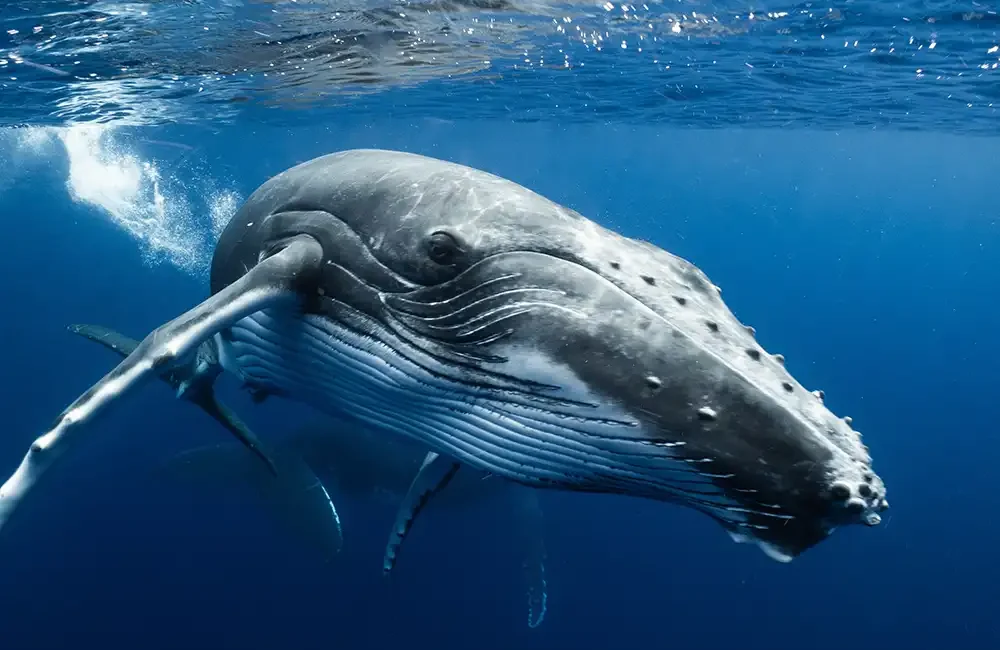
The study, published in Current Biology, used sound and movement data collected from 16 male humpback whales on their breeding grounds off Maui, Hawai‘i, between 2018 and 2024.
Temporary suction-cup recording tags were attached to the whales by hand using poles from small boats, or deployed by drones during the later years of the study.
Researchers collected 56 hours of recordings, and found that the sounds the whales made often coincided with the animal descending, remaining at depth or returning to the surface.
Humpback songs are created from individual ‘units’ of sound – each of the grunts, whoops or pulses the whale makes – which are joined together in sequences that scientists refer to as ‘phrases’.
Repetition of phrases constitutes a ‘theme’, and several themes performed sequentially make up a complete song.
When the researchers compared this structure with the whales’ movements, they found a close correspondence between the two.
Particular themes were repeatedly associated with the beginning and descent of a dive, while another commonly occurred as the whale ascended.

Most of the remaining themes were performed during the deepest part of the dive, when the whales were largely stationary, drifting through the water rather than swimming.
The songs were repeated over multiple dives, with the dives used for comparison lasting an average of 14.3 minutes, and the songs associated with them averaging 14.8 minutes.
Some whales dived continuously for hours, repeating the song each time they descended and ascended, with the longest complete singing session recorded by the tags lasting 16.5 hours.
Even returning to the surface did not necessarily interrupt the song, as the whales appeared to space individual sounds between breaths, enabling the complete song to continue as one dive ended and another began.
The themes associated with descent and ascent were comparatively consistent between whales and across different years, while those performed at depth were more varied in their themes.
The researchers suggest that the difference in song and depth may be an indication of the different physical demands placed on a singing whale.
Movement, buoyancy and changes in ambient pressure might limit the type of sounds produced during descent and ascent, whereas remaining at a relatively constant depth may allow the whales more freedom to vary their vocalisations.
The more variable themes the whales produce at depth may contain information about the individual, and may serve as some form of mating behaviour.

Only male humpbacks are known to produce lengthy, complex songs, which may play a part in courtship – although it remains unclear as to whether the males sing to attract a mate, or warn rival males of their presence.
The scientists also noted that whales would sometimes go off-script, either omitting themes, adding them, or performing then in an unusual order.
The irregular songs were associated with dives that contained unusual changes in depth, further supporting the idea that song and movement are intimately linked.
The researchers caution that although the patterns of diving songs appear to be well established in their study, it is based on a small number of whales from a single Hawaiian breeding population.
Humpback songs are known to evolve and differ between regions, and it is known that rival groups of sperm whales appear to be unable to communicate with each other, in much the same way that humans from different countries do not understand each other’s language.
There is clearly much to learn about whale song, but the linking of particular themes with particular movements may help scientists interpret future recordings.
If similar patterns are found in other populations, it may be possible, for example, to determine a whale’s position in the water column through acoustic monitoring of its song alone.
Being able to do so might prove beneficial in preventing whales from colliding with boats, for example, or alert fishers to a whale’s activities.
Most importantly, the findings add another dimension to what we know about one of the most intelligent species on the planet.
Human-whale communication is likely decades away – if it ever happens – but the new study is one more piece in that extraordinarily complex puzzle.
The study ‘Humpback whales match song production to dive patterns’ by Julia M Zeh et al is published in Current Biology
The post Humpback whale songs change with their dives appeared first on DIVE Magazine.
