
 Nöbetçi Eczaneler




Ripple Rock was a hazardous underwater mountain situated in the Seymour Narrows of British Columbia’s Discovery Passage. Featuring twin peaks that sat just 2.74 meters and 6.4 meters below the surface during low tide, the formation generated massive, treacherous eddies (the swirling of a fluid and its reverse current formed during turbulent flow). as powerful tidal currents surged around it. To safely navigate the strait and avoid the danger, transiting ships routinely waited for slack tide before making their passage.
First documented in 1791 by Captain George Vancouver, who famously labeled the surrounding area as one of the most treacherous marine passages on Earth, Ripple Rock claimed its first major victim in 1875 when the northern-bound sidewheel steamer Saranac struck the submerged mountain. Over the following eight decades, the hazard caused the severe damage or total loss of more than 120 ships, claiming at least 110 lives before its eventual destruction in 1958.
In 1862, Royal Navy Captain Richards christened the hazard “Ripple Rock” due to its shallow peaks, which sat near the surface and generated a conspicuous standing wave amidst the strait’s swift tidal flow.
During the 1860s, proposal efforts began to connect Vancouver Island to the mainland via Bute Inlet, designating Ripple Rock as a middle support for a bridge. Political resistance—fueled by decades of debate over this potential infrastructure project—repeatedly stalled proposals to demolish the hazard until maritime safety was finally prioritized. Although a marine commission formally recommended the rock’s removal as early as 1931, the Canadian government did not authorize demolition attempts and award the initial contract until 1942.
Initial attempts to destroy Ripple Rock involved using floating drilling barges to place explosives directly onto the structure and blast it apart. During the 1943 attempt, workers secured a barge using six 3.8-centimeter steel cables anchored by nearly 1,000 metric tons of weight; however, the violent currents snapped a cable roughly every two days, forcing them to abandon the project. A subsequent effort in 1945 utilized two heavy overhead steel lines, but it too was scrapped after completing just 93 of the 1,500 planned controlled blasts.
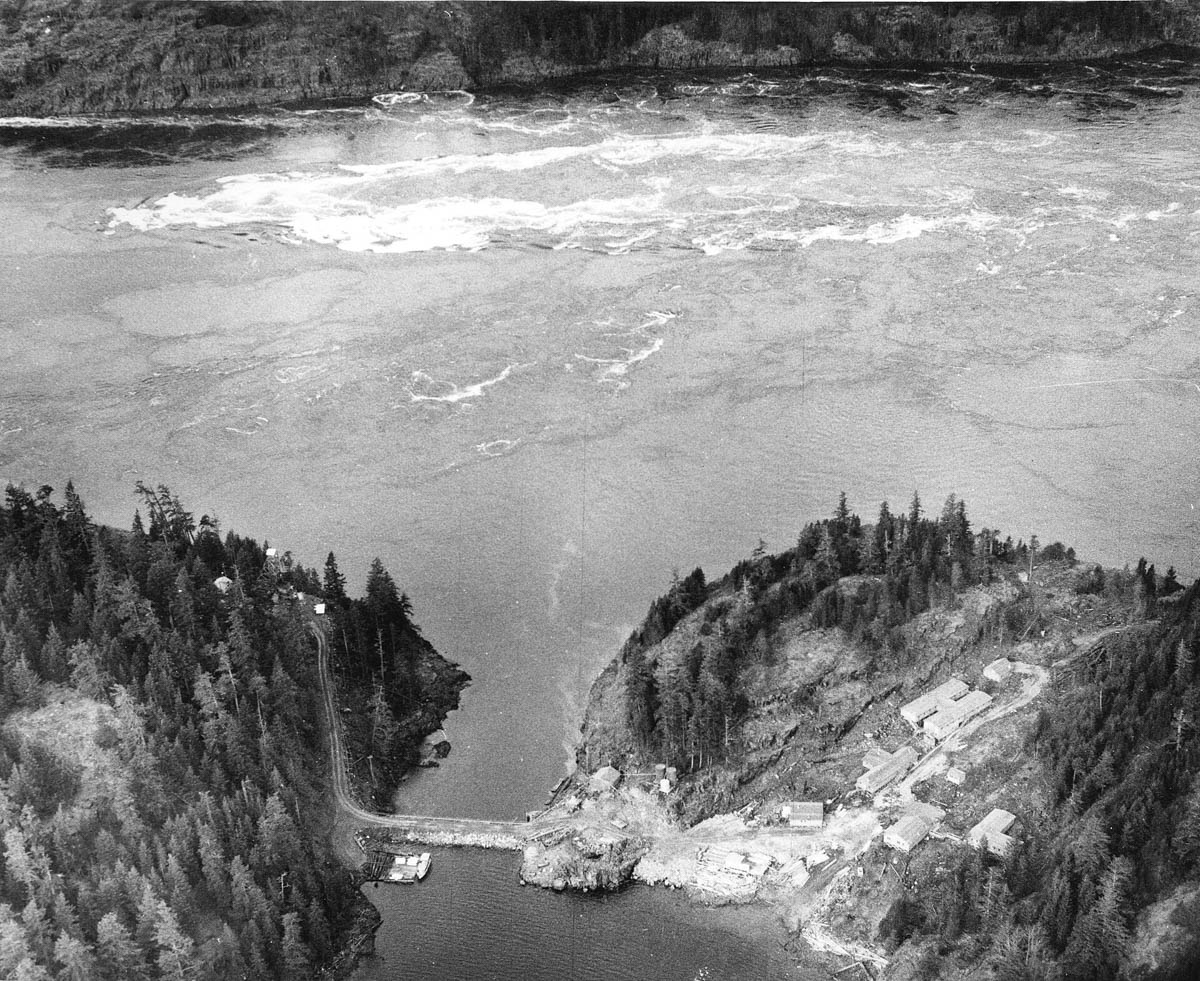
In 1953, the National Research Council of Canada launched a feasibility study to explore tunneling through Maud Island to detonate a massive underground charge beneath the peaks. After the study deemed the plan viable, Dolmage and Mason Consulting Engineers were hired to manage the project, while a consortium of Northern Construction Company, J.W. Stewart Limited, and Boyles Brothers Drilling Company secured the contract. The operation ultimately cost more than 3 million Canadian dollars—the equivalent of roughly $28.6 million in 2018.
From November 1955 to April 1958, a round-the-clock operation employing roughly 75 workers constructed an intricate underground network beneath the Seymour Narrows. Starting on Maud Island, crews excavated a 150-meter vertical shaft, extended a 720-meter horizontal tunnel directly under the waterway to the base of Ripple Rock, and bored two rising shafts up into the rock’s twin peaks, where small “coyote” tunnels were packed with 1,270 metric tons of Nitramex 2H—ten times the charge required for a comparable surface detonation.
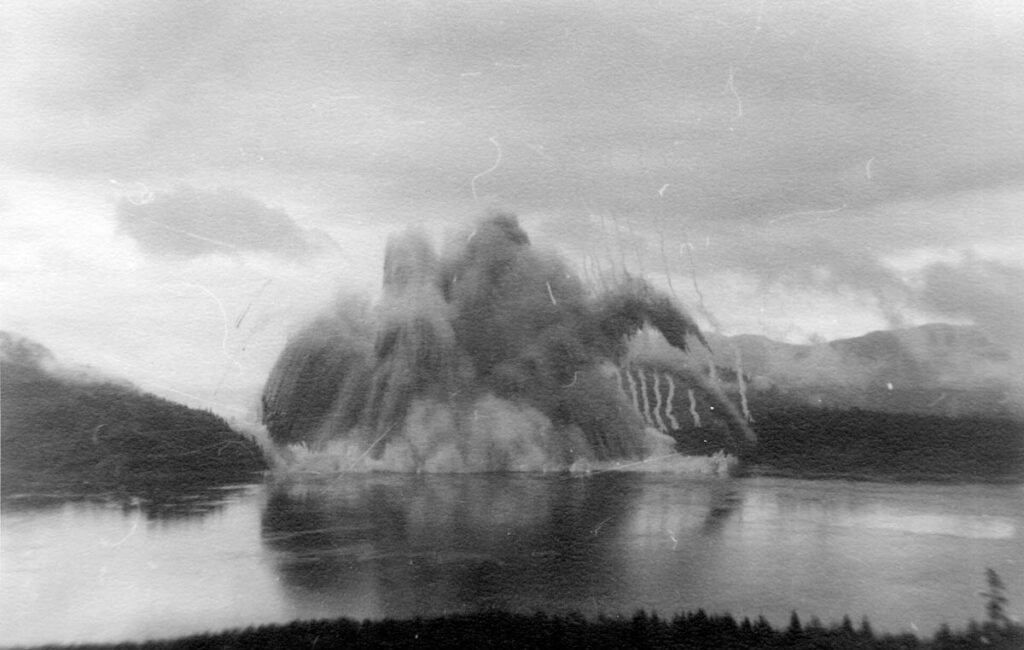
The $2.64 million excavation culminated at 9:31 a.m. on April 5, 1958, when the massive charge was detonated. Observed safely from a reinforced bunker by engineers and journalists after the RCMP evacuated a three-mile radius, the blast hurled 635,000 metric tons of rock and water over 300 meters into the air, scattering debris across both shores. As one of the largest planned non-nuclear explosions in history—rivaled only by major mining and channel-digging blasts in the Soviet Union and China—it successfully lowered the submersed peaks to safe depths of 13.7 and 15.2 meters, ensuring a minimum clearance of roughly 14 meters at low tide and finally taming the dangerous passage.
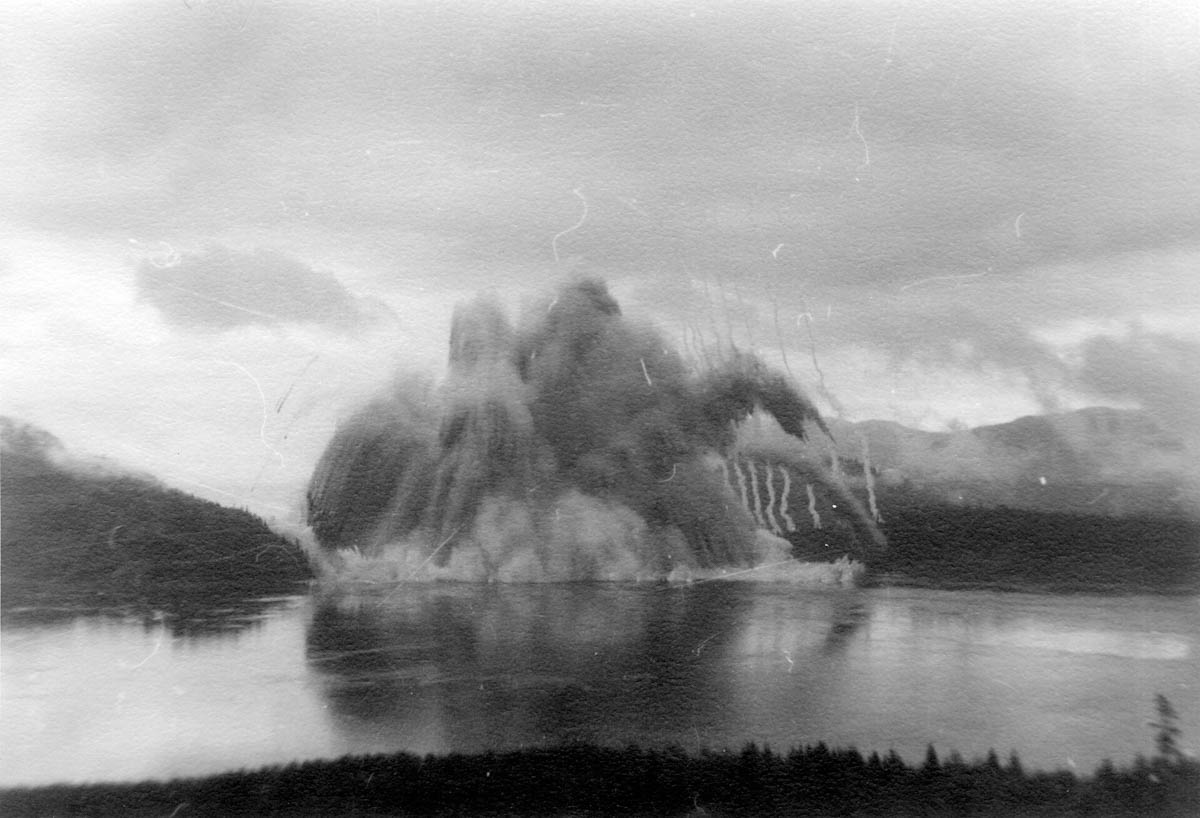
As zero hour approached, thousands waited and watched with bated breath. Work came to a complete standstill in nearby factories and boatyards, as all eyes turned toward the treacherous passage. Decades of maritime tragedy and political debate were about to culminate in a single, earth-shattering moment—the final end to the relentless menace of Ripple Rock.
THE SCUBA NEWS Link !
DemirHindiSG
24 Ağustos 2026-16:45
