
 Nöbetçi Eczaneler






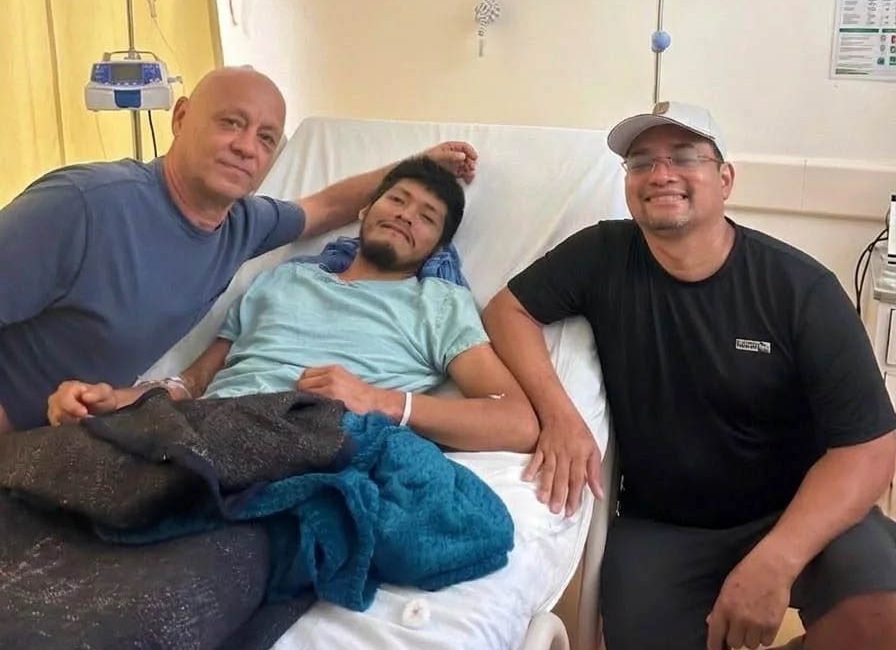
A search operation that had increasingly been expected to end with the recovery of a body took a remarkable turn when specialist cave divers found a missing fisherman alive inside an underwater cave in Mexico, 15 days after he disappeared.
Erasto Crisanto Valdez, 31, disappeared on 23 July while fishing with his father at a cenote in the San Francisco La Paz area, close to the boundary between Oaxaca and Veracruz.
For more than two weeks, family members, local authorities, civil-protection personnel, Mexican Navy divers and specialist teams searched the difficult underwater environment. Initial efforts produced no sign of the missing man.
By the time specialist cave divers joined the operation, the mission was increasingly being treated as a recovery rather than a rescue.
That changed when the divers began following physical clues left behind in the cave system.
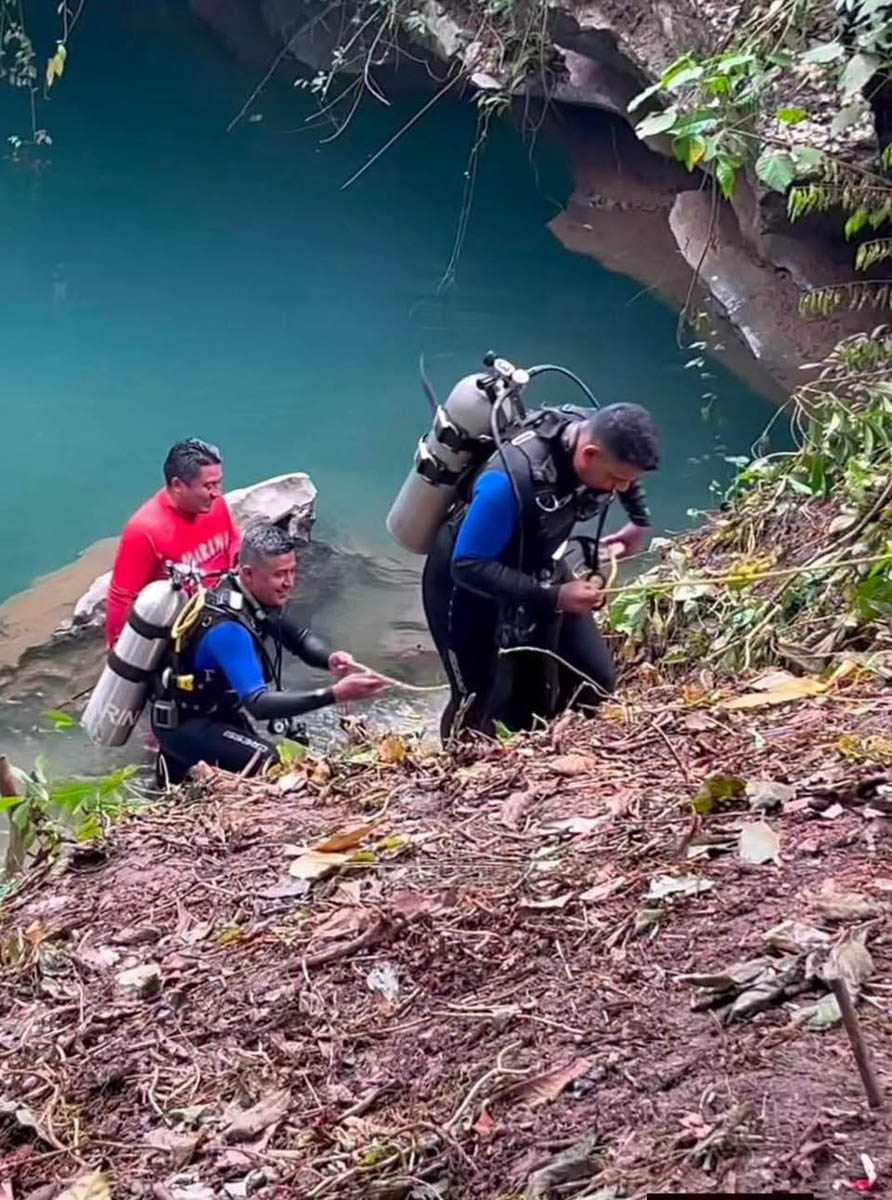
A search in an extremely difficult underwater environment
The cenote presented a particularly challenging environment for conventional search teams. Mexican Navy divers conducted multiple underwater searches and reportedly reached depths of around 120 metres without locating Crisanto.
Earlier searches had also produced an important clue when Crisanto’s fishing equipment was found inside the system. Mexican reporting identified his harpoon at approximately 65 metres, providing rescuers with an indication of how far he may have travelled into the underwater environment.
But finding equipment did not mean finding the fisherman.
The cave system was difficult to explore, with poor visibility, confined passages and sharp rock formations presenting significant risks to divers. According to American cave-diver Harry Gust, who subsequently participated in the operation, placing a continuous guideline was itself problematic because of the nature of the cave.
Gust and fellow diver Rosalino “Rosso” Rivera eventually joined the specialist effort.
Their initial objective was not to bring Crisanto out alive.
It was to find him.
Then came a voice in the darkness
Gust’s account of the operation provides the most extraordinary detail.
During an initial penetration into the cave, he found a small Spare Air cylinder approximately 100 metres inside the system. The discovery suggested that Crisanto had travelled considerably farther into the cave than earlier searches had established.
Gust returned the following day and continued searching near the end of the guideline.
Within around 30 minutes, he discovered a large dry chamber.
Then he called out.
Someone answered.
It was Crisanto.
The fisherman had survived inside a dry section of the cave, where he had remained for the previous 15 days.
Gust said Crisanto was approximately 10 metres away inside a recess and that he could not initially see him. The diver told him that he was coming back with assistance before making the hazardous journey back through the flooded section.
The search had suddenly become a rescue.
Getting him back through the cave
The discovery did not mean Crisanto was out of danger.
He had reportedly spent 15 days without food and was severely dehydrated. Getting a weakened survivor through approximately 100 metres of difficult underwater cave presented a new set of risks.
Rivera entered the chamber while Gust assessed Crisanto’s condition.
Crisanto was able to breathe from Rivera’s regulator, and the divers began the return journey through the flooded section.
The extraction was completed on 7 August.
Crisanto was brought to the surface on a stretcher and transferred to medical care. Mexican reports subsequently described him as dehydrated and malnourished, although detailed medical findings have not been publicly released.
Fifteen days without daylight
Crisanto’s survival is perhaps the most remarkable element of the incident.
According to subsequent accounts, he spent the period in darkness inside the dry cave section, drinking water and waiting for help. He also lost his sense of time and reportedly believed he had been underground for only a few days.
His own account adds an extraordinary final chapter to the rescue.
On 7 August, he heard bubbles and saw a light before hearing someone call out into the darkness.
He answered.
The people searching for a body had found a survivor.
The rescue was subsequently confirmed publicly by Uxpanapa municipal president Martín Alberto Aguilar Cuéllar. Mexican media have also reported that Crisanto later expressed his gratitude to the rescuers and said he had never lost hope of being found.
A rescue that depended on specialist cave-diving skills
The incident also demonstrates why underwater cave rescue is fundamentally different from an ordinary open-water search.
The initial search teams had to contend with depth, confined passages and difficult visibility. Specialist cave divers were then able to extend the search into an environment where conventional underwater searching had proved unsuccessful.
The distinction is important.
In a normal open-water search, a missing diver or swimmer may be located through a systematic surface or underwater grid. In a cave, the search area can extend into a complex three-dimensional network of passages, restrictions and chambers.
There may be no direct route back to the surface.
There may be no visibility.
And a diver entering the system can create another rescue emergency if the operation is not carefully managed.
In this case, the eventual breakthrough came not simply from going deeper, but from understanding the cave and following the evidence left behind by the missing fisherman.
A piece of equipment indicated that he had gone farther into the system.
A specialist team followed.
And eventually, someone answered.
For Crisanto’s family, what had become a 15-day search for a missing fisherman ended with something nobody involved in the operation could reasonably have expected: a live rescue from inside an underwater cave.
What we know, and what remains unclear
The central facts of the rescue are well supported by multiple Mexican news organisations and subsequent accounts from members of the specialist diving team.
Some details surrounding the incident remain less certain.
Reports have differed over the precise depth of Crisanto’s location, with figures ranging from approximately 65 to 120 metres. The specialist diver’s account also distinguishes between depth and the distance travelled into the cave system.
There have also been differing accounts of the equipment discovered during the search and the precise sequence by which Crisanto entered the dry chamber.
Those details should therefore be treated cautiously until a fuller technical account of the rescue is released.
What is not in doubt is the outcome.
After 15 days missing in a difficult underwater cave system, Erasto Crisanto Valdez was found alive and brought back to the surface.
The operation had begun as a search for a missing fisherman.
It ended as a cave-diving rescue.
THE SCUBA NEWS Link !
DemirHindiSG
17 Ağustos 2026-19:46
