 Nöbetçi Eczaneler



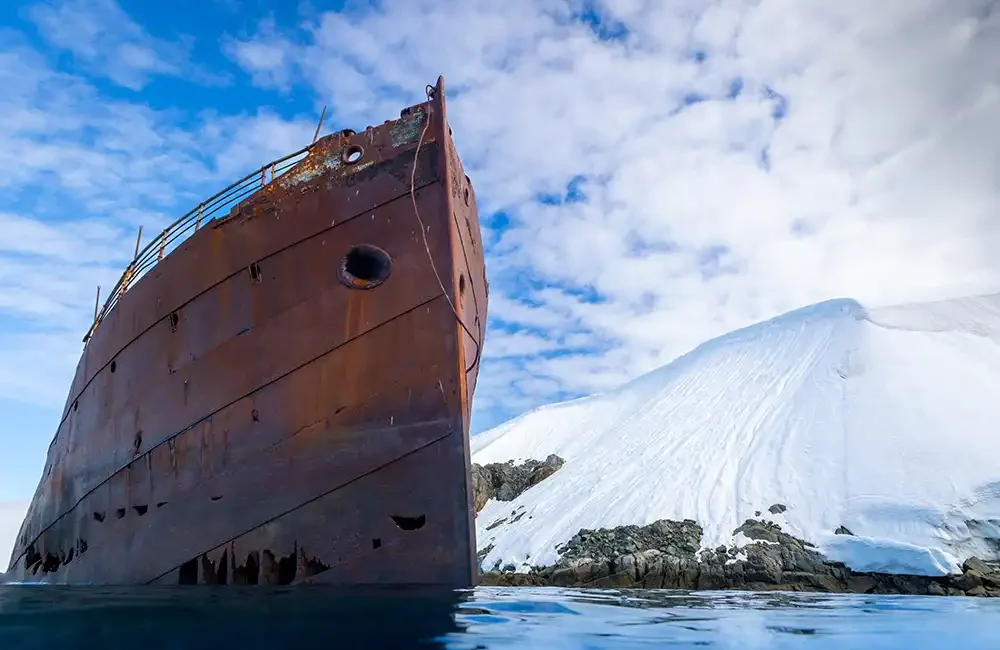
Underwater Photographer and marine biologist Bella Zandoná shares her experience photographing the wreck of Guvernøren, a former whaling ship marooned in the epic icescape of Antarctica
By Isabella Zandoná
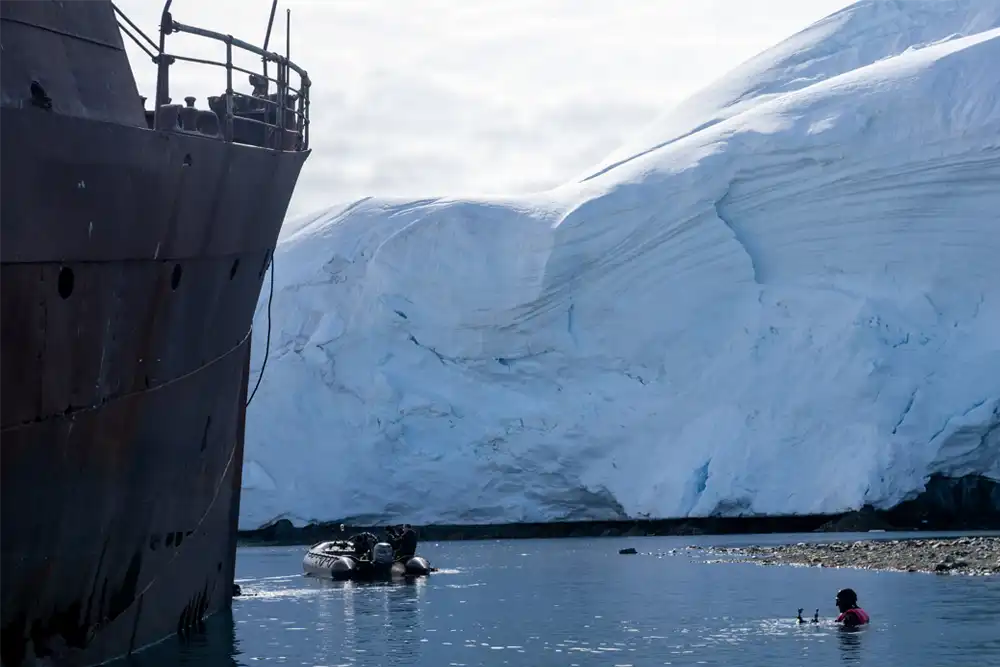
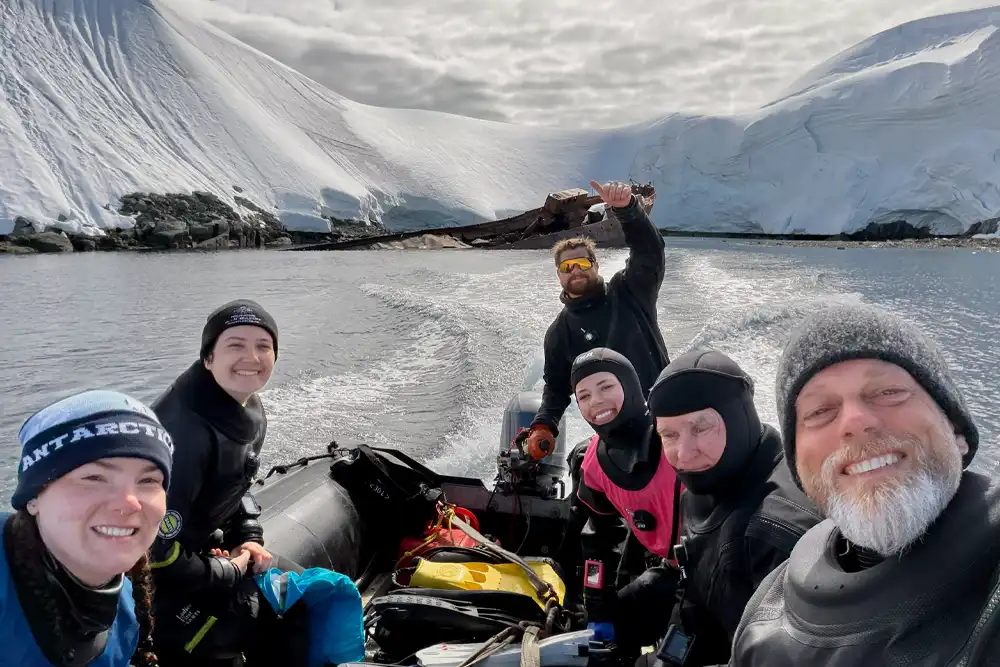
The zodiac slows as it enters the harbour at Enterprise Island, the driver weaving between small pieces of drifting ice. Dry gloves on, our 11mm hoods squeezing our faces, cameras balanced carefully on our laps.
In Antarctica, even the simple act of gearing up takes coordination. There’s no spacious dive deck here, no tank racks or camera tables. Just a small inflatable boat packed with six divers, all trying not to bump into each other as we run through our final checks.
My dive buddy points towards the shoreline. Even from a distance, Guvernøren is unmistakable. Its rusted hull lies partially aground, twisted steel jutting at different angles, with sections of the ship submerged in the below-freezing Antarctic waters. The massive structure looks impossibly out of place against the icy cliffs and floating ice.

We drift closer to the wreck. Hoods are tucked, masks on, regulators in mouths, BCDs inflated, fins on, and everyone leans slightly back in anticipation. The wreck is right there, just below the surface, and we are finally ready to enter the water. The zodiac driver begins the countdown…
‘Three… two… one…’
On one, we all roll backwards at the same time and into the icy-cold water. The cold hits instantly, sharp and exhilarating. I get close to my dive buddy, we make sure all is good, and we descend. Beneath us, Guvernøren stretches out. The wreck is huge, roughly 433ft (131m) long, its scale almost impossible to take in all at once.
History of a mobile whaling factory

Guvernøren was built in 1889 and was originally a British livestock and cargo ship named Europe. She was sold to a Norwegian whaling company in 1912 and renamed Thøger, before being sold again in 1913 and renamed Guvernøren.
The ship was refitted to be a mobile processing station designed to take in whale after whale, rendering them into oil and meal. In that era, the whaling industry was booming, and ships like Guvernøren represented the cutting edge of maritime engineering – large, powerful and capable of operating far from home ports.
In January 1915, Guvernøren was well into the whaling season off the Antarctic Peninsula. As the season was coming to a close, the crew prepared for their long journey home. They were carrying a very profitable cargo of more than 15,000 barrels of whale oil.
It was tradition for whalers to celebrate the end of a successful season, and on 27 January, Guvernøren’s crew held such a party below deck so they could celebrate and unwind after the season.
During the party, an oil lamp was knocked over and the whole ship was engulfed in whale-oil-fed flames. The fire spread at an alarming speed, and the captain, Søren Andersen, had to make a quick decision – either stay anchored and risk losing the crew or take desperate action to save their lives.
He ordered Guvernøren to be deliberately grounded in the shallow waters of Foyn Harbour, on the east side of Enterprise Island. The grounding worked and all 85 crew members were able to get safely to shore before being rescued by another whaling vessel in the area.
A challenging photographic subject

Photographing Guvernøren is an entirely different kind of challenge for a photographer. The wreck is enormous, and conveying its scale takes more than a few wide-angle shots; it demands patience, careful positioning and good communication with your dive buddy.
The water was freezing, hovering just below 0°C, and with every minute that passed, I could feel myself getting colder and colder. My hands, encased in thick dry gloves, had limited dexterity, making adjustments to camera settings and strobes slow and meticulous.
Adding to the difficulty, I had never dived this wreck before. I didn’t know where the best angles would be, which sections of the ship would offer scale, or how the light would interact with the rusted metal of the wreck.
Most of my shots focused on Sarah Yerrace, my dive buddy and model, as I was hired to photograph the new Suunto Nautic dive computer. Her presence added scale and context, turning the abstract rusted body of Guvernøren into a visual story of human versus industrial mass.
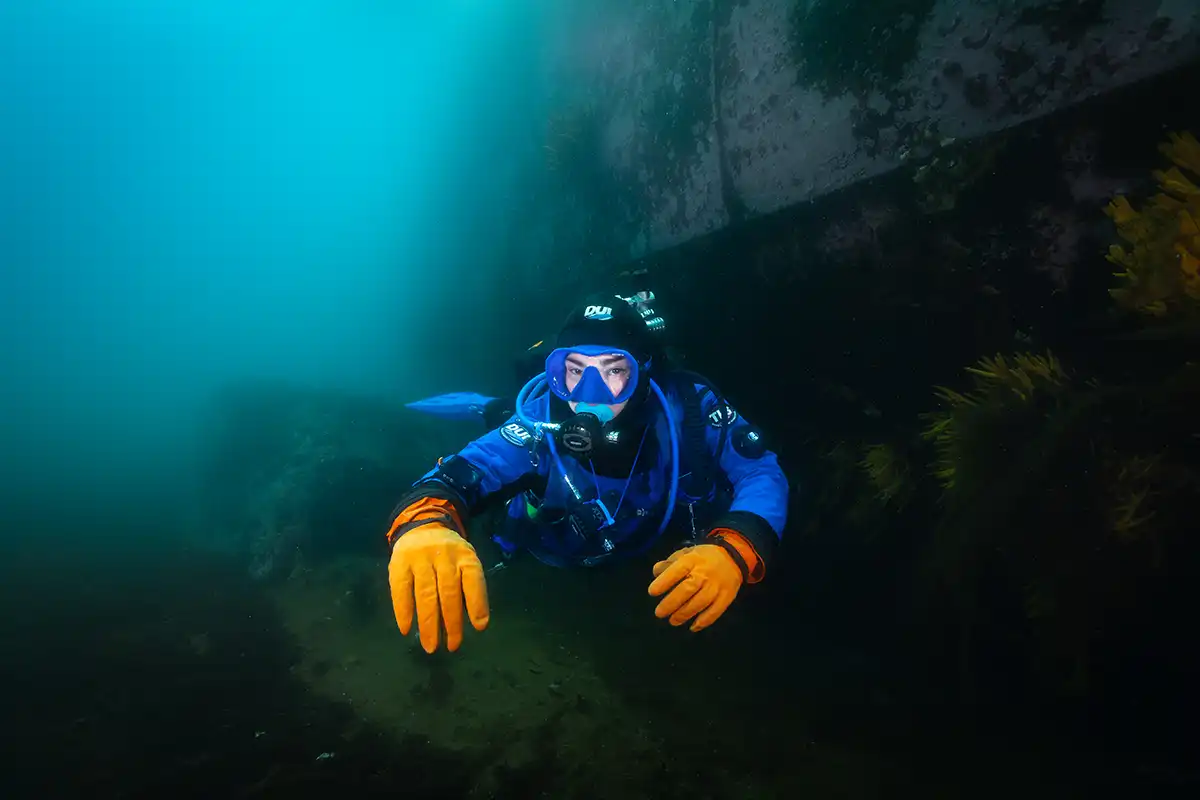
Every decision had to be made quickly and on the spot: choosing composition, framing Sarah, avoiding disturbing silt, showing the Nautic. Despite these challenges, there was satisfaction in navigating a site that is so rarely dived, balancing the unpredictability of visibility, and working with Sarah to create these images.
Despite the challenges of cold water, varying visibility and navigating an unfamiliar wreck, each shot was evidence of careful negotiation with the elements, showing timing, patience and adaptability. But just when I thought I had found my rhythm, it was time to tackle another challenge: split shots. Something I have barely any experience with.
The surface was calm, the sun was out, but the cold was still biting through all my layers as the Zodiac came to collect us. I handed my camera up first, followed by the heavy scuba gear, before hauling myself ungracefully back into the inflatable boat.
Once seated, I quickly removed my strobes, adjusted camera settings, and asked the driver if it was okay for me to get back in the water and snorkel for some split shots. He gave a quick nod and an okay sign, but with a warning: I had to be fast.
Everyone else stayed on the zodiac, waiting and shivering in the cold, and I knew I couldn’t linger. That pressure added a new layer to the challenge.
Making split decisions

I rolled off the side of the zodiac and back into the cold water. The cold hit instantly, sharper this time. I kicked out towards the front of Guvernøren, the section where the bow rises above the water. It was beautiful, rusted and preserved.
I began taking shots immediately, trying to capture the split between the icy water and the rusted hull above. The first frames were total failures. The horizon was slanted, the waterline fuzzy, visibility at the front was awful, and the sunlight was bouncing off the icy mountains behind the wreck, creating harsh contrasts and glare that made it difficult to judge exposure.
I kept fiddling with settings as stress and frustration started to take over. Everyone was waiting for me, my fingers were numb, the drysuit restricted me, and yet I pressed on.
Each failed shot felt like a small defeat, but it was also a lesson. A reminder of how unforgiving and limiting this environment is and how much precision and patience this kind of photography demands. The shots I managed to capture existed because I was able to push through.

Given the conditions and the knowledge I had at the time, that in itself felt like an achievement. If I could go back, I would dedicate far more time to the split shots. It was a steep learning curve that tested both patience and technical skill.
Eventually, I accepted that my time for split shots was up. I signalled to the zodiac and kicked back towards it. Hands reached down to take my camera first and then helped haul me back aboard. Getting back on board felt clumsy and exhausting.
Once I was finally seated, I caught my breath. Everyone was asking if I got the shots I wanted, and I could tell they were very cold. The zodiac started up again, and we headed back to the ship. We all looked at Guvernøren as she disappeared into the distance. The massive hull lay half-submerged, the sun glinting off icy ridges and rusted steel. She looked calm and monumental.

After the fire and deliberate grounding in Foyn Harbour, Guvernøren remained where she had been run aground. Over the decades, the cold Antarctic waters have preserved much of the ship’s structure, while algae and marine life have started to claim it as a home.
What was once a symbol of industrial power became a monument to history, a frozen moment in time that tells the story of human risk and survival.
Today, those lucky enough to experience it don’t just encounter a rusted ship, but a layered narrative: the decisions of the past, the harshness of the Antarctic environment, and the reclamation by the ocean. Guvernøren isn’t just a wreck. It’s history waiting to tell its story.
The post Diving with Bella – photographing Antarctic whaling ship Guvernøren appeared first on DIVE Magazine.
