
 Nöbetçi Eczaneler






by Jan Pehrson
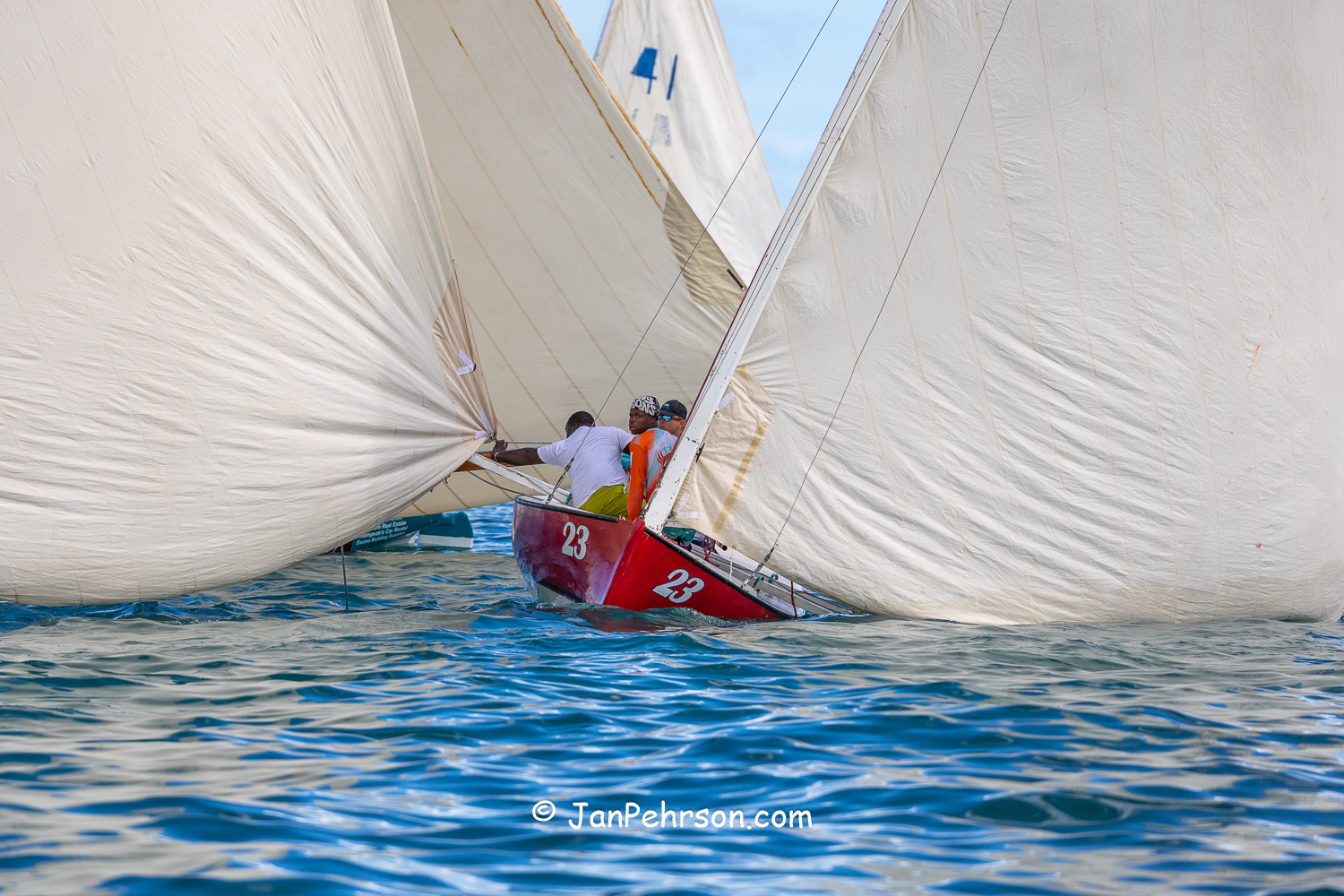
For the past decade my sailing partner, Captain Ken, and I dove headfirst into the colorful chaos of Bahamian wooden sloop regattas. Sailing regattas have been held in the Bahamas for over 70 years, with the inaugural National Family Island Regatta taking place in April 1954 in Elizabeth Harbour, Exuma.
I shoot the regatta photos and tell the stories; Captain Ken makes friends with the boat builders. As he got to know this community, he realized that one of the major bottlenecks in wooden boatbuilding in The Bahamas is the lack of availability of tools and parts.
Without new boats being built, regattas will decline. Nicknamed “Stuffmaster” when he was a kid himself, Captain Ken looked for an answer. “What is the solution?” he mused. When isolated on an island, resources are limited. There is no manufacturing. Over time, it became obvious to him that the islands needed outside resources for the regattas to continue to grow.
Wood is available to Bahamian boatbuilders, including native hardwoods that grow in the swamps – mahogany, horseflesh, lignum vitae, and sea grape. Lumber, often used for planking, can be procured in Nassau, the capital. But unlike wood, manufactured tools and parts must be brought into the islands of The Bahamas, usually by boat.
Manufactured tools are needed. Building a wooden boat requires a combination of traditional and modern tools, including hand tools like chisels, handsaws, planes, and mallets, along with measuring tools such as tape measures, squares, and compasses. Power tools like drills, jigsaws, and band saws are also commonly used for efficiency, while specialized tools may be needed for specific tasks.
Manufactured boat parts are needed. To attach the hull, mast, boom, sails, rigging, and rudder together, you need a full bill of materials – boat hardware such as mast blocks, shackles, chain plates, cleats, pintels, gudgeons, anchor line, an anchor, stainless steel screws and more. You need a trailer to launch and transport your boat.
So, Captain Ken, calling himself “the silent sponsor of the sloops,” began looking for ways to get donated tools and parts to the boatbuilders.
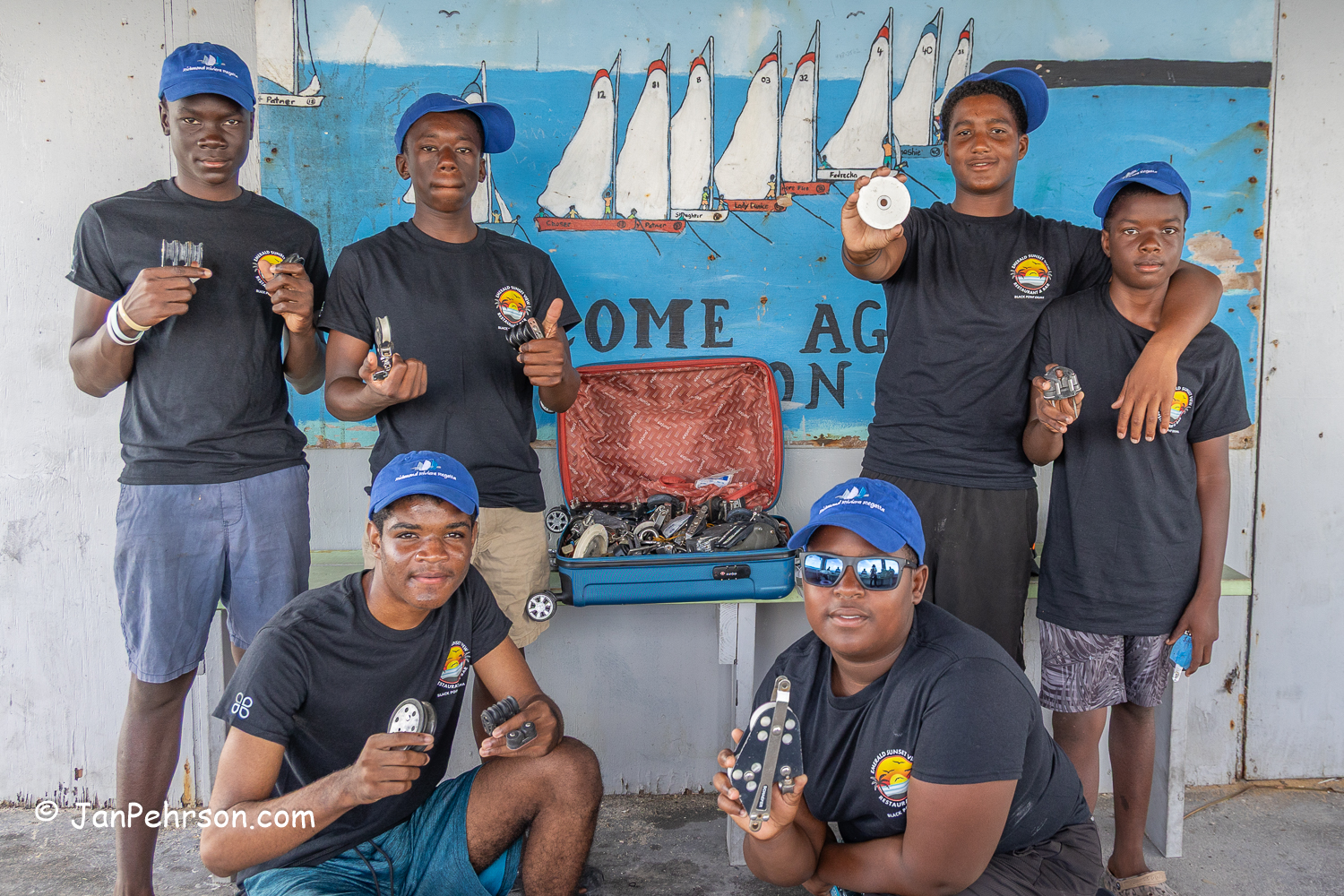
He gave them used tools from his own sailboat, “Slowpoke.” Tides Marine of Fort Lauderdale gave five new sail tracks to the sloops, and the Richmond Yacht Club Foundation of Richmond California donated 49 pounds of stainless used boat parts to the juniors sailors of Black Point Settlement, Exuma.
He combed the pawn shops, nautical flea markets, and marine stores in the United States, acquiring donated tools and parts for the boatbuilders.
“There’s just so much used stuff in the United States that will end up in the dumpster,” he observed. “There are too many parts in the USA and not enough on the islands. For a hundred years or so, electric hand tools have been used with cords you plug into the wall, but now new tools are battery powered which makes all the old, corded tools obsolete. They all end up in the pawn shops or landfill.”
While Captain Ken increased his network of “silent sponsors” with donated tools and boat parts, transporting them to the islands is also critical. Nothing is easy yet the payoff is happening.
Kids in the Bahamas are building E-Class boats right now. Regattas are growing, hands-on skills are spreading, and Bahamian youth are sailing craft they helped create. In the future, they will run the sailing regattas and mentor the next generation.
For now, this is a grass-roots effort, but Captain Ken is considering a GoFundMe or similar campaign to fund shipping and logistics so more tools and parts reach builders who need them. Stay tuned!
Jan Pehrson is a sailing photojournalist who spends summers in San Francisco, California and winters in St. Pete Beach, Florida. As a racing and cruising sailor and Coast Guard licensed skipper, Jan’s familiarity with sailing and the sailing community lends an in-depth element to her prolific array of photographs and articles. Contact her at www.janpehrson.com or jan@janpehrson.com
SCUTTLEBUTT News Link !
DemirHindiSG 28 Ocak 2026-21:33