
 Nöbetçi Eczaneler



Long before European sails appeared on the horizon, the Labrador coast had been home to Indigenous cultures for about 9,000 years, with Maritime Archaic and Paleo-Inuit societies relying on the region’s rich supply of salmon, seals, and walrus. By the mid-1500s, however, the area caught the attention of European industry. Red Bay—dubbed Balea Baya (Whale Bay)—emerged as a major center for Basque whaling.
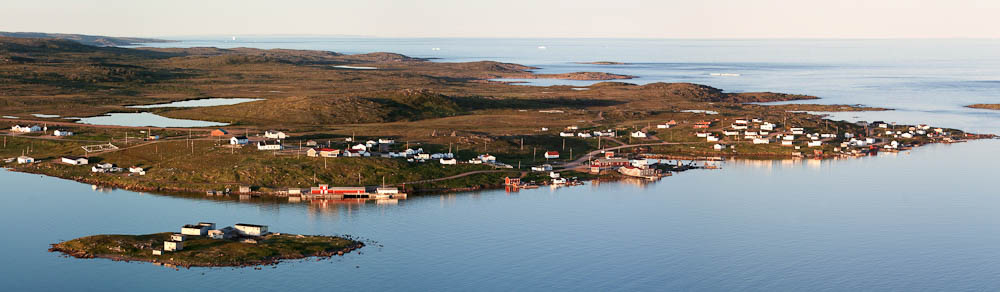
Tucked away on the southern coast of Labrador, Canada, Red Bay might look like a quiet, scenic fishing village with a population of just 140 people—but its postcard views hide a monumental history. This tiny harbor once held massive global significance as a bustling hub of international industry.
During the 1500s, the harbor of Red Bay—known to the Basques as Butus—reigned as the world’s premier whaling port. Each summer, over 2,000 whalers from Spain and France braved the treacherous Atlantic to establish a massive, seasonal industrial operation. They hunted bowhead and right whales to harvest their prized blubber, rendering it on-site into high-grade oil that would cross the ocean to light up the streets of Europe.
Nestled in Labrador, the fishing village of Red Bay doubles as a premier underwater time capsule. Between 1530 and the early 1600s, this harbor was the epicenter of the Basque whaling industry. Centuries later, the remarkable discovery of sunken whaling ships—including large galleons and small chalupas—secured Red Bay’s status as a National Historic Site in 1979 and a UNESCO World Heritage Site in 2013.
The oldest European shipwreck ever discovered in North America, north of Florida, rests in the frigid waters of Red Bay, Labrador. Believed to be the San Juan—a Basque whaling galleon or nao that sank in 1565—the vessel was uncovered by a Parks Canada team in September 1978. Found largely buried and remarkably well-preserved just 100 feet from the inner shore of Saddle Island, the ship sat in 25 to 40 feet of water. At the time of its demise, it was packed with hundreds of wooden barrels meant for whale oil, positioned just offshore from the station’s stone rendering ovens.
Local folklore in Red Bay whispers of a hidden treasure buried by the infamous pirate Captain William Kidd. Legend places the loot inside a body of water known as Pond on the Hill, located right at the foot of Tracey Hill. The tale was taken so seriously that residents of nearby Carrol Cove once launched an ambitious attempt to uncover the pirate’s bounty by completely draining the pond—though their efforts ultimately failed.
A visit to Red Bay offers an incredible journey through time, starting at the Parks Canada Visitor and Interpretation Centre, where you can marvel at an authentic, fully restored 16th-century chalupa recovered from the ocean floor alongside ancient tools and weapons. From there, a quick boat ride transports you to Saddle Island, allowing you to walk among the ruins of old whaling shore stations, historic oil-boiling tryworks, and a 500-year-old cemetery where 140 Basque whalers rest beneath ground still littered with thousands of original European red clay roof tiles. Finally, cap off your adventure by conquering the 689-step wooden boardwalk of the Tracey Hill Trail, which rewards hikers with a breathtaking panoramic view of the entire harbor and the striking red granite cliffs that give this historic town its name.
Because Red Bay, Labrador, has a tiny population of about 140 people, it doesn’t have a large corporate economy. Instead, employment revolves tightly around natural resources, history, regional services, tourism, and fishing. Because local year-round jobs are limited, many skilled tradespeople in Red Bay choose to raise their families in the village but commute elsewhere for work. They travel out to larger mining operations in western Labrador (like Labrador City) or other parts of Canada for weeks at a time, then return home to Red Bay for their off-weeks.
In recognition of its profound cultural value, Red Bay was declared a National Historic Site of Canada in 1979, later achieving international acclaim in 2013 with its inscription as a UNESCO World Heritage Site.
THE SCUBA NEWS Link !
DemirHindiSG
05 Temmuz 2026-20:49

