
 Nöbetçi Eczaneler






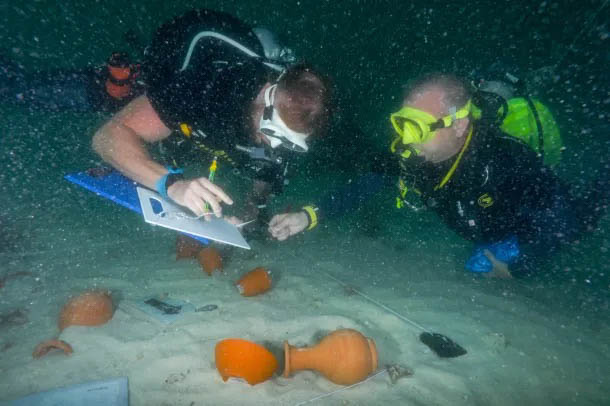
Recreational divers are being enlisted to help document and protect Qatar’s submerged maritime history through a collaborative initiative between Qatar Museums and UNESCO.
The second edition of Diving into Al Zubarah’s Past brought together divers and heritage specialists during November 2026, highlighting the contribution the diving community can make to underwater archaeology and cultural heritage conservation.
The programme culminated in an open day at the Al Zubarah Archaeological Site on 21 November, following specialist workshops designed to equip divers with a greater understanding of archaeological documentation and responsible underwater exploration.
According to an announcement from UNESCO, 15 divers from Al Ghais Diving Centre participated in the workshops, which took place at Qatar Museums on 18 and 19 November.
Turning Recreational Divers into Heritage Guardians
Recreational divers are uniquely positioned to contribute to the protection of underwater archaeological sites. Their familiarity with local waters can provide valuable opportunities to identify potential archaeological features, document discoveries and report changes to known sites.
However, without appropriate training, even well-intentioned divers can inadvertently damage historically significant material or disturb the archaeological context in which objects are found.
The Al Zubarah programme seeks to bridge this gap by encouraging cooperation between the diving community and professional heritage specialists.
Qatar Museums describes the initiative as a long-term citizen science project, launched in 2025 to increase awareness of underwater heritage and strengthen relationships between divers, archaeologists, coastal communities and conservation authorities.
The latest edition was supported by Seashore and EcoLuxia for Sustainability Solutions, alongside Qatar Museums’ Community Service Section.
Exploring Qatar’s Maritime Past
Situated on Qatar’s northwestern coast, Al Zubarah provides an important record of the region’s maritime and commercial history before the development of its modern oil and gas economy.
The former trading settlement was closely associated with pearl diving, fishing and maritime commerce, with connections extending across the Arabian Peninsula, Western Asia and the Indian Ocean.
The Al Zubarah Archaeological Site became Qatar’s first UNESCO World Heritage Site in 2013.
Archaeological discoveries, including pearl diving weights, imported ceramics and evidence of traditional fishing practices, illustrate the importance of the sea to the communities that once inhabited the settlement.
The underwater environment surrounding Al Zubarah offers further opportunities to understand this relationship and investigate aspects of Qatar’s maritime history that may not be represented in surviving structures on land.
Marking 25 Years of Underwater Heritage Protection
The 2026 programme also marks the 25th anniversary of the adoption of the UNESCO Convention on the Protection of the Underwater Cultural Heritage.
Adopted in 2001, the convention provides an international framework for protecting submerged cultural heritage, promoting scientific research, encouraging international cooperation and preventing commercial exploitation of underwater archaeological material.
Qatar ratified the convention in November 2023.
Among its guiding principles is the preservation of underwater cultural heritage in its original location as the first option to be considered before activities involving archaeological recovery.
For recreational divers, this reinforces the importance of observing and documenting underwater discoveries without unnecessarily disturbing or removing them.
A Wider Role for the International Diving Community
Initiatives such as the Al Zubarah programme demonstrate how recreational diving can contribute to scientific research and cultural heritage protection beyond traditional marine conservation activities.
While divers are frequently encouraged to participate in reef monitoring, marine debris removal and biodiversity surveys, underwater archaeology presents another opportunity for meaningful citizen science.
With appropriate training and cooperation with heritage authorities, divers can help protect fragile archaeological environments and contribute to a better understanding of humanity’s maritime past.
The collaboration between UNESCO, Qatar Museums and Qatar’s diving community provides an example of how these relationships can be developed, ensuring that underwater exploration contributes to the preservation of history rather than its loss.
Kaynak: SCUBA NEWS
