
 Nöbetçi Eczaneler




By DIVE Contributors
A recently published study led by the Manta Trust and an international team of researchers has found that manta rays contribute more than US$311 million annually to the Maldivian economy and could generate an estimated US$8.6 billion in tourism revenue over their lifetimes.
Published in PLOS One, ‘Valuing conservation and natural wealth: The blue economy of manta ray watching in the Maldives’ provides the first updated national assessment of the economic and socio-economic benefits of manta ray watching, drawing on tour operator surveys and extensive data analysis.
The researchers estimate that manta ray tourism generated US$227.3 million in direct revenue during 2021, equivalent to around 2.6 per cent of the Maldives’ GDP.
When associated spending, including taxes, salaries and tourism-related expenditure is included, the total direct economic benefit rises to more than US$311 million per year.

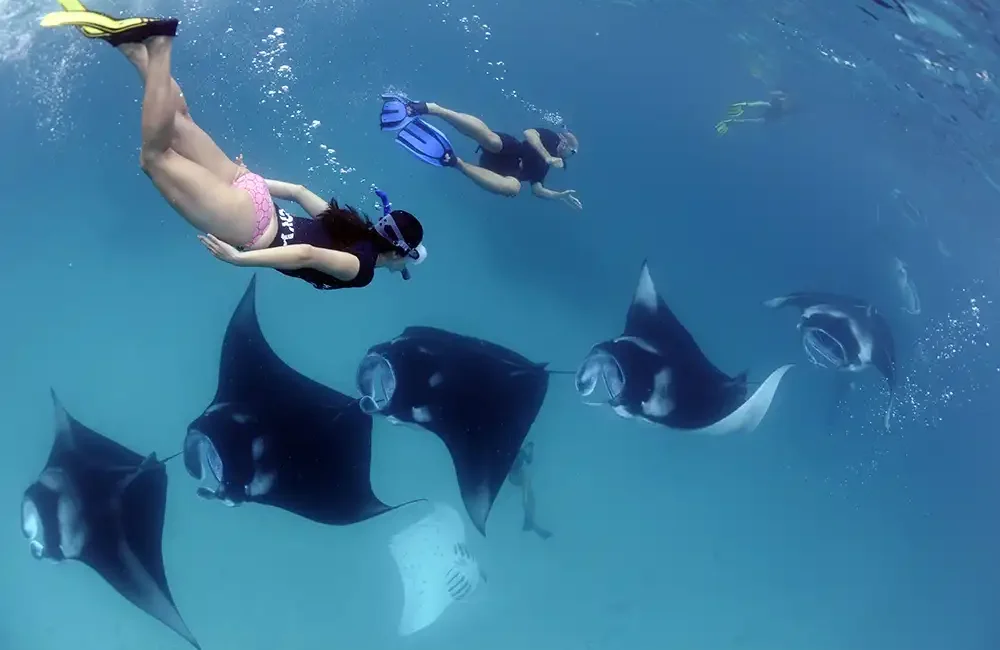
The study also estimates that the Maldives’ population of approximately 3,500 reef manta rays will generate around US$8.6 billion in cumulative tourism revenue over their assumed lifetimes, with each individual contributing an average of up to US$2.6 million through repeated dive and snorkelling encounters.
‘The reason it’s important to put a monetary value on wildlife like manta rays is that a lot of stakeholders, including politicians and other decision-makers, speak in terms of money,’ said lead author Hannah Moloney, a PhD candidate at the University of the Sunshine Coast.
‘They understand when there is an economic value attached to an animal or an ecosystem. If you can put a value on an animal, they’re often more likely to react, and that can help drive positive conservation outcomes.’
The research highlights the rapid growth of manta ray tourism since the last national assessment in 2008. The industry has expanded by approximately 380 per cent and now operates across 95 per cent of the Maldives’ administrative atolls, with around 80 per cent of tour operators offering manta encounters.

Operators identified 92 key manta dive and snorkelling sites throughout the archipelago, underlining both the scale and accessibility of the country’s manta tourism industry.
Although manta rays have long held cultural significance in the Maldives, the study finds that they have also become a major economic asset, supporting employment, local businesses and government revenue.
The authors warn, however, that the rapid expansion of manta tourism must be matched by greater investment in conservation and management, which currently falls short.
To preserve the economic benefit of manta tourism, argue the report’s authors, a greater proportion of the income generated by tourism must be directed to protecting key aggregation and foraging sites, closer monitoring of tourism pressures and the development of nationwide strategies to safeguard manta ray populations.
‘What this study really shows is that manta rays are not just a conservation priority, but a national economic asset,’ said Dr Guy Stevens, Chief Executive and co-founder of the Manta Trust.

‘With that comes a responsibility to manage these populations properly – ensuring tourism is sustainable, key habitats are protected, and enough of the revenue they generate is reinvested back into their long-term survival.’
The researchers also stress the need to better quantify visitor pressure at manta ray sites. While manta tourism is now widespread across the Maldives, relatively little is known about its ecological impacts, raising concerns that increasing visitor numbers could ultimately threaten the very populations that attract tourists.
‘The manta tourism industry is growing rapidly, and with that growth comes increasing pressure on manta rays and their habitats,’ said Moloney.
‘It’s really important that we identify which sites are under the most pressure and understand where the greatest risks are, so we can take action to protect those areas before the impacts become more serious.’
As wildlife tourism continues to expand globally, the authors argue that the Maldives demonstrates how healthy marine ecosystems can underpin national economies.
Recognising the economic contribution of manta rays, they suggest, provides a strong additional argument for protecting the species alongside its intrinsic conservation value.
The complete study, ‘Valuing conservation and natural wealth: The blue economy of manta ray watching in the Maldives’, by Hannah M Moloney et al, is published in PLOS One
The post Manta rays worth US$8.6 billion to the Maldives economy, study finds appeared first on DIVE Magazine.
