
 Nöbetçi Eczaneler




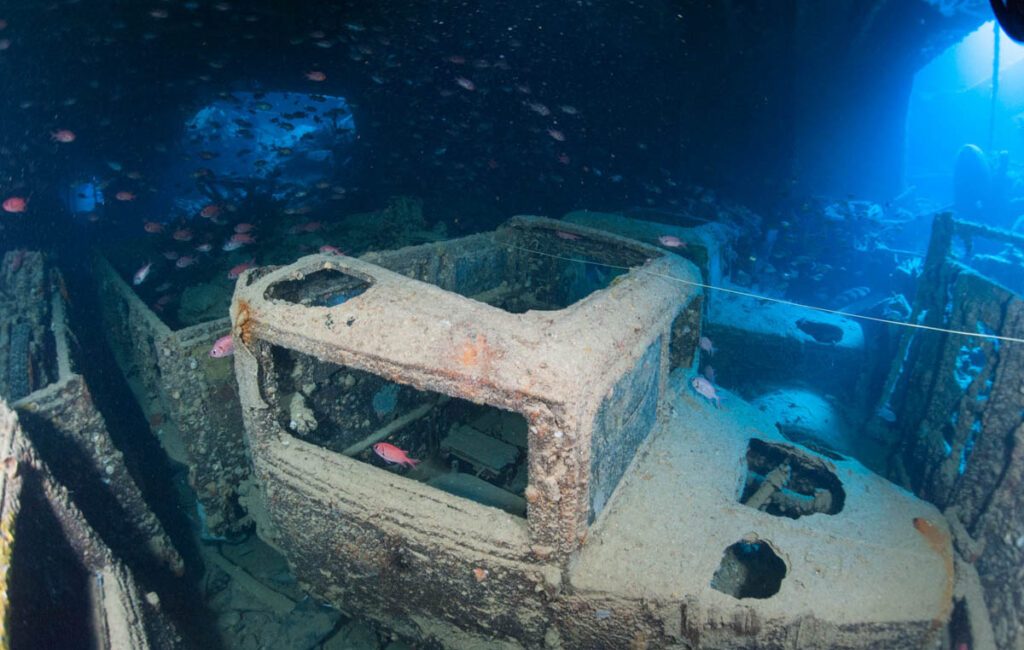
There is a quiet paradox in underwater photography. Divers cross oceans searching for discovery, yet many return repeatedly to the same shipwrecks, photographing identical bows, passageways, and propellers from slightly different angles.
At first glance, that looks like repetition. In reality, it reflects something far more dynamic.
Marine scientists studying shipwreck ecology explain in BioScience that “the artificial structure provided by shipwrecks creates underwater habitat for an array of flora and fauna ranging from microbes to megafauna,” a process that fundamentally reshapes the surrounding seascape as detailed in this peer-reviewed paper published by BioScience.
For photographers, that single ecological truth changes everything: the wreck is never the same twice.
Structure Is the Beginning of Life
When a vessel settles onto the seabed, it introduces complexity into environments that may otherwise be flat or sediment-dominated. The NOAA Ocean Service explains that submerged shipwrecks are the most common form of artificial reef and frequently enhance habitat for corals, fishes, and invertebrates that depend on hard surfaces for survival.
This structural contrast is not trivial.
Scientists at NOAA Coastal Science note that wrecked vessels provide materials “starkly different from the surrounding ecosystem,” allowing microorganisms, algae, corals, and sponges to colonise surfaces while larger marine creatures adopt the site as shelter.
What begins as steel becomes architecture.
Architecture becomes habitat.
Habitat becomes community.
Return visits are therefore less about revisiting a subject and more about witnessing ecological succession in slow motion.
Some Wrecks Become Biodiversity Islands
The habitat effect can extend beyond the hull itself. Researchers investigating deep-sea microbiomes found that shipwrecks may function as “islands of biodiversity,” increasing microbial richness in nearby sediments, a phenomenon documented in this study hosted on ResearchGate.
Even decades later, the influence can persist. A paper in Frontiers in Marine Science reports that a historic wreck continued to steer surrounding sediment chemistry and microbial ecology more than eighty years after sinking, demonstrating long-term environmental impact according to Frontiers.
For underwater photographers, biodiversity means unpredictability.
The empty cargo hold you shot last season may now host schooling fish. Railings vanish beneath sponge growth. Predator behaviour alters the entire visual rhythm of a dive.
Repetition becomes transformation.
Shipwrecks Attract Marine Communities
Within protected waters, shipwrecks are widely recognised as biological anchors. The NOAA National Marine Sanctuaries program describes these sites as seafloor features that attract a wide variety of marine life, eventually supporting stable communities of diverse plants and animals as colonisation progresses.
Predators may even reshape these communities. Research from NOAA’s National Centers for Coastal Ocean Science shows that large predators can prefer artificial reefs such as shipwrecks, influencing the structure of species living there.
From a photographic standpoint, apex presence changes composition overnight.
A wreck without predators feels static. A wreck with them feels alive.
Artificial Habitat Is Expanding Globally
While many natural marine habitats are declining, built marine structures are increasing in extent, a trend highlighted in a NOAA library paper showing that artificial habitats can represent a significant proportion of structured nearshore environments as outlined in this NOAA research archive.
This shift has implications for photographers.
As artificial structure spreads, wrecks are no longer anomalies. They are becoming part of the modern ocean landscape.
Photographing them repeatedly is not nostalgia.
It is documentation of a changing planet.
Why Familiarity Produces Exceptional Images
Beyond ecology lies a simpler truth: mastery requires repetition.
A known wreck removes variables. Photographers learn how currents wrap around the hull, when light penetrates companionways, and where fish aggregate. Instead of searching for composition, they refine it.
The difference between a good wreck photograph and a defining one is rarely luck.
It is patience layered over familiarity.
Many of the most recognisable underwater images exist because someone returned not twice, but dozens of times.
The Camera as a Witness to Time
Shipwrecks occupy a rare intersection between cultural heritage and ecological function. Scholars note that an estimated three million wrecks exist worldwide and are recognised both as archaeological resources and as habitats supporting diverse organisms, a dual role explored in this ecological synthesis available via PubMed.
Every photograph therefore captures two timelines:
• the human story that ended
• the marine story that began
Returning to the same wreck is less like revisiting a place and more like rereading a living text whose pages continue to change.
The Myth of “Already Shot”
Photographers sometimes talk about sites being “over-photographed,” yet the idea collapses under scientific scrutiny.
If ecosystems evolve, communities shift, predator dynamics fluctuate, and microbial processes continue for decades, then no wreck is ever truly finished as a subject.
What changes most is not the wreck.
It is the photographer.
Experience sharpens awareness. Vision matures. Technical restraint replaces experimentation.
Eventually, the return is no longer about capturing the wreck.
It is about interpreting it.
We Return Because the Ocean Never Repeats Itself
So why do we photograph the same wrecks again and again?
Because they are not the same.
They are biological engines, historical monuments, evolving reefs, and silent witnesses to environmental change. Each descent offers a new arrangement of life, light, and narrative.
Familiarity underwater does not breed creative complacency.
It breeds depth.
And in underwater photography, depth is everything.
THE SCUBA NEWS Link !
DemirHindiSG 30 Ocak 2026-16:21
