
 Nöbetçi Eczaneler






The history of the tech world shows that it is far easier to establish principles in advance than to attempt to regain control later. Dan Ibsen of Danish publication Bådmagasinet highlights a new issue in the sport:
Does an Olympic sailor have a right to their own digital performance history, and are others permitted to exploit it for commercial or sporting purposes without the sailor’s consent?
This question might sound like something belonging to Silicon Valley or the major social media platforms. However, as advanced tracking and analysis systems gain a foothold in international sailing, the issue has suddenly become highly relevant on the racecourse.
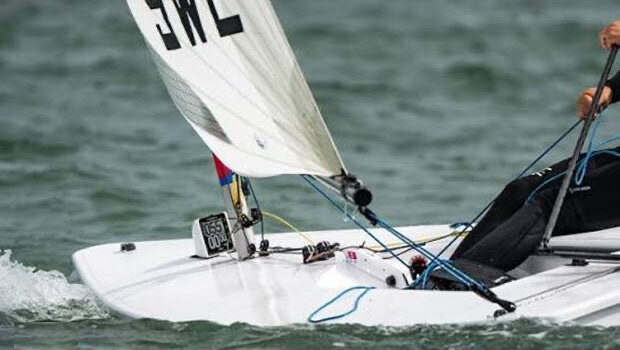
Today, systems such as Vakaros are already being used at a number of international championships.
The technology enables more precise starts, improved officiating, and new possibilities for safety, live tracking, and the promotion of the sport. The trend appears to be moving in only one direction. Several World Championships are already utilizing these systems, and there are strong indications that tracking and data collection will become an integrated—and in some cases, mandatory—part of Olympic sailing in the future.
Yet, amidst the excitement surrounding these technological possibilities, a fundamental question arises:
Who actually owns the data generated by an individual sailor’s performance on the water?
Anders Kristensen, Director of the Danish Sailing Association (DS), raised the question at the 2026 World Sailing Annual Conference. It seems nobody really had thought about this, but many agreed this is highly important and the debate has to happen now.
From sport to data industry
Every Olympic sailor knows that the margins are slim. The difference between a medal and a mid-pack finish can come down to just a few meters on an upwind leg, or a single tactical decision at the windward mark.
As modern tracking systems record every position, course change, acceleration, fluctuation in speed, and maneuver, a detailed digital picture of a sailor’s decisions and performance emerges. Over time, these records evolve into something far greater than a mere summary of results; they become a digital performance history.
Just as the tech industry has discovered the value of user data, the world of sports is beginning to recognize the value of athlete data.
Data is no longer just a byproduct of sport—it has become a resource.
A discussion already underway in other sports
Sailing is not alone in facing this issue. For years, professional cyclists have debated the ownership of power-meter readings and performance data. In football, running patterns, sprints, physical load, and recovery are tracked to an extent that would have been unimaginable just a few years ago. American sports like baseball and basketball utilize massive databases covering player behavior and performance.
At the heart of these discussions lies a fundamental question: where should the line be drawn between the sport’s legitimate need for data and an athlete’s right to control information about themselves?
It may simply be that sailing has reached this juncture a bit later than other sports.
What if data becomes a competitive advantage?
Perhaps the most compelling question is not the commercial one, but rather the one concerning the sport itself.
Imagine that, in just a few years, databases exist containing millions of data points from the world’s best Olympic sailors. Databases that make it possible to analyze patterns in starts, boat handling, tactical choices, and performance under various conditions.
• Who gets access to this information?
• Can it be purchased?
• Can it be shared with third parties?
• Can national federations or elite programs gain access to competitors’ data?
• Can artificial intelligence be trained on the performances of the world’s best sailors?
In theory, such a development could create situations where a sailor’s own historical data becomes more valuable to others than to the sailor themselves.
This would be a paradox—especially if the sailor in question lacks access to that same data or has no control over how it is used.
TV rights or personal data?
Some might argue that this is no different from standard TV rights. Event organizers already own the footage from a regatta. They own the live production. They can sell TV and streaming rights to media outlets and sponsors.
However, tracking data is not necessarily the same as footage.
A TV signal is something produced by the organizer. Tracking data, by contrast, emerges from the interaction between the organizer’s technology and the athlete’s performance. Without the sailor, the data would not exist. This makes the issue more complex.
Therefore, it is by no means certain that the legal and ethical principles applied in the world of television can be directly transferred to the digital data economy.
A debate that needs to happen now
Perhaps the greatest risk is not that someone is misusing data today.
The greatest risk is that the sport might only begin discussing the rules once certain practices have already become established. The history of the tech world shows that it is far easier to establish principles in advance than to attempt to regain control later. Once systems, commercial agreements, and business models have been established, it becomes difficult to change the rules of the game.
Therefore, it seems both timely and necessary that this issue is now being raised for international discussion within World Sailing.
For the technology is not going to disappear. Quite the contrary. Tracking, analysis, and data collection are highly likely to become an increasingly important part of Olympic sailing in the future.
For this very reason, World Sailing should determine, here and now, what rights individual sailors should have regarding their own data.
Because if sailors themselves have no say in how their digital performance history is used, the sport risks creating a system where the most critical resource is no longer talent, training, and experience—but rather control over the data that talent, training, and experience generate.
Kaynak: SCUTTLEBUTT NEWS
