
 Nöbetçi Eczaneler





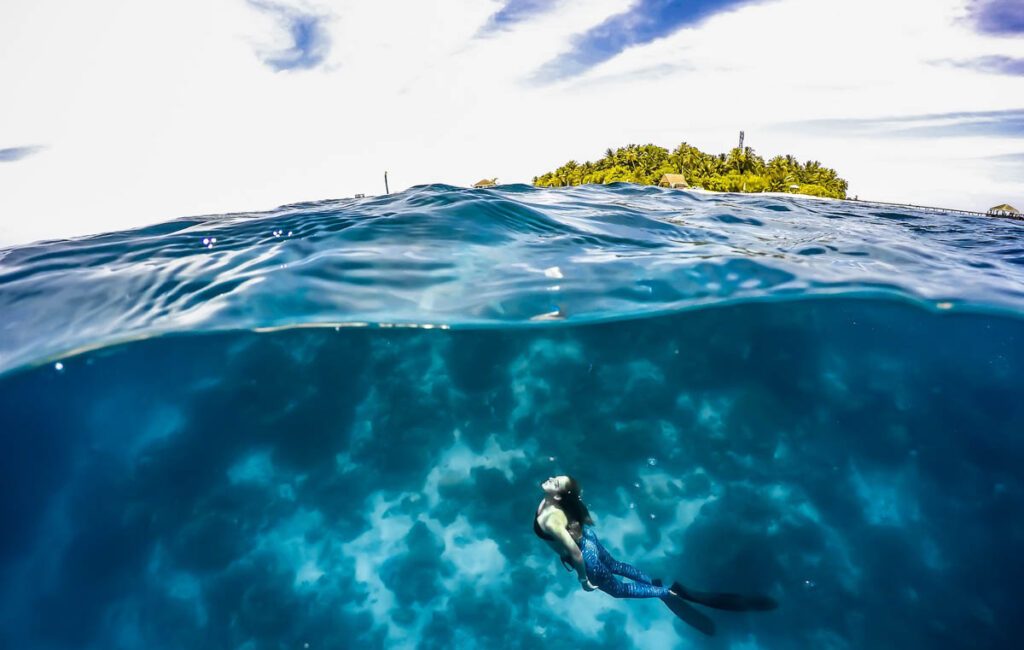
Breath-hold diving is older than writing. Before metal, before maps, people learned to slip beneath the surface, harvest what they needed, and return with lungs burning and hands full. Along the way, some of these divers tilted the course of wars, economies, and even human evolution. Their names rarely appear in modern dive briefings, yet their techniques, tools, and courage echo through every apnea descent today.
A secret war beneath the waves
Ancient Greek historians recorded the exploits of Scyllias of Scione, a diver who defected from Xerxes’ Persian fleet during the Greco-Persian Wars. According to Herodotus’ Histories, Scyllias and his daughter Hydna used their diving skills to sabotage anchored ships, cutting their moorings during a storm and scattering the fleet. Their daring acts bought the Greeks time and marked the earliest recorded use of freediving in warfare. Statues of the pair once stood at Delphi, a rare public honour for divers in an age dominated by warriors and generals.
The stone that carried men to the bottom
Across the Aegean, sponge divers perfected the art of deep breath-hold work using the skandalopetra, a smooth stone slab tied to a rope. The stone guided divers rapidly to depth and back, serving as both ballast and brake. One of the most famous sponge divers, Stathis Hatzis of Kalymnos, cemented his legend in 1913 when he located the lost anchor of the Italian battleship Regina Margherita at a reported depth of over 70 metres. His feat, achieved with nothing but a stone and a lungful of air, is widely considered the first recorded deep freedive in modern history. It also demonstrated the precision teamwork between diver and tender that defined traditional sponge diving for centuries.
The women who fed islands and families
On South Korea’s Jeju Island, the haenyeo, literally “sea women”, built a matriarchal maritime culture centred on freediving for abalone, seaweed, and shellfish. Their breath control, cooperative harvest system, and ocean songs have sustained communities for generations. Recognised by UNESCO in 2016 as an Intangible Cultural Heritage of Humanity, haenyeo diving reflects an intricate balance between ecological knowledge and endurance. Today, many of these divers are in their seventies or eighties, yet still work the reefs, blending traditional practice with modern conservation efforts.
Across the sea in Japan, ama divers, most of them women, have harvested shellfish and seaweed for at least two thousand years. Using little or no gear, they dive repeatedly throughout the day, surfacing to rest beside the iso-bune (floating tub) that marks their position. Regional preservation projects in Mie and Shima are helping to protect this heritage as younger generations rediscover the balance of discipline, freedom, and community identity that defines ama culture.
Pearls that built cities
In the Arabian Gulf, freedivers once powered entire economies through the traditional pearl diving industry. Long before cultured pearls emerged, fleets of dhows left coastal towns such as Bahrain, Qatar, and Dubai for the summer diving season. Each diver descended with a stone weight called a yedi and a woven basket to collect oysters, while a rope tender at the surface counted seconds and hauled him up. The work was punishing and perilous, yet it laid the foundations for the Gulf’s maritime trade. Modern museums in Abu Dhabi and Doha now preserve the songs, tools, and stories of those divers, ensuring their legacy survives beyond commerce.
A people shaped by the sea
Further east, the Bajau of Southeast Asia, often called “sea nomads”, live much of their lives afloat, freediving daily to fish and gather food. In 2018, a study published in Cell revealed that the Bajau possess a genetic adaptation leading to unusually large spleens, a trait that boosts oxygen storage in the blood. This evolutionary response to centuries of breath-hold diving marks one of the few known human physiological adaptations to the sea, blurring the line between culture and biology.
What modern divers can learn
Today’s competitive freediving is a high-tech pursuit of marginal gains, yet its deepest roots are practical. Scyllias reminds us that underwater skill once shaped the outcomes of wars. The sponge divers of Kalymnos prove that innovation often begins with simple tools. The haenyeo and ama show how freediving can sustain entire communities, while Gulf pearl fishers highlight the cost of human endurance when pushed to its limits. The Bajau stand as living evidence that adaptation to the sea can become written in our DNA.
Three lessons echo through their stories. Teamwork, every traditional diver relied on a tender, a crew, or a chorus above. Restraint, seasonal rules and collective wisdom kept marine resources sustainable long before modern conservation. And respect for limits, every diver, from Jeju to the Aegean, knew that breath and humility defined survival beneath the surface.
Keeping the stories alive
These divers are not footnotes; they are the spine of underwater history. Credit UNESCO for elevating the haenyeo’s legacy. Credit cultural historians who preserve Scyllias and Hydna’s feats, and Aegean crews who still practice skandalopetra for heritage festivals. Credit Gulf archivists who present the full story of the pearling era, its beauty and its hardship. And credit the Bajau, whose lives remind us that humanity and the ocean are inseparable.
Their stories belong in every diver’s education, not only as history but as a living guide to how we can dive, work, and protect the seas with the same grace they once did.
THE SCUBA NEWS Link !
DemirHindiSG 16 Aralık 2025-17:44