
 Nöbetçi Eczaneler







The ensuing shipwreck claimed the lives of at least 535 individuals, making it the most significant civilian maritime catastrophe in the North Atlantic for a quarter-century, a record it held until the loss of the SS La Bourgogne in 1898. Furthermore, the sinking remained the deadliest event in the history of the White Star Line for nearly forty years, eventually surpassed only by the famous RMS Titanic disaster in April 1912.
Constructed in 1870 by the Belfast-based shipbuilders Harland and Wolff, the Atlantic was the second of four pioneering Oceanic-class vessels designed for the White Star Line. Alongside its sister ships—the Republic, Oceanic, and Baltic—it was engineered for both power and efficiency. The ship utilized a 600-horsepower compound steam engine built in Liverpool, which allowed it to reach speeds of roughly 14.5 knots. For navigation and control, it featured a bridge-to-engine room telegraph and a steam steering system similar to the one used on the famous Great Eastern. To complement its mechanical power, the vessel was also rigged as a four-masted barque.
The Atlantic was notably long and narrow, with a length-to-beam ratio of 10:1 and a gross register tonnage of 3,707 tons. Its internal structure included three decks and five bulkheads for stability. Inside, the ship set a new benchmark for maritime luxury. The “Cabin class” accommodations were situated amidships and featured a massive saloon that spanned the entire width of the hull. These high-end quarters offered modern conveniences like running water and steam-heated baths. In contrast, the ship could also hold 1,000 steerage passengers, with separate living areas designated for single men, single women, and families.
Following its inaugural trip to New York in June 1871, the Atlantic was marketed as a leader in passenger safety and comfort, even providing dedicated medical staff and stewardesses. The ship’s career was largely smooth, completing 18 successful round trips across the ocean. Its only significant mishap prior to its final voyage was a minor collision with the SS Alexandria in late 1871, which did little to dampen its reputation at the time.
On March 20, 1873, the SS Atlantic set out from Liverpool on its 19th crossing, carrying a total of 952 individuals, including 14 stowaways. The journey was immediately plagued by severe weather, as the vessel fought against violent seas and powerful headwinds. These conditions forced the engines to work at a much higher intensity, leading Captain James Williams to grow anxious about the ship’s fuel levels. In reality, the ship held a sufficient supply of coal; however, the chief engineer, John Foxley, had been providing artificially low estimates of the remaining stock—a common, albeit risky, contemporary tactic intended to ensure the crew managed resources conservatively.
By the eleventh day of the voyage, the disconnect between the reported and actual fuel reserves led to a critical decision. Foxley informed the Captain that only 129 tons of coal remained, a figure he knew was an underestimate but felt compelled to maintain to hide his previous accounting errors. Based on a daily consumption rate of 70 tons, the ship appeared to lack the fuel required to cover the remaining 460 miles to New York. With the intense headwinds making it impossible to rely on the ship’s sails as a secondary power source, Captain Williams felt he had no choice but to change course.
The Captain decided to divert the steamer to Halifax, Nova Scotia, which was only 170 miles away and a standard refueling stop for vessels in distress. This maneuver, while logical on paper, introduced a new set of dangers. It was the first time a White Star Line vessel had attempted to enter Halifax, and none of the deck officers possessed personal experience or navigational familiarity with the treacherous approaches to that specific harbor.
As the SS Atlantic neared the Nova Scotian coastline on the night of March 31, the vessel battled intense storms and fluctuating visibility while maintaining a speed of 12 knots. Neither the crew nor the passengers realized that powerful ocean currents and heavy winds had gradually pushed the ship more than 12 miles west of its intended path. Around midnight, Captain Williams retired to his cabin to rest, leaving Second Mate Henry Ismay Metcalfe in charge with explicit orders to wake him at 3:00 am. The Captain intended to pause the ship’s progress at that hour and wait for the safety of daylight before entering the harbor, but his subordinates failed to follow these instructions.
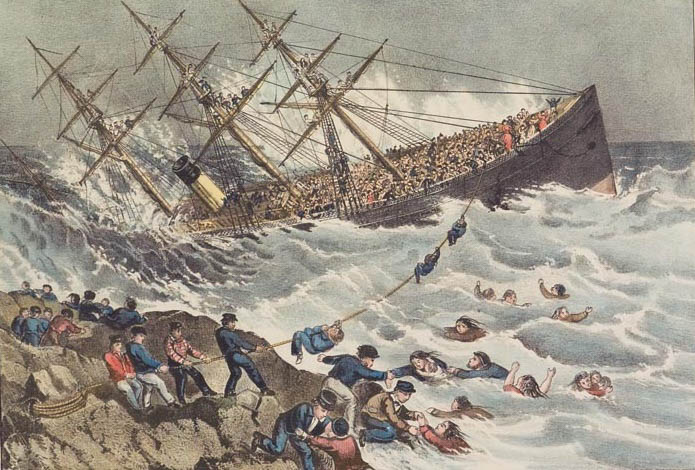
In the early hours of April 1, 1873, the SS Atlantic met its tragic end after a lookout’s frantic warning of breaking waves came too late to prevent a collision with an underwater reef off the coast of Nova Scotia. Despite a desperate attempt to reverse the engines, the ship struck the rocks at nearly full speed, shattering its iron hull and tilting sharply as it began to sink into the shallow seabed. The situation turned catastrophic as all ten lifeboats were destroyed by the relentless surf, and while distress signals were fired repeatedly, no help arrived in time to save those trapped within the flooding cabins. Many passengers who reached the deck were swept away by the crashing waves, creating a scene so crowded with victims that witnesses likened it to floating cargo, while those who sought refuge in the ship’s rigging eventually succumbed to the freezing temperatures and fell into the sea.
.jpg)
The approach turned increasingly dangerous as the crew, largely unfamiliar with the local geography, neglected standard safety protocols. No one measured the water’s depth, reduced the ship’s speed, or stationed a lookout at the masthead to scan for hazards. Because the vessel was so far off-course, it missed the critical signal from the Sambro Lighthouse, the primary navigational landmark designed to warn sailors of the treacherous rocky shoals guarding the harbor’s western entrance.
Despite the lack of a visible beacon, the officers remained overconfident. The ship’s quartermaster, Robert Thomas—the only man on board with any prior knowledge of Halifax—became deeply alarmed when the lighthouse failed to appear. He repeatedly warned both the Second and Fourth Mates that the ship was likely in danger and urged them to halt their progress. However, his professional concerns were ignored by the officers, who continued blindly toward the rugged coastline.
The survival of many passengers was primarily due to the heroic actions of Third Mate Cornelius Brady and quartermasters John Speakman and Edward Owens, who braved the freezing waters to swim a rope to the coastline. By daybreak, they had successfully rigged five separate lines connecting the wreck to a nearby rock and then to the mainland, providing a desperate escape route for those able to swim or pull themselves along the ropes. Local fishermen from Lower Prospect and Terence Bay joined the effort by 6:00 a.m., launching small boats to retrieve survivors from both the wave-swept rocks and the remains of the ship until the operation concluded at noon. Despite these valiant efforts, the disaster claimed at least 535 lives, resulting in a staggering mortality rate where only 429 people survived. The tragedy was marked by a devastating loss among the most vulnerable; of the 952 people on board, every woman and nearly every child perished, with the sole exception of a young boy named John Hindley. This event stood as the deadliest civilian shipwreck in the North Atlantic for over two decades, claiming ten crew members while leaving a haunting legacy of loss.
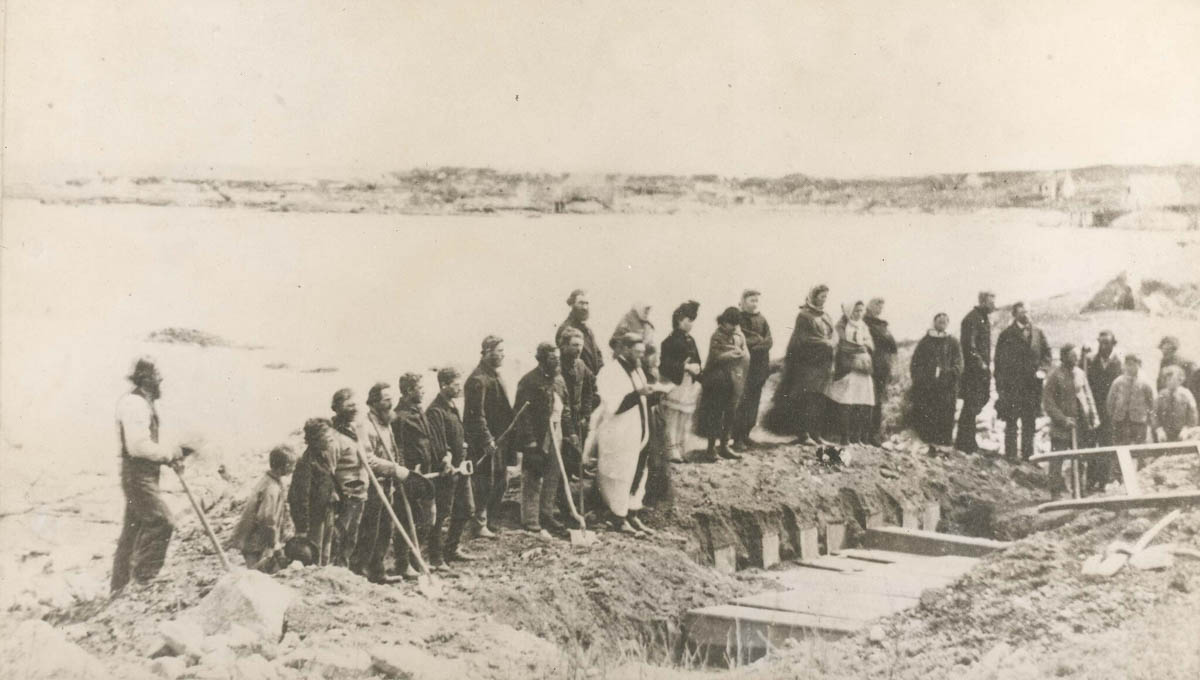

The process of retrieving and identifying victims of the wreck spanned several weeks, as specialized divers were incentivized with rewards to recover the numerous bodies trapped within the submerged iron hull. A salvage firm from New York eventually deployed advanced equipment to the site to reclaim the ship’s cargo and locate the deceased, with international reports from May 1873 noting that explosive charges were used to breach the wreckage, leading to the recovery of 349 bodies and a significant amount of property. Among the grim discoveries was a sailor known to the crew as “Bill,” whose true identity as a woman aged twenty to twenty-five was only revealed during burial preparations. Having served undetected through three separate voyages, she was remembered by her shipmates as a well-liked and capable sailor who shared in their daily habits, leaving her fellow crew members both shocked by the revelation and mourning the loss of a companion they had considered a “good fellow” and a peer.
After:
The aftermath of the tragedy involved two major inquiries that sought to assign responsibility for the vessel’s loss. The initial Canadian government investigation leveled harsh criticism against Captain Williams, concluding that his failure to take regular depth soundings while approaching the coast was a grave dereliction of duty for an officer in his position. While his master’s certificate was suspended for two years rather than revoked—a leniency granted due to his life-saving efforts during the wreck—the inquiry also took aim at the White Star Line, suggesting the ship lacked the necessary coal reserves for its class. However, a subsequent British Board of Trade inquiry eventually cleared the company of these specific charges; upon closer analysis and an appeal, investigators determined that the Atlantic actually possessed enough fuel to reach its original destination of New York with a surplus of 70 tons. The root of the fatal detour was actually traced back to a miscalculation by the ship’s engineer, Mr. Foxley, who had deliberately underreported the remaining coal levels to the captain to protect his professional pride, inadvertently triggering the catastrophic sequence of events.
.jpg)
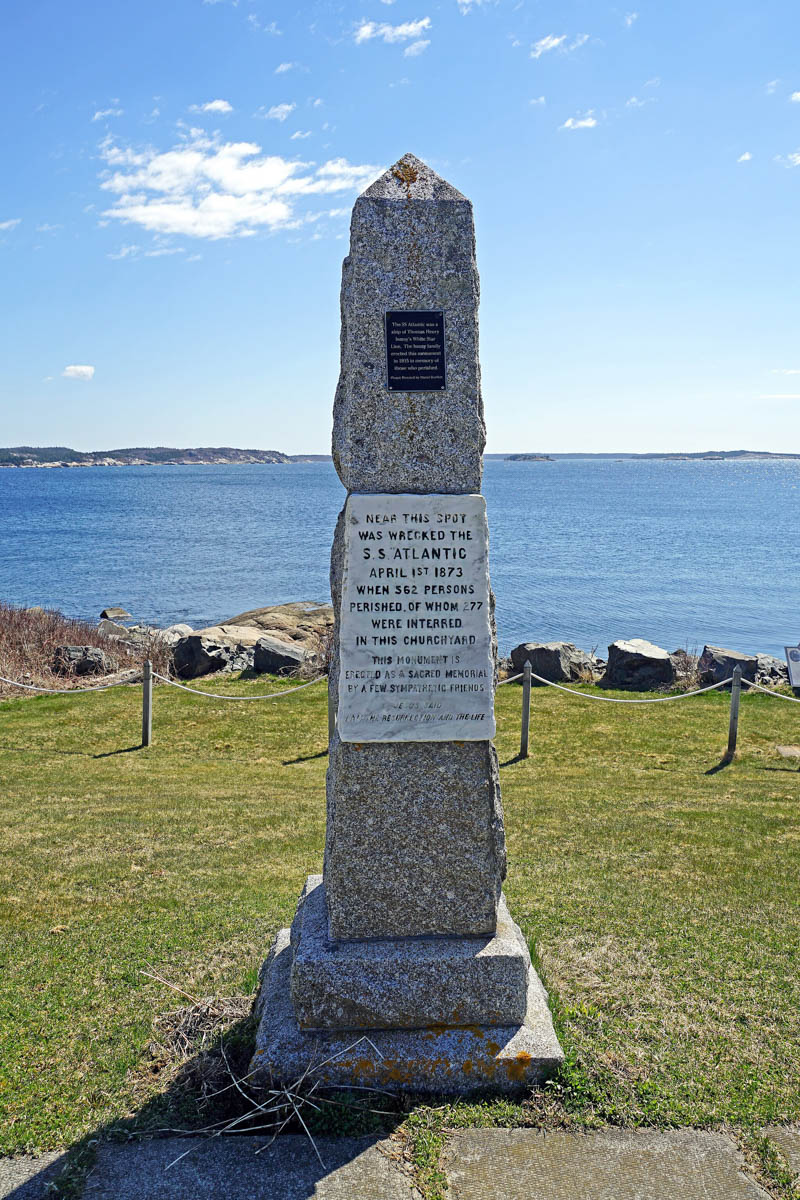
Memorial donated by ship owner Thomas Henry Ismay (Owner of the White Stare Line) family at the site of the mass grave.
THE SCUBA NEWS Link !
DemirHindiSG 11 Mart 2026-14:25