
 Nöbetçi Eczaneler



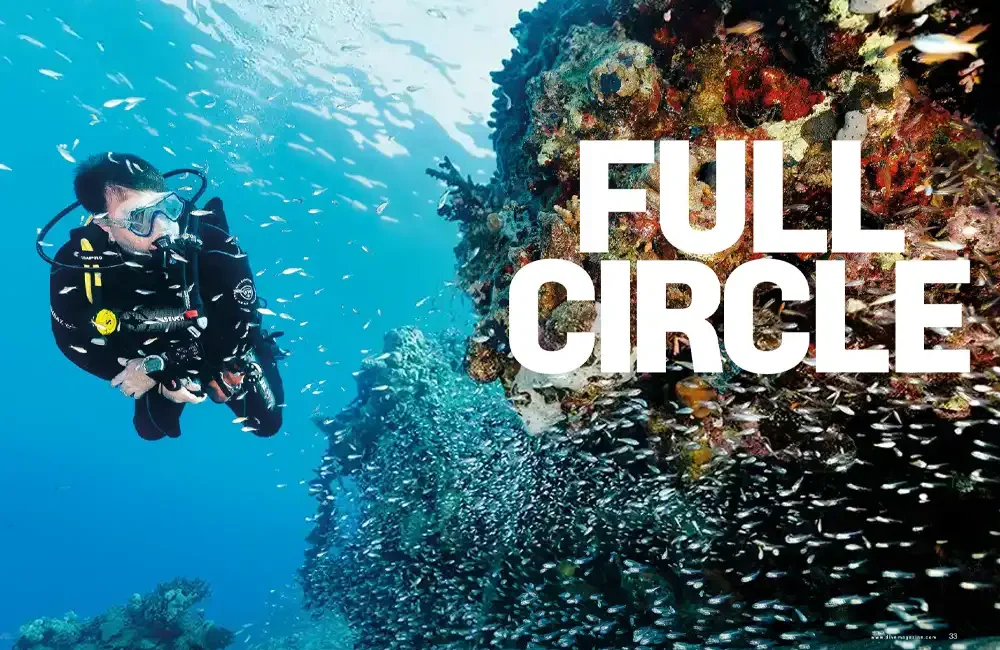
After a long absence from the water, DIVE’s Editor Mark ‘Crowley’ Russell makes a return to diving in Sharm El Sheikh, where he first learned to dive 25 years ago, and spent the best years of his life as a dive professional.
Words by Mark ‘Crowley’ Russell, pictures by Jovana Milanko
IN THE BEGINNING
It was late in the year 2000. Having spent much of my teenage life overseas, I had not left the UK for nine years – I was bored and I needed a holiday. The brochure fairly leapt off the shelf of the travel agent – Learn to Dive in Sharm El Sheikh, Egypt! Flight, hotel and PADI Open Water Course: £470 (yes, really)!
Twenty-five years ago, almost to the day that this article was published, I walked into the waters of Na’ama Bay and – pardon the cliché – never really left. The sparkling blue water, the gloriously coloured coral; a squadron of eagle rays passing by as I performed my skills in the confined waters of the bay.
The adventure, the camaraderie with my instructor and student peers, the lunch on the boat and the evenings reliving the experience in the legendary Camel Bar.
I returned to Sharm El Sheikh each year for the next four years. It became a sanctuary of sorts. My last trip as a tourist was in 2004, following both my parents’ separation and an unpleasant breakup of my own.
I made my first dives on the wreck of the SS Thistlegorm that year. On the early morning voyage, I took a photograph of a dive boat silhouetted against the rising sun and e-mailed it to my mother with just one word: ‘Happiness.’

I was an Advanced Open Water diver with around 70 dives at the time and quite naturally fell into helping other divers. My instructor, Ulrike, asked if I had ever thought about becoming a dive instructor, because I ‘would be really good at it.’
At 3 am on the final night of that trip, after the imbibition of copious amounts of Sakara beer, I drunkenly said I would.
That picture of the dive boat at sunrise was spread across my computer desktops for the next six months as I searched for opportunities to become an instructor.
In the end, I decided to experience some other parts of the world and took my PADI Instructor Development Course in Thailand. I spent three years there before taking a job on the Caribbean island of Curaçao, from where, thanks to a muddle-up with paperwork, I was unceremoniously deported in May of 2009.
A friend and former student of mine invited me to Sharm. As soon as I stepped out of the airport and felt the familiar dry heat of the cloudless blue sky, and the distinctive smell of the desert set against the dramatic mountain backdrop, I felt like I’d come home.

I settled in quickly, freelancing for several centres before settling at Sinai Divers, for me the best in Sharm and one of the oldest dive operations in the Red Sea, founded by German pioneers Rolf Schmidt and Petra Roeglin in 1974.
By the time I arrived in early 2009, Sharm was a well-oiled, if oftentimes chaotic machine, but there was an accepted way of doing things which made it all work, and to which all the top centres adhered.
Divers were ‘levelled’ to match their ability with the difficulty of the dive site; there were approved methods of conduct underwater and of diving Thistlegorm. There was no room for unprofessional staff. You were either really good, or you moved on – and word of mouth ran rapidly and widely across the resort.
I like to think I experienced the tail end of what I call Sharm’s ‘golden years’. The Camel Bar’s legendary Friday night parties were still in full swing, the diving was awesome, and life was good.
The dive boat at sunrise in the picture I had all over my computer screens five years before? I worked that same boat every other day now, and regularly took her to Thistlegorm myself.
A LONG GOODBYE
Working in Sharm was a dream – anybody who’s dived there will know the fleet of well-appointed white dive boats, their well-trained crews and the fantastic lunches made onboard (if you don’t remember that, then you were diving with the wrong people!)
Income was the best I ever earned as a dive pro, and we lived comfortably. High season was hectic, but the payoff was spending weeks in what I consider to be the most beautiful waters on the planet, guiding expert-level divers around those glorious reefs. I sometimes felt guilty that I was being paid for it.
In December 2010, a series of shark attacks, one of them sadly fatal, almost brought Sharm to a standstill. A lot of divers cancelled and business took a downturn over the traditionally busy Christmas period.
The worst was yet to come, however – and I will never forget the day I came home to find my flatmate crying in front of the TV – as, on 25 January 2011, violent protests erupted in Cairo following the ousting of Tunisia’s president a week earlier; the start of the so-called ‘Arab Spring’.
Egypt’s dictatorial president, Hosni Mubarak, would step down on 11 February, but only after a series of bloody battles between protesters and his loyalist police. The resorts were unaffected by the violence but tourism to Egypt, needless to say, stopped.
In a way the timing was fortunate for business, because the revolution happened during the lowest part of low season, so takings were not as badly affected as they would have been had it happened later in the year.
With flights to Egypt cancelled, however, some of the European staff who had left for the winter break never came back. Once flights resumed, others left for more stable waters. I had enough money to pay one more month’s rent, so I decided to stay.
My love of Sharm began to slowly diminish. The diving was still awesome, but we were understaffed and overworked, and Sharm was no longer the diver-centric place it used to be. It was increasingly apparent that for many visitors, scuba diving was just a box to tick when visiting Egypt: ride camel, visit pointy buildings, find Nemo.
The old times were moving behind us quickly. The Camel Bar was restyled as a sports bar but without the Friday night diver parties, and Sharm’s longer-term residents began to dwindle away.
By the end of 2011, despite having only been in Sharm for two and a half years, I was considered something of an old hand. I took a lot more responsibility around the dive centre, but life just wasn’t as fun as it used to be.
By the end of 2012 my closest friends had all left, or were leaving, and I had stopped loving the thing I loved most in this world. I left in February 2013, with no plans to return, or even work in scuba diving again.
THE BEGINNING OF THE END
I lasted about two weeks back in the UK before I took a job managing a dive centre on Nusa Lembongan, Bali, but I hung up my professional fins permanently a year later, in June 2014.
I lasted six months in an office job before quitting to take a temporary job as a delivery driver and focus on writing. I had been writing an ‘Easy Diving’ column for DIVE since 2011 (a result of the shark attacks, as it happens), and eventually found myself taken on as the magazine’s Senior Correspondent, and now Editor.

Diving journalism comes with some spectacular diving-related perks and I spent the next few years enjoying trips to exclusive resorts in far-flung destinations, until, in April 2019, I was given a diagnosis that I thought meant I would never dive again.
The short version is that a visit to hospital ended with me being diagnosed with seriously high blood pressure and hypercholesterolaemia. A year’s worth of medical experiments later, and I was told I had heart disease.
I had also been researching and writing about Immersion Pulmonary Oedema (IPO), a condition whereby the lungs spontaneously fill with fluid and which is increasingly thought to be the number one killer of divers.
The most common triggers appear to be overexertion in cold water by people with high blood pressure. As a self-described shallow-water tropical fish-botherer I try to avoid cold water and overexertion, but even in the tropics that’s not always possible, so I resigned myself to life as a scuba diving journalist who doesn’t scuba dive. Great.
A NEW LEASE OF LIFE
Fast-forward five years and, having not died, and with my blood pressure and cholesterol levels now firmly under control, I discovered during a routine hospital consultation that my personal condition was not as awful as I had first been led to believe.
I kept putting a dive medical on the back burner, but earlier this year, however, two things made me reconsider. Firstly, I was offered a super-interesting press trip to America on behalf of Garmin, and secondly, I watched Ozzy Osbourne, of whom I have been a lifelong fan (the clue is in the name), at 76 years of age, and with half of his body somewhat less than functional, belt out an amazing performance at his farewell gig in July.
‘Crowley,’ I said to myself, ‘you’re 51 and you’re in a lot better shape, so get your backside off that chair and into your dive gear.’ I booked (and passed, with advisories) a dive medical and, two weeks later when the Prince of Darkness died, hoped that his inspiration wouldn’t send me to a watery grave in a flooded North Carolina quarry.
If I was going to get back in the water properly, however, it could only be Sharm – a place where I have dived most of the individual reefs more times than many divers rack up in a lifetime; where conditions are either easy, or easy to get out of; where there are comprehensive medical facilities and, of course, the legendary Dr Adel Taher and his hyperbaric clinic.
I knew Sharm was very different though. I still have friends there and am familiar with the huge changes it has undergone. I desperately wanted to return, but I was a little afraid of what I would actually find, 13 years after leaving.
THE CHANGING OF THE GUARD
The shutdown after the shark attacks and 2011 revolution affected me personally, but Sharm suffered two more devastating shutdowns in the years since.
On 31 October 2015, a Russian airliner was bombed leaving Sharm El Sheikh airport, with the loss of all 224 passengers and crew, resulting in a global halt on direct flights to Sharm.
Of the three largest contingents of tourists to Egypt, Germany resumed flights within six months, but Russia didn’t fly to Egypt at all until 2018, and the British government, shamefully, did not allow direct flights to Sharm to resume until 2019. The loss of business was catastrophic.
Big-name dive centres were forced to close or relocate, but just as tourism was picking up – again – the entire world needlessly shut down over a virus.
The Covid pandemic forced some of the biggest names in Sharm, including Sinai Divers, Werner Lau, Ocean College and Colona Divers, to shutter their operations permanently.
Recovery has been slow and hampered by the war between Russia and Ukraine – formerly two of Egypt’s largest tourist cohorts – and the Israel-Gaza conflict, because many people assume any regional conflict will spill over into Egypt and Jordan.
Sharm itself has changed immensely – construction is never-ending (and in some cases, never finished). A huge spate of development prior to the climate change conference COP27 saw the construction of a vast six-lane highway – which seems something of an ostentatious folly, given the actual volume of traffic – plus decorative structures and a host of cafes lining the main road into Na’ama Bay.
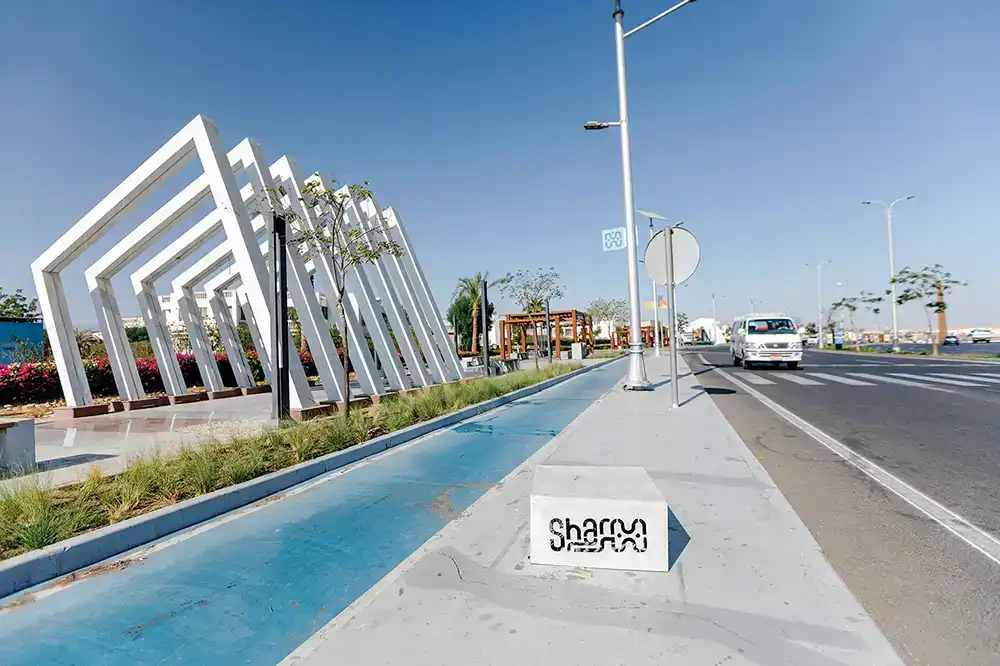
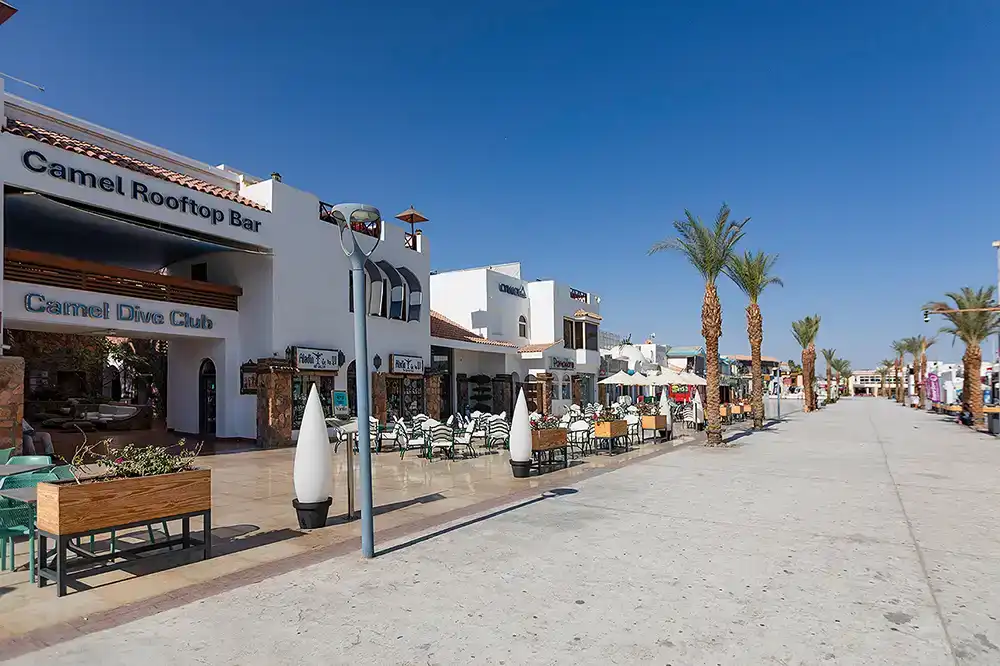
Cynical me laughed at first, but passing through it every day, I came to appreciate the aesthetic. Not so much the installation of roundabouts, which local drivers treat like circular obstacles on an otherwise straight road, and pedestrians use as traffic islands – a moderately hair-raising experience.
Tourist demographics have changed – when European nations stopped flying, operators targeted the domestic market and those of neighbouring Arab states – and today, you’re as likely to hear Arabic-flavoured pop music in any given bar as European electro beats.
Whereas scuba diving was once the mainstay of Sharm’s existence, it is no longer the money-spinner it used to be. The Egyptian pound has devalued by around 600 per cent since I left, and booming in-country inflation has seen steep rises in the cost of fuel, food, equipment, and staff wages.
Margins for scuba diving have always been slim, but now they are wasting away, so many operators have turned to snorkelling instead. A boat that takes 25 divers can take 50 snorkellers, who pay similar prices for their trips but with substantially lower overheads.
Most of the dive staff now are Egyptian rather than the European majority of the past, but enough of the old ways have been preserved so that reputable centres, such as the one I would be diving with, provide the same great services as I remember.
SCUBA DIVING IN THE NEW SHARM

Circle Divers was founded in 2016 by Abdelsalam Awad, a friend and former colleague from Sinai Divers. A native Egyptian fluent in English and German, he stood out among the new recruits following the 2011 revolution as enthusiastic and amiable, with a timely sense of humour and an eagerness to learn.
Faced with the prospect of unemployment brought on by the shutdown following the Metrojet disaster in 2016, he took the risky decision to start his own business rather than move away from the place he loved.
Today he has two highly regarded centres in Sharm and Dahab, employing around 30 staff between them, most of whom are Egyptian, including the ten dive guides and instructors.
Many of the guests I met were long-time repeaters from the Sinai Divers of old – high praise indeed from discerning German divers.
I interviewed him some years ago and asked why he took that risk. ‘I just love Sharm, and I cannot give it up,’ he told me. ‘I want to do my best to make this place alive again, and I am sure people will keep coming to Sharm.’
He has succeeded by retaining much of the philosophy of the old school of Sharm diving, and the boat, the guides, the briefings and the excellent lunches made me feel like I had stepped back in time.
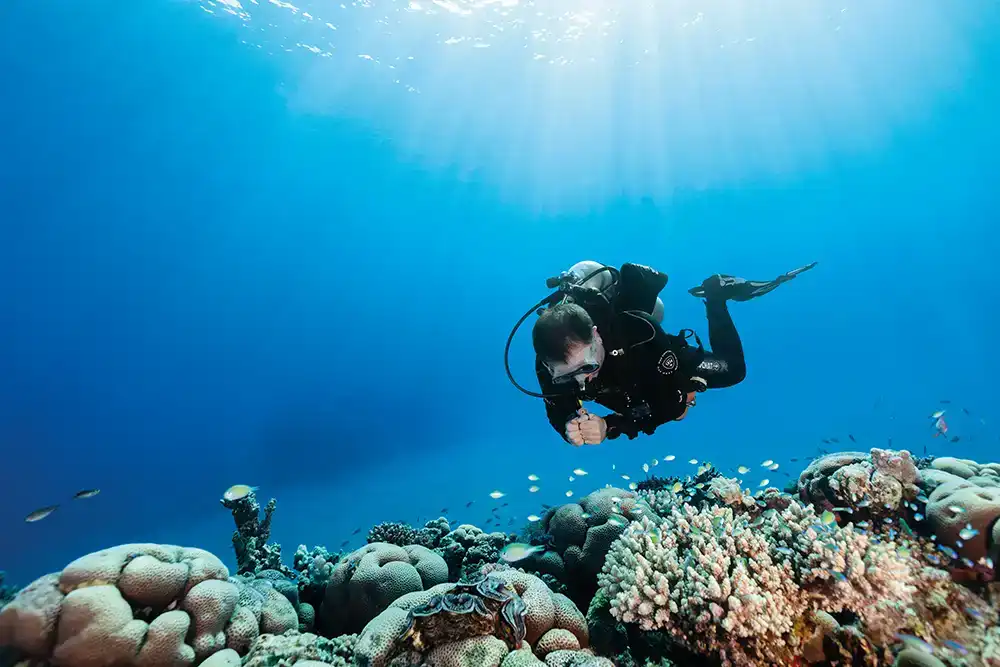
Back in the day, when people asked me whom to dive with in Sharm, I would point them towards the big, established names, because we all provided the same great service for roughly the same price.
Today, the list is sadly smaller, but to Camel Dive Club, Emperor Divers, Red Sea College, Oonas Divers and Elite Diving, I would now add Circle Divers as one of the most trustworthy names in Sharm El Sheikh. Yes, Abdelsalam’s a friend. No, I would not say that if he ran a tinpot shack selling intro dives for a tenner.
Mindful of my long absence from proper diving, I took it easy for the first two days and went shore diving in Na’ama Bay. Within short order my fear of impending doom was gone.
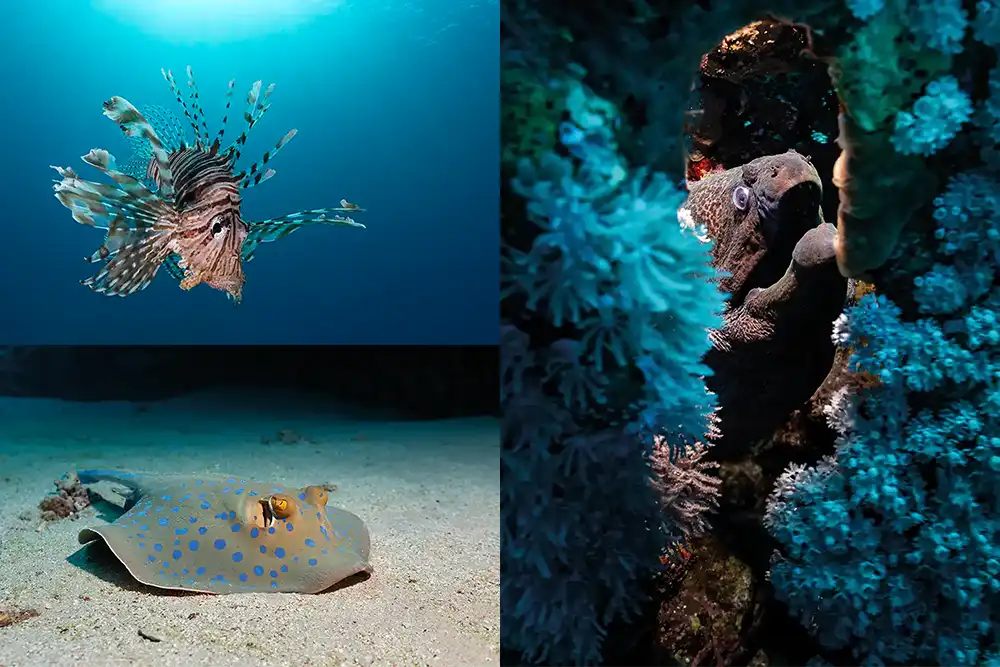
My buddy (Jovana, the photographer) and I swam over to the house reef where we had conducted countless intro dives, courses, guided dives and night dives – and they remain just as I remember them. I was half expecting them to be lifeless, but the glassfish and lionfish remain in the same places as always.
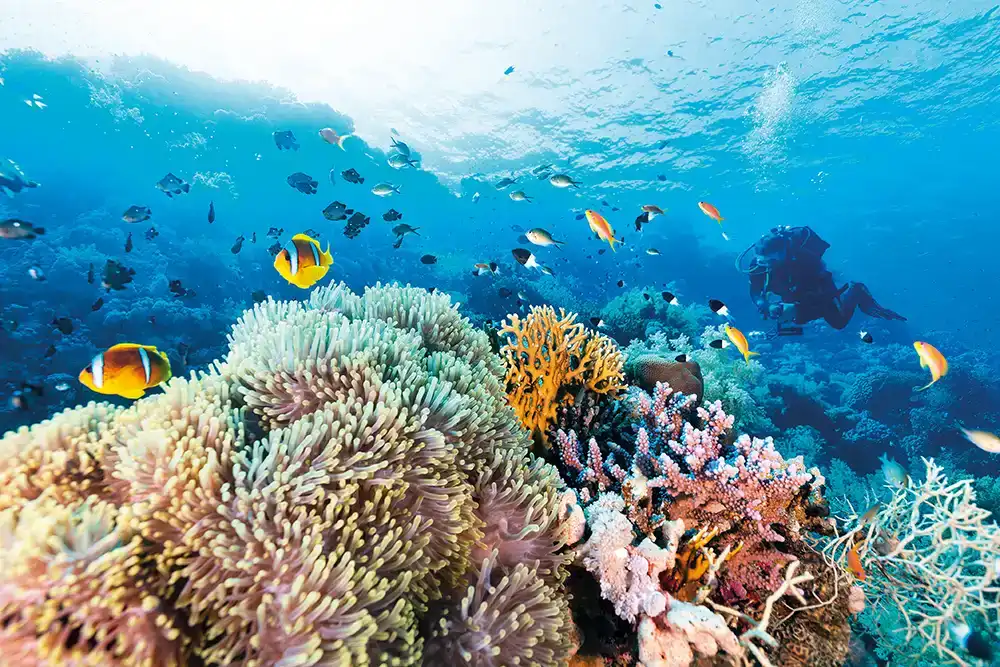
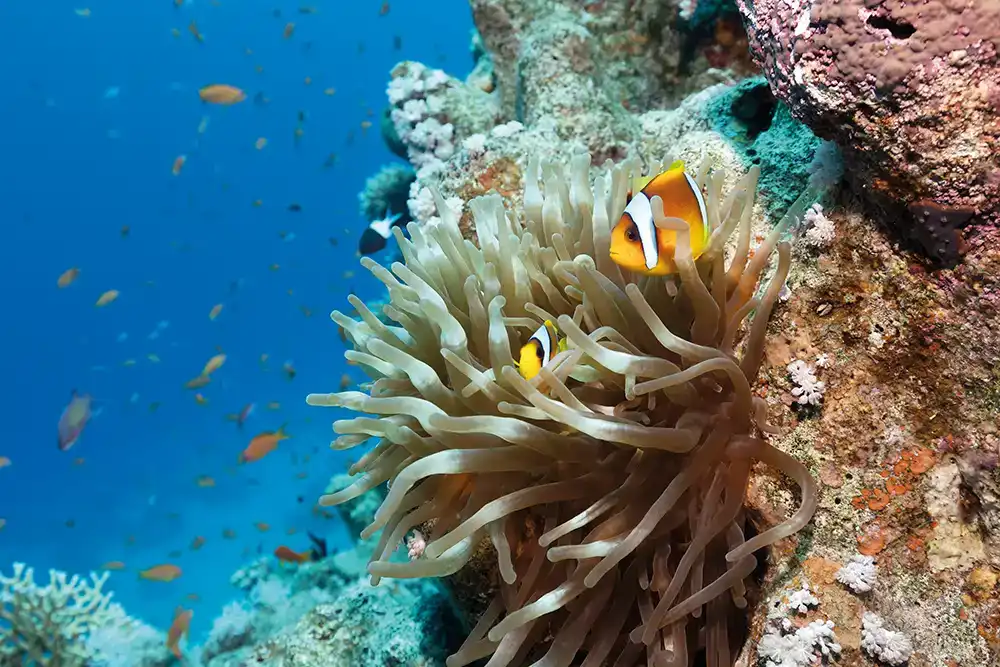
Biology says that probably wasn’t the same clownfish I used to wiggle my fingers at, but it may well be the same anemone in which its descendants now shelter.

On the downside, there is very little seagrass left in the bay, where once there was a field on which two huge green turtles would regularly graze. Sadly, most of the grass is gone, and we did not see our old chelonian friends.
Out on the main fringing reef of Ras Mohammed National Park and the island reefs of Tiran, however, the coral is in rude health, despite ongoing development and a mass bleaching event in 2023.
There is evidence of both coral mortality and regrowth but overall, it remains vibrant. Reef fish were in plentiful supply but I did feel there were fewer larger fish – barracuda, snapper, trevallies and parrotfish seemed more scarce and we saw just one blue-spotted ray in our ten dives.
Fifteen years ago I would have scoffed at such an observation, made through a short, off-season viewing window, but I thought it fairly noticeable, like having not seen a friend for ten years and realising they’ve suddenly become older, and have eaten many extra pies.
Having said that, in the weeks prior to my arrival, divers saw a whale shark, tiger shark, hammerheads and reef sharks, so it’s clearly not all bad – I must therefore book a return trip to investigate!
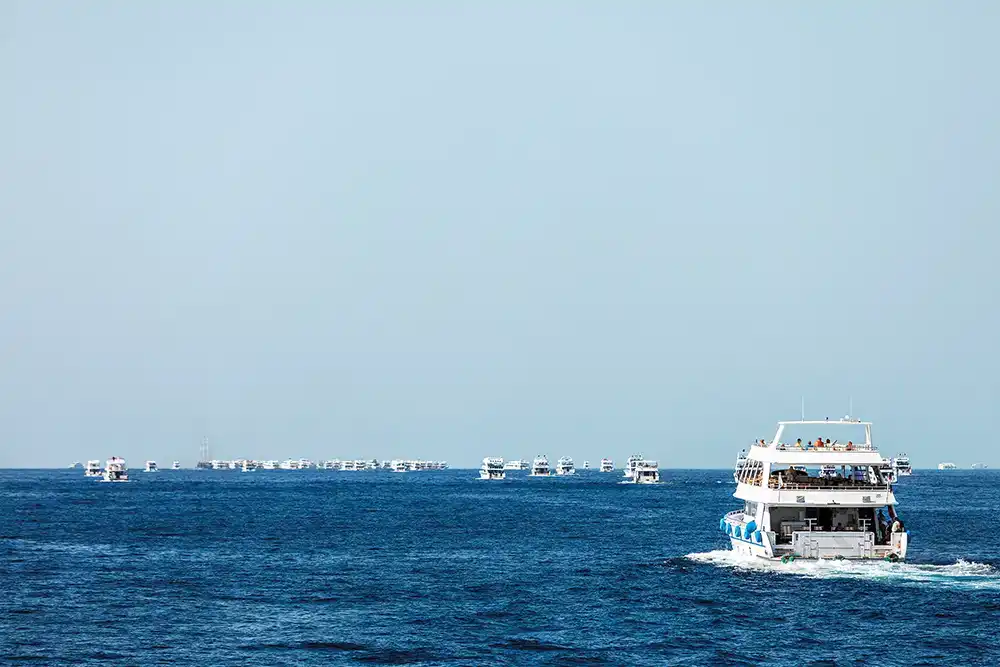

In one key aspect the diving experience has actually improved since I was last there. The mass transition to snorkel boats means there are far fewer dive boats on Sharm’s reefs, as snorkelling and entry-level experiences are not permitted in the National Park and Tiran.
The snorkel boats and day-trippers instead head around the tip of Ras Mohammed and outside the National Park boundaries to a site named the Alternatives.
Waiting off Shark Reef during our surface interval, we watched a vast armada of snorkel boats pass us by – 90 per cent of all the boats in Sharm, according to our captain.
It’s a fairly unpleasant sight, but it leaves the best dive spots as they were meant to be: for divers. As a result, we dived at Ras Ghoslani, Shark Observatory and Anemone City as the only dive boat at those reefs, and at Shark and Jolanda, twice, we saw only two other boats.
They dropped their divers directly on top of me, of course, because it has always been thus, but three boats on Shark and Jolanda? Even in low season that would have been unheard of back in the day.


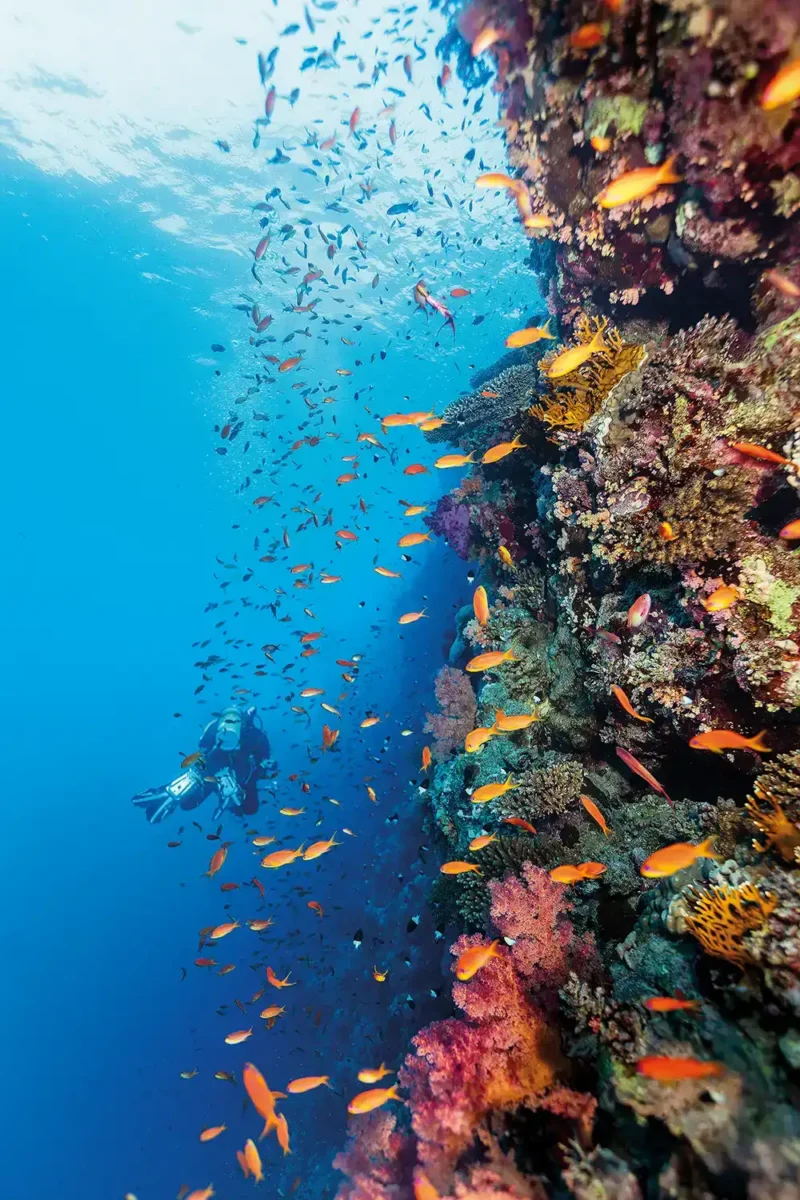
The reefs though, remain majestic. The beautiful soft coral garden on the eastern face of Jolanda – one of the best in the world, in my opinion – is as glorious as it ever was.
For our final dive at Jackson Reef in Tiran, we zigzagged between the opposing currents over the southern coral garden and its northerly drifting wall.
The sun was glorious in a cloudless sky, the sea its mesmerising blue, and as I hovered in that current split among the hordes of golden anthias and the bicolour chromis we called ‘chocolate dips’, my heart sang, and I had to clear my mask, because it was filling up from the inside.
Sharm El Sheikh has been in an almost permanent state of recovery since I left – an apt metaphor for my own journey – and the only place I could have ever recovered my confidence to dive.
Much has changed above the surface, and not all of it to my liking, but the soul of Sharm El Sheikh lies intact beneath the surface of the deep blue Red Sea, and the piece of my heart that I left there 25 years ago remains there with it. I’ll be back.
Crowley was diving with Circle Divers Sharm, www.circledivers.com. See them at the UK’s Go Diving Show, 28 Feb-1 March 2026, Stand 101. Jovana Milanko is a Serbian underwater photographer, film-maker and scuba diving instructor. Find her on Instagram @jovana_milanko/
The post Full Circle – a return journey through 25 years of Sharm El Sheikh appeared first on DIVE Magazine.
