
 Nöbetçi Eczaneler







There are millions of recreational scuba divers in the U.S. and hundreds of thousands of traveling divers from countries around the world making tens of millions of enjoyable recreational dives each year in unique dive locations all over America. In the unlikely event that any of these divers would suffer a pressure-related diving injury, they trust that the U.S. medical system will provide state-of-the-art care for their injuries, especially in an emergency situation. As these divers are preparing to enjoy a pleasurable dive in some of the world’s most popular dive locations in this country, little do they know that if a pressure-related injury were to occur while diving that would necessitate treatment in a hyperbaric chamber, they may experience a delay in treatment that could adversely impact their chances for a successful and residual-free outcome.
Unknown to most divers, there is a steadily decreasing number of hyperbaric treatment facilities in the U.S. willing and able to treat them, even in a life-threatening emergency, for decompression sickness or arterial gas embolism. This situation places all divers at a much greater risk than any of us have realized.
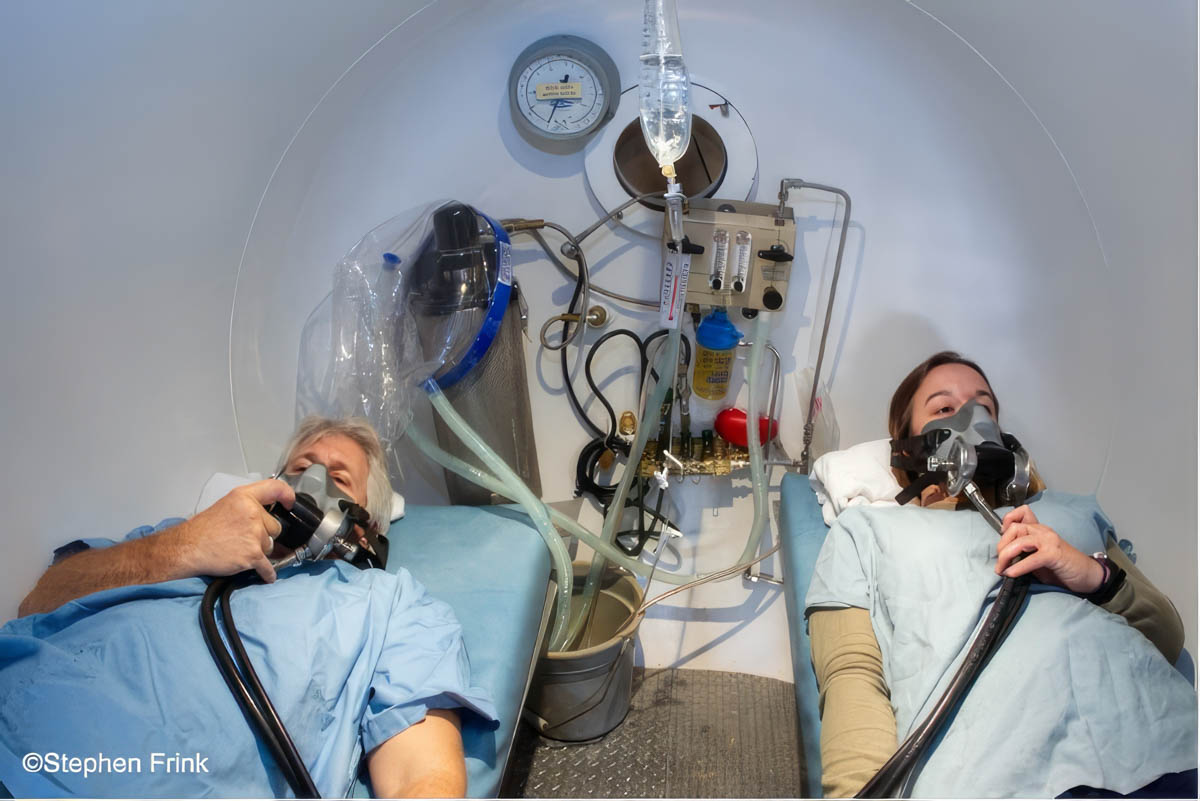
For example, in May of 2020, a recreational diver made a dive off the coast of Pensacola, Florida. After surfacing, he experienced serious neurological symptoms that were indicative of a pressure-related diving injury. Divers in that area were aware that there were five hyperbaric treatment facilities in the Pensacola area. These facilities had been providing hyperbaric oxygen therapy for a variety of non-diving medical conditions but the divers were totally unaware that not one of these facilities would provide the emergency care this severely injured diver badly needed. Instead of being treated at one of these treatment facilities only minutes away, this diver had to be transported to a treatment facility in Mobile, Alabama that was willing to be available to treat injured divers 24/7.

The reality is that this facility in Mobile, Alabama was one of the very few treatment facilities in the U.S. that had continued to offer emergency care for injured divers 24/7. The most recent information regarding this facility indicates that, unfortunately, it is no longer available on a 24/7 emergent basis for the Gulf Coast diving community.
The injured diver in this example was fortunately treated successfully with no residual symptoms, despite the treatment delay. As accident data from Divers Alert Network (DAN) has shown, treatment delay, such as occurred during this diver’s care, is one of the most significant risk factors for a negative outcome when treating divers with decompression sickness or arterial gas embolism.
This reduced capability to provide emergency treatment for diving accidents also impacts local fire and police forces, many of which have diving rescue teams; federal law enforcement agencies; fish and wildlife services; park services and other state and federal agencies with dive teams; as well as military divers conducting training operations in areas away from the location of their unit chamber.
There are approximately 1,300 hyperbaric treatment facilities (each of which has one or more hyperbaric chambers) that currently provide hyperbaric oxygen therapy in the United States. As recently as two decades ago, the large majority of hyperbaric treatment facilities were available to provide emergency treatment on a 24/7 basis. Today, however, few of these facilities offer emergency treatment 24/7, and some of those facilities do so only intermittently. Non-diving patients being treated for wound healing therapy dominate hyperbaric chamber usage.
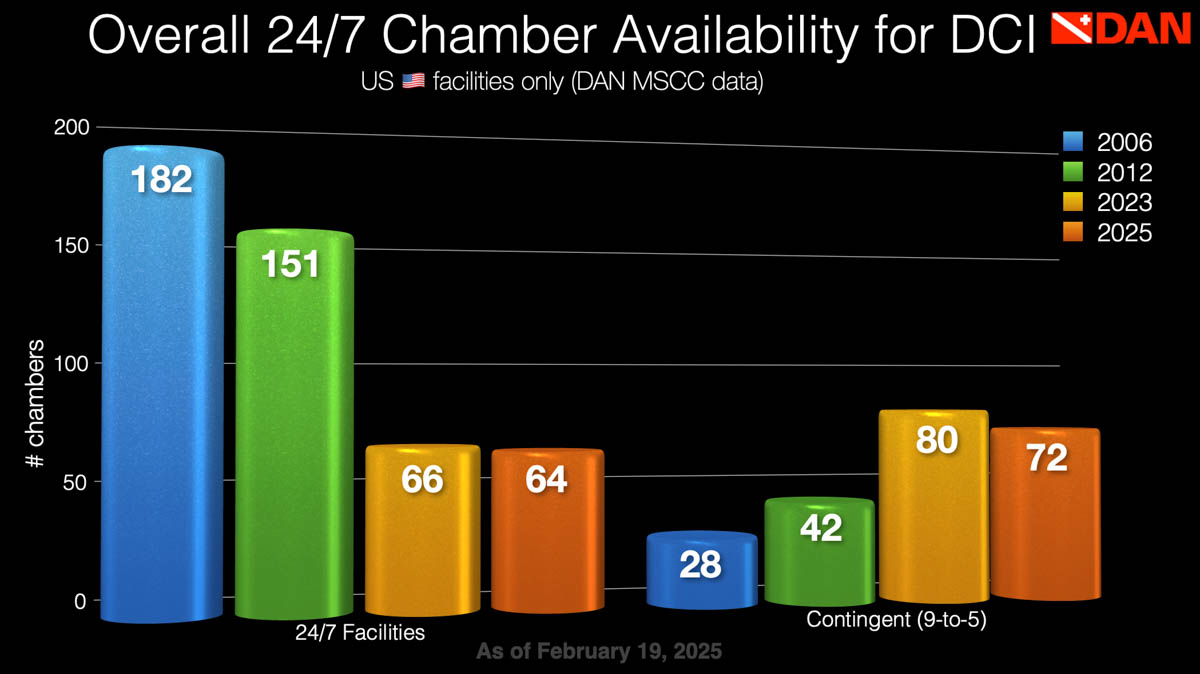
The above graph, provided by Dr. Matias Nochetto, VP of Medical Services at Divers Alert Network (DAN), demonstrates the change in hyperbaric chambers available 24/7 and those only available from 9:00 AM to 5:00 PM between 2006 and 2025. Even fewer 24/7 facilities may be available if the diving injury requires more complicated treatment modalities such as the need for a ventilator.
The Undersea and Hyperbaric Medical Society identifies hyperbaric facilities based upon the level of care that can be provided. For example, Level One facilities have a hyperbaric program that offers a full scope of services for the hyperbaric patient. They are typically hospital-based facilities that cover all recognized indications, including 11 emergency life- or limb-threatening injuries and are available for treatment of the emergent patient 24/7. Level Two facilities have a hyperbaric program that provides a reduced scope of service for the hyperbaric patient (does not treat emergency patients). They are typically in the hospital setting and not available 24/7. These programs provide high quality care to outpatients Monday through Friday and are not equipped or staffed for emergency indications. Level Three facilities have a hyperbaric program that offers appropriate hyperbaric therapy in the non-affiliated setting (non-hospital based nor affiliated with a hospital). Level Four facilities are in International locations.
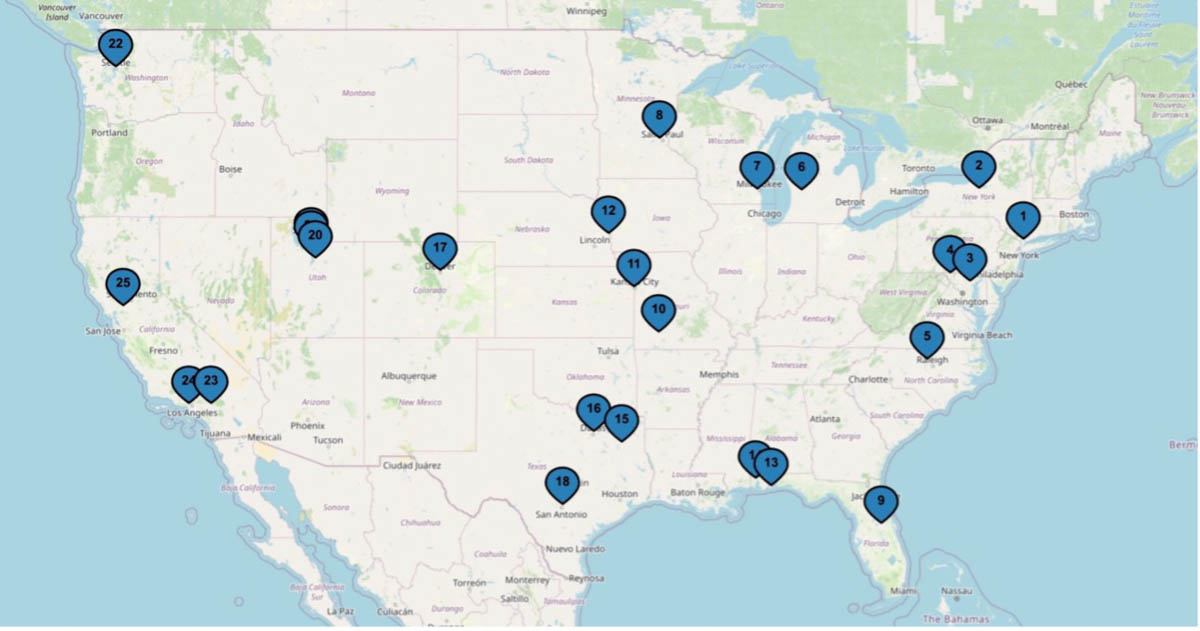
The graphic above was provided by John Peters, Executive Director of the UHMS and identifies the UHMS-accredited Level One Hyperbaric Facilities in the U.S.
According to Dr. Matias Nochetto, DAN VP of Medical Services, DAN does not limit its Recompression Chamber Network (RCN) to UHMS-accredited facilities, nor to hospital-based ones. The primary focus of the RCN database is facilities that are willing and able to treat divers; whether they do any other Hyperbaric Oxygen (HBO) indications is secondary to them. In addition, about 80% of the chambers in the RCN are not in the US, and very few international chambers seek UHMS accreditation. Divers Alert Network (DAN) has its own recompression facility classification system; where it factors in technical capabilities, operational capabilities, placement, availability, and communication with DAN. Two notable examples of such facilities are Catalina and Pacific Grove.
As a business enterprise, the scheduled wound healing therapy model is much more profitable than emergency hyperbaric treatment for pressure-related diving injuries. In the past, hospitals and other hyperbaric treatment facilities underwrote the additional costs associated with providing 24/7 access to emergency hyperbaric treatment as a public service for those who required it. Now, because of the negative economic impact, as well as concern for staffing and training considerations and the potential for legal liability, most hyperbaric treatment facilities have ceased to provide 24/7 access to emergency hyperbaric treatment.
For the recreational diving community, this is a critical safety issue. Recreational divers are regularly diving in locations where they believe emergency hyperbaric treatment will be available at nearby treatment facilities that have, in the past, been available to treat injured divers when they needed it most. Unfortunately, this may not be the case at all and, if injured, they may have to endure long delays in treatment as they must be transported to a distant treatment facility willing and able to provide the emergency care they need.
From a diver safety perspective, there is an urgent need to correct this decreasing availability in the U.S. health care system and make emergency hyperbaric treatment available to those who require it. This may be especially true as divers are increasingly attracted to artificial reef shipwrecks in deeper water off the Gulf Coast of northern Florida.
The Undersea and Hyperbaric Medical Society has been working to address this situation within the U.S. healthcare system by alerting governmental organizations. In a letter to the editor of the Journal of Undersea and Hyperbaric Medicine on 22 August 2020, Doctors Frank Butler and Richard Moon described the decreasing availability of emergency access to hyperbaric oxygen therapy in many areas of the United States. This lack of treatment capability presents significant challenges to providing optimal care for divers who suffer decompression sickness or arterial gas embolism.
Options for addressing this critical issue include:
- direct federal or state grants to hyperbaric treatment facilities that offer emergency hyperbaric treatment;
- indemnification from legal liability for hyperbaric treatment facilities and medical providers who provide emergency hyperbaric treatment to divers and other non-diving patients who require it;
- recognition of the public service performed by the hyperbaric treatment facilities that offer emergency hyperbaric treatment when indicated;
- favorable consideration with respect to Medicare, Medicaid, and private insurance reimbursements to hyperbaric treatment facilities and medical providers that offer emergency hyperbaric treatment when indicated, including carve-outs to inpatient DRG (diagnosis-related group) payments;
- incentives for military hyperbaric facilities to provide emergency hyperbaric treatment to civilian patients through emphasis on the training benefit to military providers that this accomplishes; third-party reimbursement for emergency hyperbaric treatment provided to civilian patients by military hyperbaric facilities; and indemnification of the military facility from lawsuits resulting from this public service activity.
In addition, there should be federal support for non-profit organizations, such as Divers Alert Network (DAN), that are willing to operate around the clock assisting any patient who needs emergency hyperbaric treatment by identifying the nearest hyperbaric treatment facility that is capable of providing this treatment and helping to arrange transportation to it. Since chamber availability may vary based on ongoing hyperbaric oxygen treatments, staffing issues and chamber maintenance operations, the ability to quickly determine which hyperbaric treatment facility is the most appropriate for a particular emergency patient in a specific geographic area is critical to optimal care. It should likewise be a national health care priority to ensure that there is adequate funding for fellowship education in Hyperbaric Medicine so that appropriately trained physicians will be reliably available to oversee the hyperbaric treatment provided by these hyperbaric treatment facilities.
So, what is a concerned and safety-conscious diver to do? First, it is important to be a member of Divers Alert Network (DAN) to support the emergency medical services they provide. And, always have the DAN Emergency Hotline number in your emergency assistance/action plan. If a pressure-related emergency were to occur, DAN can assist in getting you to the most appropriate, available treatment facility with as little delay as possible. Remember, that the treatment facility you may be referred to may not be local to your dive location, but DAN is aware of the locations of all treatment facilities available to treat injured divers 24/7.
Divers can also determine if treatment facilities at or near their favorite dive location are, indeed, available on a 24/7 basis and, if not, encourage the local diving community to put pressure on that facility to be available when needed. This may require the local community to reach out to the treatment facility to express their concern and, possibly, offer support in the form of fundraisers or other activities that could help. In some areas of the U.S., the local diving community has sponsored “Divers Days” to raise awareness and funds to support local treatment facilities. There are organizations, such as DAN, and individuals who will gladly volunteer their time and resources to help such a worthy cause.
Like any other risk in diver safety, we must identify and find ways to mitigate that risk. We now know that the decreasing availability of treatment facilities willing or able to provide emergency hyperbaric treatment when we need it most increases our risk as divers. We must mobilize and mitigate that risk by working with local, state, and national officials to let once available treatment facilities know of our concern and work with them to find ways to reduce that risk through cooperative and supportive measures.
References:
- Butler, F. Capt. (ret). Personal communication.
- Buzzacott, P. A Report on 2016 Diving Fatalities, Injuries and Incidents. DAN 2018 Annual Diving Report. Divers Alert Network. 2018.
- Clarke, D. Divers Losing Access to Emergency Care. Alert Diver. Winter 2012
- Denoble, P. A Report on 2017 Diving Fatalities, Injuries and Incidents. DAN 2019 Annual Diving Report. Divers Alert Network. 2019.
- Divers Alert Network. Health & Medicine, Health Resources, Diseases & Conditions, Decompression Illness.
- Gabriel, M. Lack of hyperbaric chambers in Pensacola continues to put divers’ lives at risk, expert says. Pensacola News Journal. March 14, 2018.
- Garcia, J. Personal communication.
- Orr, D. A Crisis Lurking Below the Surface Emergency Hyperbaric Treatment Availability. DiveNewsWire. August 24, 2021.
- Peters, J. Executive Director, Undersea and Hyperbaric Medical Society. Personal communication.
THE SCUBA NEWS Link !
DemirHindiSG 10 Aralık 2025-20:38