
 Nöbetçi Eczaneler







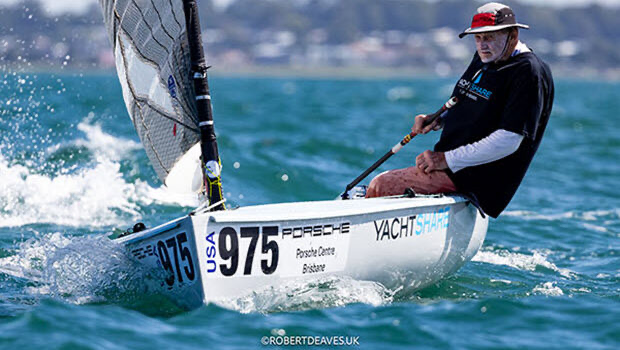
Gus Miller is a freak of nature. At 91 years of age, the American was the oldest participant at the 2026 Finn World Masters Championship in Brisbane, Australia. Eligibility begins on the 40th birthday. Gus finished every race. In this report, he relives his life time of Finn sailing, revealing a few stories, and how the Finn class shaped his life, his understanding of sailing and his friendships:
I started sailing when I was three, and my father taught me how to steer by pulling a little punt with steering ropes on it up and down the beach. After that, he would take me sailing, but put me in a seat and say, stay out of the way.
And then a little later, I was allowed to sail a small punt with leeboards. But I was given a great deal of freedom. I sailed all over Narragansett Bay on my own. The wind back then, the sou’wester would go 20, 25 knots, so I grew up learning to sail in a lot of wind.
I sailed in my first ocean race when I was 12, and I really have a great interest in that, so I started doing a lot of ocean racing besides racing dinghies. I’ve sailed dozens and dozens of different kinds of boats and learned a lot from each of them, and particularly the people that I met.
There are some superb seamen that I sailed with that really guided you. There is a culture of seamanship and sailing that I was a part of without all of the legalistic legislation that goes on in sailing now. So going up in that culture, there are just things you’re expected to do.
The only rules I had were to take care of the boat first, take care of yourself, don’t get drowned, and be home for supper. Take care of the boat first and take care of yourself was excellent because if you take care of the boat, it’ll take better care of you than you will of yourself. The culture of sailing worldwide is a marvelous thing to be part of.
Along the way, John Bertrand (AUS) came to Pewaukee to learn how to be a sailmaker, and he and I teamed up as training partners, so I learned a lot about that. The first thing he did is make me design three sails and build them myself, so I knew how to translate what I saw on the water onto the loft floor. We experimented with all kinds of things.
I also learned a great deal from David Howlett (GBR), who I had met in 1973 at the pre-Olympics in Kingston, Ontario, and we really took to each other. We had a common way of looking at the world.
At one point in 1973, he sat me down with David Hunt, who designed the Needlespar mast. We spent an evening with David leading me through the design process for engineering a Needlespar mast. That coupled with what I learned from David and John and from Bob Scoville, I began to understand the rig a lot better.
I went to Acapulco to the pre-Olympics and Paul Elvström was there. I watched him and before he went out every day, he’d spend about a half hour with a rig, adjusting the controls and then he’d walk around the boat and study the rig. And he kept that process up every morning. He’d study what he was looking at.
And I realized he had a precision and a depth of insight into the rig and what he was doing was unusual. So, I’ve kind of followed his lead since then, spending a lot of time just looking very carefully at what I was seeing. And I kept a diary throughout. It’s an intellectual adventure. Developing the theory of the Finn rig has been invaluable and applied it to all the other boats I’ve sailed. I think you can learn more from the Finn than any other single boat I’ve ever sailed.
I had to come back here [to Brisbane] because I’d been here for the Finn Gold Cup 50 years ago. John Bertrand and Sid Howlett, my training partners, both beat me in that. And I realized that I was not strong enough to beat them. So, I went back to Ann Arbor, got permission to use football team’s training room and the trainers who had a set of brand-new equipment.
For two months, they pushed me with other exercises that built up my strength. So, when I got to the Europeans, I beat John and all the others that had beaten me here. So that started a 50-year process of continuing to train.
And then I thought I wanted to come back here to this anniversary.
SCUTTLEBUTT News Link !
DemirHindiSG 12 Mart 2026-20:26