
 Nöbetçi Eczaneler






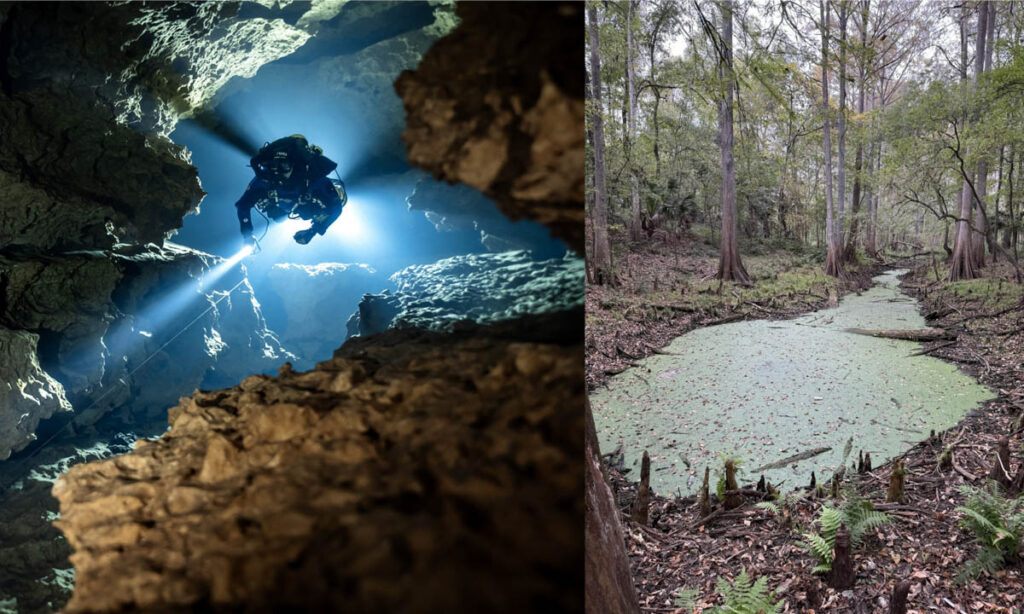
One of Florida’s most important freshwater cave systems, Mill Creek Sink Nature Preserve, is facing renewed pressure from nearby development proposals that conservationists warn could place both the cave system and the wider aquifer at risk.
Located in Alachua County, the preserve is owned and managed by the National Speleological Society, which has issued a formal alert warning that land immediately adjacent to Mill Creek Sink is now under threat from commercial and residential development plans, as outlined in its recent announcement detailing how Mill Creek Sink Nature Preserve is under threat.
Mill Creek Sink is far more than a single dive site. The sinkhole and its connected underwater cave passages act as a major drainage point for surface water flowing into the Floridan Aquifer, one of the most important freshwater resources in the southeastern United States. According to background information published by the National Speleological Society, the system drains water from tens of square miles of surrounding land directly into underground cave conduits with little natural filtration.
Why development nearby matters
Although the preserve itself remains protected, development on neighbouring parcels poses a significant risk in karst terrain. Stormwater runoff, fertilisers, wastewater, and other pollutants introduced at the surface can rapidly enter the cave system and move into the aquifer. In limestone environments like this, contaminants do not slowly filter through soil but can travel quickly through fractures and conduits.
Construction also increases the risk of sinkholes and subsurface instability. Any alteration to groundwater flow, drainage patterns, or surface loading has the potential to affect cave integrity, water quality, and connected springs downstream.
A fragile underground ecosystem
Mill Creek Sink supports specialised subterranean life that depends on clean, stable groundwater conditions. Blind cave-adapted crustaceans and other groundwater species are extremely sensitive to changes in water chemistry. Scientists and cave explorers have long recognised the preserve as an important site for understanding karst hydrology, groundwater biology, and cave formation processes.
Damage to these systems is often invisible until it is too late. Once pollutants enter a flooded cave system, remediation is effectively impossible.
Legal action and conservation response
In response to the proposed developments, the National Speleological Society has begun legal and advocacy efforts aimed at protecting the preserve and its surrounding buffer zones. Through its conservation and litigation programmes, the organisation is challenging planning decisions that could undermine the long-term protection of the cave system and the aquifer it feeds.
The NSS has warned that protecting only the sinkhole itself is not enough. Without adequate safeguards on surrounding land, even a legally protected preserve can be compromised by activities taking place just beyond its boundaries.
Why this matters to divers
For cave divers, Mill Creek Sink represents a rare and irreplaceable window into Florida’s underground waterways. More broadly, the situation highlights how closely inland diving sites are tied to land-use decisions made far from the water’s edge.
As Florida continues to grow, the outcome at Mill Creek Sink could become a benchmark case for how karst environments, groundwater resources, and inland dive sites are protected, or exposed, in the face of development pressure.
You can assist this action by donating here
THE SCUBA NEWS Link !
DemirHindiSG 12 Ocak 2026-20:24